
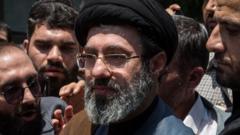
Iranians deeply divided over Mojtaba Khamenei's rise to power
#Iran #Mojtaba Khamenei #Supreme Leader #succession #political division #nepotism #leadership
📌 Key Takeaways
- Mojtaba Khamenei's political ascent is causing significant division among Iranians.
- Public opinion is split on his potential succession to Supreme Leader.
- The issue highlights internal power struggles within Iran's political elite.
- Debate centers on legitimacy, nepotism, and future leadership stability.
📖 Full Retelling
🏷️ Themes
Political Succession, Public Division
📚 Related People & Topics
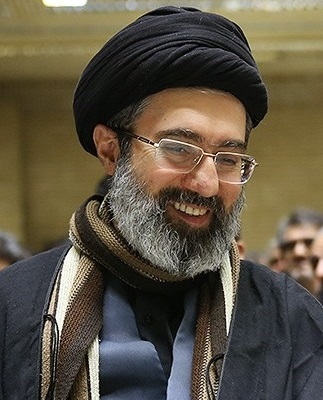
Mojtaba Khamenei
Iranian politician and cleric (born 1969)
Mojtaba Hosseini Khamenei (born 8 September 1969) is an Iranian politician and Muslim cleric. The second eldest child of Ali Khamenei, the former supreme leader of Iran, Mojtaba Khamenei served in the Iran–Iraq War from 1987 to 1988, and also reportedly took control of the Basij that was used to sup...
Entity Intersection Graph
Connections for Mojtaba Khamenei:
Mentioned Entities
Deep Analysis
Why It Matters
This news matters because it reveals significant internal divisions within Iran regarding potential leadership succession, which could destabilize the country's political system. It affects all Iranians as it concerns their future governance and international relations. The debate over Mojtaba Khamenei's rise reflects broader tensions between conservative hardliners and reformist factions. This internal conflict could influence Iran's domestic policies and foreign affairs, including nuclear negotiations and regional proxy activities.
Context & Background
- Mojtaba Khamenei is the second son of Iran's Supreme Leader Ayatollah Ali Khamenei, born in 1969
- Iran's political system combines democratic elements with theocratic oversight, where the Supreme Leader holds ultimate authority
- Succession of Supreme Leaders has occurred only twice since the 1979 Islamic Revolution - from Ruhollah Khomeini to Ali Khamenei in 1989
- Mojtaba has been involved in religious and political circles but holds no official government position
- The Islamic Revolutionary Guard Corps (IRGC) plays a crucial role in Iranian politics and could influence succession
What Happens Next
Increased political maneuvering among Iranian factions will likely occur as Ayatollah Khamenei ages. The Assembly of Experts will face growing pressure to clarify succession procedures. Public debates about leadership may intensify, potentially leading to protests or crackdowns. International observers will monitor for signs of who gains influence in security and religious institutions.
Frequently Asked Questions
Mojtaba Khamenei is the son of Iran's current Supreme Leader and has been involved in religious-political circles. He's controversial because his potential rise represents dynastic succession concerns in a system that theoretically values clerical meritocracy.
The Supreme Leader is selected by the Assembly of Experts, an 88-member body of Islamic scholars. They consider candidates' religious qualifications and political views, though the process lacks transparency and has been influenced by powerful institutions like the IRGC.
Iranians are divided between conservatives who support maintaining hardline control through figures like Mojtaba, and reformists who want more democratic succession. There's also debate about whether family succession contradicts revolutionary ideals of merit-based leadership.
Succession uncertainty could make Iran's foreign policy more unpredictable. Regional adversaries might test Iranian resolve during leadership transitions, while nuclear negotiations could stall until domestic power struggles resolve.
The IRGC holds significant economic and military power in Iran and can influence succession through their support for candidates. Their backing could be crucial for any potential Supreme Leader, including Mojtaba Khamenei.