
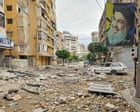
Israel says it is expanding ‘buffer zone’ in Lebanon – as it happened
📖 Full Retelling
📚 Related People & Topics

Lebanon
Country in West Asia
Lebanon, officially the Lebanese Republic, is a country in the Levant region of West Asia. Situated at the crossroads of the Mediterranean Basin and the Arabian Peninsula, it is bordered by Syria to the north and east, Israel to the south, and the Mediterranean Sea to the west; Cyprus lies a short d...

Israel
Country in West Asia
Israel, officially the State of Israel, is a country in the Southern Levant region of West Asia. It is bordered by Lebanon to the north, Syria to the northeast, Jordan to the east, and Egypt to the southwest. Israel occupies the West Bank and the Gaza Strip of the Palestinian territories, as well as...
Entity Intersection Graph
Connections for Lebanon:
View full profileMentioned Entities
Deep Analysis
Why It Matters
This development matters because it represents a significant escalation in the ongoing conflict between Israel and Hezbollah, potentially expanding the geographical scope of hostilities. It directly affects civilians living near the Israel-Lebanon border who face increased displacement and security threats. The expansion risks drawing Lebanon more deeply into regional tensions and could undermine diplomatic efforts to de-escalate the situation. This move also has implications for international relations, particularly involving the United States and regional mediators who have been working to prevent a wider war.
Context & Background
- Israel and Hezbollah have engaged in cross-border exchanges since October 2023, following Hamas's attack on Israel.
- The United Nations-delineated Blue Line has served as the de facto border between Israel and Lebanon since Israel's withdrawal from southern Lebanon in 2000.
- Hezbollah, a Lebanese Shia militant group and political party, is designated as a terrorist organization by Israel, the United States, and several other countries.
- Previous conflicts between Israel and Hezbollah include the 2006 Lebanon War, which resulted in significant casualties and displacement on both sides.
- Southern Lebanon has historically been a flashpoint, with Israel maintaining a security zone there during the 1980s and 1990s to prevent attacks.
What Happens Next
In the coming weeks, we can expect increased military activity along the border as Israel implements its expanded buffer zone. Diplomatic efforts, likely led by the United States and France, will intensify to prevent further escalation. There is a risk of miscalculation leading to a broader conflict if Hezbollah responds with significant force. The situation may also impact ongoing negotiations for a ceasefire in Gaza, as these conflicts are increasingly interconnected.
Frequently Asked Questions
A buffer zone is an area established between hostile forces to reduce the risk of conflict. It typically involves increased military presence, surveillance, and restrictions on movement to create a security barrier.
Israel likely aims to enhance security against Hezbollah attacks following increased cross-border fire. The expansion may be a response to perceived threats or part of a broader strategy to pressure Hezbollah and its allies.
Lebanese civilians near the border face displacement, property damage, and restricted access to their homes and farms. The expansion increases humanitarian concerns and disrupts daily life in already vulnerable communities.
Hezbollah may retaliate with increased rocket fire or guerrilla attacks, aiming to challenge Israel's military presence. The group could also leverage political pressure within Lebanon and seek support from regional allies like Iran.
International humanitarian law requires that military actions distinguish between combatants and civilians. Occupying or annexing territory is generally prohibited, though temporary security measures may be allowed under specific conditions.