
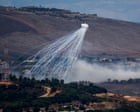
Israel used white phosphorus to scorch earth in south Lebanon, researcher says
📖 Full Retelling
📚 Related People & Topics

Lebanon
Country in West Asia
Lebanon, officially the Lebanese Republic, is a country in the Levant region of West Asia. Situated at the crossroads of the Mediterranean Basin and the Arabian Peninsula, it is bordered by Syria to the north and east, Israel to the south, and the Mediterranean Sea to the west; Cyprus lies a short d...

Israel
Country in West Asia
Israel, officially the State of Israel, is a country in the Southern Levant region of West Asia. It is bordered by Lebanon to the north, Syria to the northeast, Jordan to the east, and Egypt to the southwest. Israel occupies the West Bank and the Gaza Strip of the Palestinian territories, as well as...
Entity Intersection Graph
Connections for Lebanon:
View full profileMentioned Entities
Deep Analysis
Why It Matters
This allegation matters because white phosphorus is a controversial incendiary weapon that causes severe burns and can ignite structures and vegetation, potentially violating international humanitarian law if used in populated areas. It affects Lebanese civilians living near the border, Israeli military operations, and international observers monitoring compliance with weapons conventions. The accusation could strain Israel's diplomatic relations and trigger investigations by human rights organizations and UN bodies.
Context & Background
- White phosphorus creates intense heat and smoke, used militarily for illumination, screening, and incendiary purposes.
- International law restricts its use near civilian populations under Protocol III of the Convention on Certain Conventional Weapons.
- Israel and Hezbollah have engaged in periodic cross-border clashes since the 2006 Lebanon War, with recent escalations following the October 2023 Hamas-Israel conflict.
- South Lebanon has been a contested zone with UN peacekeeping forces (UNIFIL) deployed since 1978.
- Previous allegations of white phosphorus use by Israel occurred during the 2008-2009 Gaza conflict, drawing international criticism.
What Happens Next
Human rights groups like Amnesty International may investigate and publish reports, potentially leading to UN discussions. Lebanon could file a complaint with international bodies, while Israel might deny or justify the use under military necessity. Escalation risks include retaliatory attacks by Hezbollah or increased border tensions, possibly drawing in other regional actors.
Frequently Asked Questions
White phosphorus is a chemical that ignites upon contact with air, burning at extremely high temperatures. It's controversial because it causes horrific, deep burns that are difficult to treat and can start fires in civilian areas, leading to accusations of indiscriminate harm.
No, but its use is restricted. International law prohibits using white phosphorus as an incendiary weapon against civilians or in areas with concentrated civilian populations. However, militaries may legally use it for illumination or creating smoke screens in certain contexts.
Israel has typically stated it uses all weapons in accordance with international law, arguing white phosphorus is employed for legitimate military purposes like obscuring movements. Following past criticisms, Israel adjusted some procedures but maintained its right to use the substance.
Researchers typically analyze video footage showing characteristic white smoke and intense burning, examine munition remnants at attack sites, and interview witnesses describing the distinctive garlic-like odor and unusual burn patterns associated with white phosphorus.
This could increase tensions along the already volatile border, potentially provoking Hezbollah responses and complicating UN peacekeeping efforts. It may also influence international perception of the conflict and pressure diplomatic efforts to de-escalate the situation.