
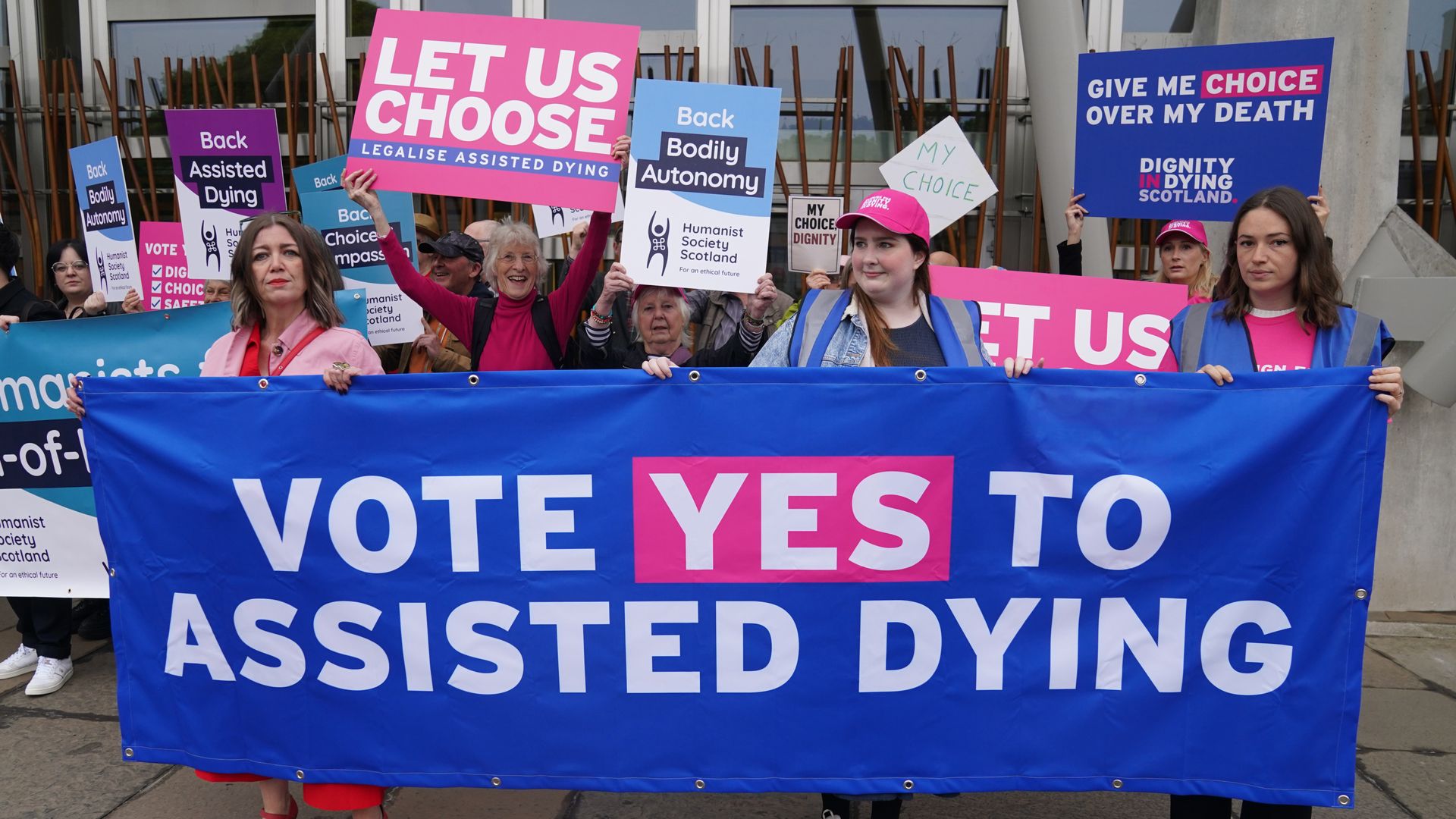
Scottish parliament to vote on assisted dying bill
#Scottish Parliament #assisted dying #vote #bill #end-of-life care #legalization #Scotland
📌 Key Takeaways
- The Scottish Parliament is set to vote on a bill regarding assisted dying.
- The bill addresses the legalization of assisted dying in Scotland.
- This vote could lead to significant changes in end-of-life care legislation.
- The outcome may influence similar debates in other parts of the UK.
📖 Full Retelling
🏷️ Themes
Legislation, Healthcare
📚 Related People & Topics

Scotland
Country within the United Kingdom
Scotland is a country that is part of the United Kingdom. It contains nearly one-third of the United Kingdom's land area, consisting of the northern part of the island of Great Britain and more than 790 adjacent islands, principally in the archipelagos of the Hebrides and the Northern Isles. In 2022...

Scottish Parliament
Devolved parliament of Scotland
The Scottish Parliament (Scottish Gaelic: Pàrlamaid na h-Alba [ˈpʰaːrˠl̪ˠəmɪtʲ nə ˈhal̪ˠapə]; Scots: Scots Pairlament) is the devolved, unicameral legislature of Scotland. It is located in the Holyrood area of Edinburgh, and is frequently referred to by the metonym Holyrood. It is a democratically e...
Entity Intersection Graph
Connections for Scotland:
View full profileMentioned Entities
Deep Analysis
Why It Matters
This vote represents a significant ethical and legal shift in Scotland's approach to end-of-life care, potentially granting terminally ill individuals greater autonomy over their deaths. It directly affects terminally ill patients, their families, healthcare professionals, and religious communities with moral objections. The outcome could influence similar debates across the UK and other Commonwealth nations, while raising complex questions about medical ethics, patient rights, and safeguards against abuse.
Context & Background
- Scotland has previously rejected assisted dying legislation in 2010 and 2015, with debates intensifying in recent years due to shifting public opinion
- The UK Parliament has consistently rejected assisted dying bills at Westminster, making Scotland's potential approval a notable devolution of healthcare policy
- Several countries including Canada, New Zealand, and multiple US states have legalized some form of assisted dying since 2015, creating international precedents
- Current Scottish law treats assisted dying as illegal under homicide legislation, with potential prosecution under the Suicide Act 1961
- Campaign groups like Dignity in Dying Scotland have lobbied for decades while religious organizations and disability rights advocates have expressed strong opposition
What Happens Next
If passed, the bill will undergo detailed committee scrutiny and amendment stages before final parliamentary approval, likely taking 12-18 months. Implementation would require developing strict medical protocols, training healthcare professionals, and establishing regulatory oversight bodies. If rejected, campaigners may reintroduce revised legislation in future parliamentary sessions while continuing public awareness efforts.
Frequently Asked Questions
The bill typically requires terminal illness with life expectancy under six months, mental capacity to make the decision, and persistent requests without coercion. Specific eligibility criteria will be debated and potentially amended during parliamentary scrutiny.
Assisted dying involves providing medication that the patient self-administers, while euthanasia involves a doctor directly administering life-ending treatment. The Scottish bill focuses on physician-assisted dying rather than active euthanasia.
Expected safeguards include multiple medical assessments, waiting periods, witness requirements, and documentation of informed consent. The bill will likely include oversight by independent regulatory bodies to monitor implementation.
While Scotland's healthcare is devolved, a successful bill could pressure Westminster to reconsider UK-wide legislation and influence debates in Wales and Northern Ireland. However, each nation would need to pass its own legislation.
Opponents argue it could pressure vulnerable people, devalue disabled lives, contradict medical ethics of preserving life, and risk gradual expansion to non-terminal cases. Religious groups maintain that life is sacred and should not be intentionally ended.