
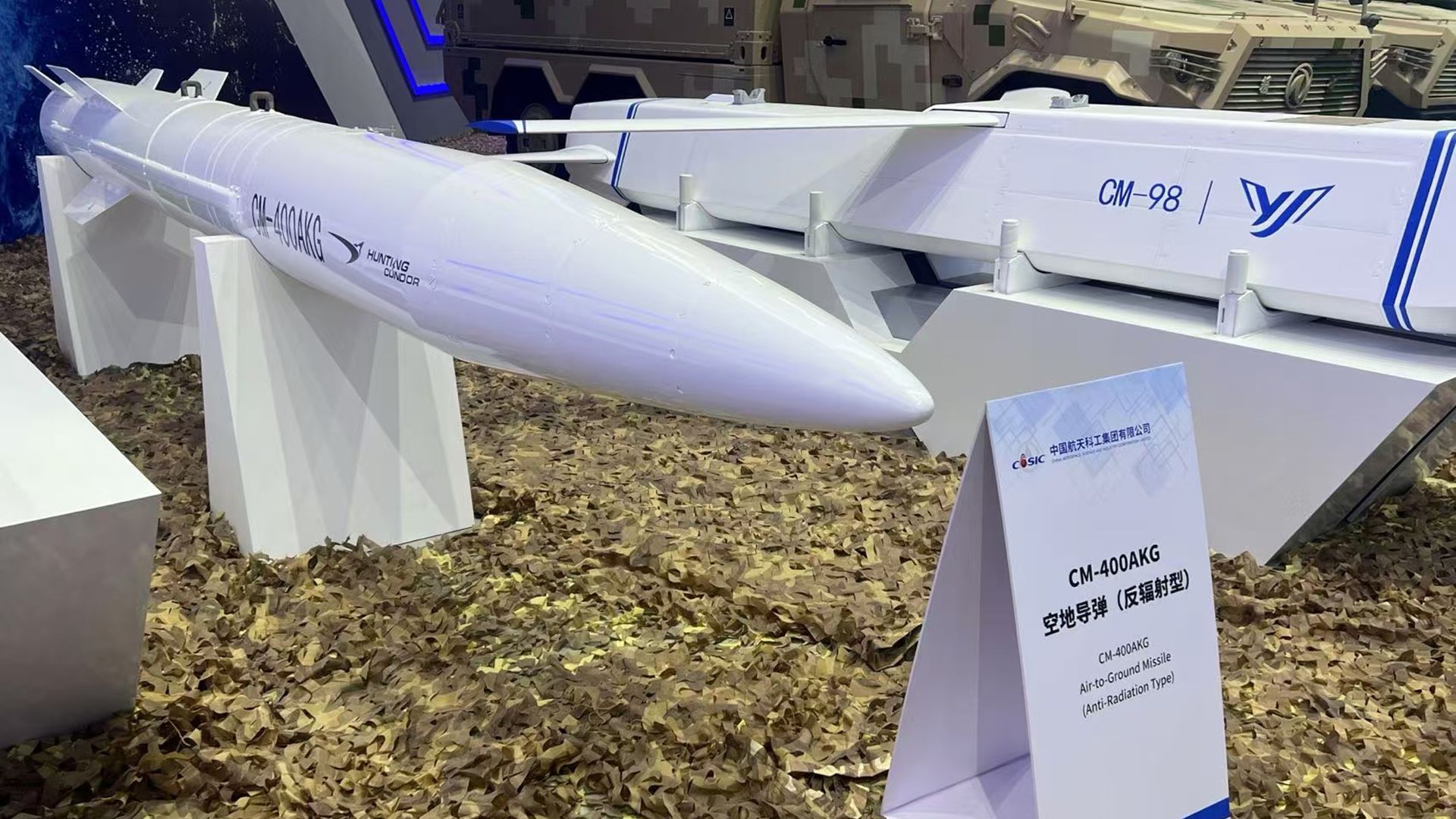
Serbia buys Chinese supersonic missiles
#Serbia #China #supersonic missiles #military deal #defense #Balkans #arms sale
📌 Key Takeaways
- Serbia has purchased supersonic missiles from China.
- The acquisition involves advanced Chinese military technology.
- This deal strengthens Serbia's defense capabilities.
- The purchase may influence regional military dynamics in the Balkans.
📖 Full Retelling
🏷️ Themes
Military Procurement, International Relations
📚 Related People & Topics

Serbia
Country in Southeast and Central Europe
Serbia, officially the Republic of Serbia, is a landlocked country in Southeast and Central Europe. Located in the Balkans, it borders Hungary to the north, Romania to the northeast, Bulgaria to the southeast, North Macedonia to the south, Croatia to the northwest, Bosnia and Herzegovina to the west...

Balkans
Region of southeastern Europe
The Balkans ( BAWL-kənz, BOL-kənz), corresponding partially with the Balkan Peninsula, is a geographical area in southeastern Europe with various geographical and historical definitions. The region takes its name from the Balkan Mountains that stretch throughout the whole of Bulgaria. The Balkan Pe...

China
Country in East Asia
China, officially the People's Republic of China (PRC), is a country in East Asia. It is the second-most populous country after India, with a population exceeding 1.4 billion, representing 17% of the world's population. China borders fourteen countries by land across an area of 9.6 million square ki...
Entity Intersection Graph
Connections for Serbia:
Mentioned Entities
Deep Analysis
Why It Matters
This acquisition significantly enhances Serbia's air defense capabilities, potentially altering military balances in the Balkans region. It represents a deepening of Sino-Serbian military cooperation, which could influence Serbia's geopolitical alignment away from Western defense partnerships. The purchase affects regional security dynamics, neighboring NATO members, and reflects China's expanding arms exports to European nations.
Context & Background
- Serbia has maintained military neutrality while seeking EU membership, balancing relations with Russia, China, and Western powers.
- China has been expanding its defense exports globally, with the FK-3 air defense system (similar to Russia's S-300) being a key export product.
- The Balkans have experienced ongoing tensions since the 1990s Yugoslav wars, with Kosovo's 2008 declaration of independence still unrecognized by Serbia.
- Serbia's military modernization has accelerated in recent years, including previous acquisitions of Russian MiG-29 fighters and Chinese drones.
What Happens Next
Regional neighbors and NATO will likely monitor deployment locations and conduct capability assessments. Serbia may face diplomatic pressure from Western allies concerned about Chinese influence. Additional military exercises between Serbian and Chinese forces could follow, potentially in 2024. The delivery and operational integration timeline will be watched for signs of accelerated cooperation.
Frequently Asked Questions
Serbia acquired the Chinese FK-3 surface-to-air missile system, which is comparable to Russia's S-300 and capable of engaging targets at ranges up to 150km with supersonic interceptor missiles.
Serbia maintains military neutrality and seeks diversified suppliers to avoid dependency. Chinese systems offer advanced technology without political conditions that Western sales might impose, while avoiding complete reliance on Russia.
The purchase may complicate Serbia's EU path as Brussels grows increasingly concerned about Chinese influence in candidate countries. However, Serbia has previously balanced such acquisitions with continued accession negotiations.
Neighboring NATO members like Croatia and Montenegro will likely enhance their own air defenses in response. Kosovo's security calculations may shift given Serbia's improved ability to control airspace near disputed territories.
Yes, China has been gradually expanding defense exports to European nations, particularly in Eastern Europe and the Balkans, though this represents one of the most significant systems sold to a European country.