
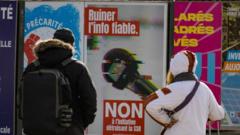
Swiss reject right-wing plan to cut licence fee for public broadcaster
#Switzerland #referendum #licence fee #public broadcaster #SRG SSR #right-wing #media funding #vote
📌 Key Takeaways
- Swiss voters rejected a right-wing proposal to reduce public broadcaster licence fees
- The referendum aimed to cut funding for SRG SSR, Switzerland's public media organization
- Supporters argued fees were too high, while opponents warned of threats to media independence
- The result maintains current funding levels for public service broadcasting in Switzerland
📖 Full Retelling
🏷️ Themes
Media funding, Public broadcasting
📚 Related People & Topics

Switzerland
Country in Central Europe
Switzerland, officially the Swiss Confederation, is a landlocked country located at the intersection of Central, Western, and Southern Europe. It is bordered by Germany to the north, France to the west, Austria and Liechtenstein to the east, and Italy to the south. Switzerland is geographically divi...

Swiss Broadcasting Corporation
Public broadcasting agency of Switzerland
The Swiss Broadcasting Corporation (German: Schweizerische Radio- und Fernsehgesellschaft; French: Société suisse de radiodiffusion et télévision; Italian: Società svizzera di radiotelevisione; Romansh: Societad Svizra da Radio e Televisiun; SRG SSR) is the Swiss public broadcasting association, fou...
Entity Intersection Graph
Connections for Switzerland:
View full profileMentioned Entities
Deep Analysis
Why It Matters
This decision preserves stable funding for Switzerland's public broadcaster SRG SSR, ensuring continued independent journalism and cultural programming accessible to all citizens. It affects Swiss households who will continue paying the annual licence fee, and political groups who sought to reduce public media influence. The rejection maintains Switzerland's tradition of public service media while reflecting public support for its role in a fragmented media landscape.
Context & Background
- Switzerland's public broadcaster SRG SSR is funded through an annual household licence fee of approximately 335 CHF ($375)
- The Swiss system requires major constitutional changes to be decided through national referendums
- Right-wing Swiss People's Party (SVP) has long criticized SRG SSR as being too left-leaning and sought to reduce its funding
- Previous attempts to cut public broadcasting funding failed in 2018 with 71% voting against
- Swiss media landscape includes strong public broadcasting alongside private media in four national languages
What Happens Next
SRG SSR will maintain current funding levels through 2025, with the next licence fee review scheduled for 2026. Political debates will continue about media bias and public funding models. The broadcaster faces ongoing challenges adapting to digital transformation while maintaining its public service mandate across Switzerland's linguistic regions.
Frequently Asked Questions
Voters rejected a right-wing initiative to eliminate the mandatory household licence fee and replace it with voluntary funding, which would have cut SRG SSR's budget by approximately 75%.
Constitutional changes in Switzerland require a double majority - approval from both the overall population and a majority of cantons. This system gives significant power to citizens through direct democracy.
Proponents argue that licence fee funding ensures editorial independence from political and commercial pressures, maintains quality journalism across all language regions, and provides universal access to information and culture.
Critics claim SRG SSR has excessive bureaucracy, shows political bias favoring centrist/left positions, and competes unfairly with private media through its broad online offerings.
Switzerland's household licence fee model is similar to Germany's, while countries like Sweden have transitioned to income-based fees, and others like the Netherlands use mixed public-private funding models.