
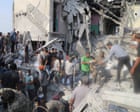
Video shows US Tomahawk missile hit base next to bombed Iranian school
#Tomahawk missile #US military #Iran #school bombing #video evidence #military base #collateral damage #strike
📌 Key Takeaways
- Video evidence shows a US Tomahawk missile striking a military base in Iran.
- The targeted base is located adjacent to a school that was also bombed.
- The incident highlights the precision and collateral risks of US military strikes.
- The attack raises questions about targeting near civilian infrastructure in conflict zones.
📖 Full Retelling
🏷️ Themes
Military Strike, Civilian Risk
📚 Related People & Topics
United States Armed Forces
Combined military forces of the United States
The United States Armed Forces are the military forces of the United States. U.S. federal law names six armed forces: the Army, Marine Corps, Navy, Air Force, Space Force, and Coast Guard, each assigned their role and domain. From their inception during the American Revolutionary War, the Army and...

Tomahawk missile
Long-range, subsonic cruise missile
The BGM-109 Tomahawk Land Attack Missile (TLAM) is an American long-range, all-weather, jet-powered, subsonic cruise missile that is used by the United States Navy, Royal Australian Navy, Royal Netherlands Navy and Royal Navy in ship and submarine-based land-attack operations. Developed at the Appli...

Iran
Country in West Asia
# Iran **Iran**, officially the **Islamic Republic of Iran** and historically known as **Persia**, is a sovereign country situated in West Asia. It is a major regional power, ranking as the 17th-largest country in the world by both land area and population. Combining a rich historical legacy with a...
Entity Intersection Graph
Connections for United States Armed Forces:
Mentioned Entities
Deep Analysis
Why It Matters
This incident matters because it reveals the precision and collateral damage risks of modern military strikes, potentially escalating tensions between the US and Iran. It affects regional stability in the Middle East, raises humanitarian concerns about civilian infrastructure near military targets, and could influence international diplomatic relations regarding military engagement protocols. The visual evidence may impact public opinion and policy debates about the ethics and consequences of targeted strikes.
Context & Background
- The US and Iran have had strained relations since the 1979 Iranian Revolution and the subsequent hostage crisis.
- The US has previously conducted strikes against Iranian-linked targets in the region, such as the 2020 drone strike that killed Iranian General Qasem Soleimani.
- Iran has been accused of supporting proxy militias in Iraq, Syria, and Yemen, which the US views as regional threats.
- Tomahawk missiles are long-range, precision-guided cruise missiles commonly used by the US Navy for targeted strikes.
- Schools and other civilian structures near military sites in conflict zones often become collateral damage, raising international humanitarian law concerns.
What Happens Next
Iran may issue formal diplomatic protests or retaliate through proxy forces in the region. The US military might review strike protocols to address collateral damage concerns. International organizations like the UN could call for investigations into the incident. Future US-Iran negotiations, if any, may be affected by this escalation.
Frequently Asked Questions
A Tomahawk is a long-range, subsonic cruise missile used by the US military for precision strikes. It can be launched from ships or submarines and is known for its accuracy in hitting specific targets, though collateral damage risks remain.
The US might target Iranian bases due to perceived threats, such as support for militant groups or regional aggression. Strikes are often justified as self-defense or counterterrorism measures, though Iran typically denies such allegations.
International humanitarian law requires distinguishing between military and civilian targets and minimizing harm to civilians. Strikes near schools or other protected sites can be scrutinized for proportionality and necessity, potentially violating these principles.
Tensions have persisted for decades, with incidents like the 1988 US shootdown of an Iranian airliner and the 2020 Soleimani strike. Conflicts often involve proxy warfare, sanctions, and diplomatic stalemates, rather than direct large-scale war.
While escalations are possible, both sides have historically avoided full-scale war due to mutual deterrence and regional instability risks. Proxy conflicts and limited strikes are more common, but miscalculations could increase broader conflict chances.