
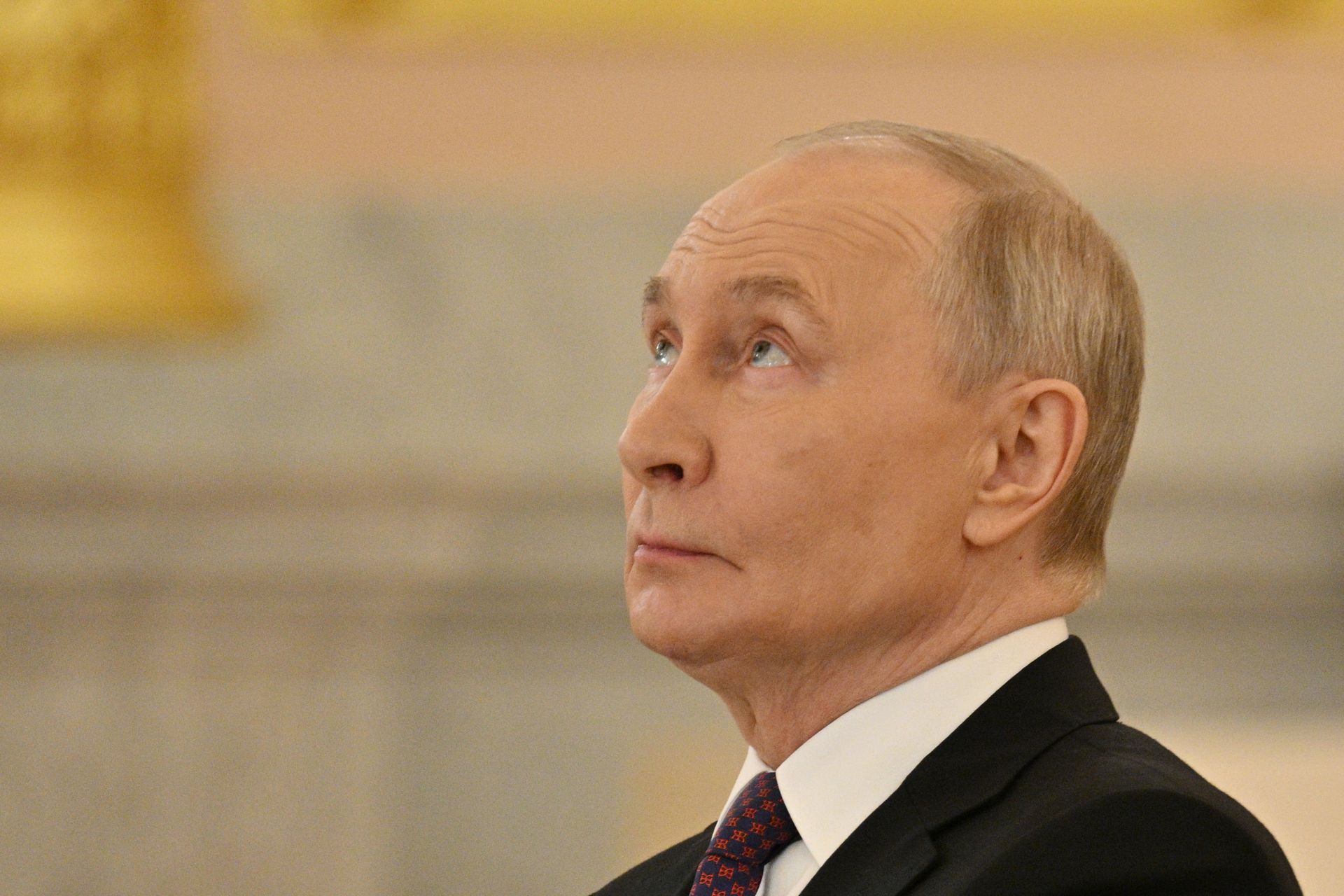
After Khamenei and Maduro, Putin knows he could be next
📖 Full Retelling
On Jan. 3, 2026, Nicolas Maduro was captured by U.S. forces in a dramatic military operation. Just 56 days later, a joint U.S.-Israeli airstrike killed Iran's Supreme Leader Ayatollah Ali Khamenei in Tehran. For Vladimir Putin , watching from Moscow, these events were a pattern. A
Entity Intersection Graph
No entity connections available yet for this article.
Original Source
Opinion After Khamenei and Maduro, Putin knows he could be next by Nicholas Chkhaidze March 10, 2026 5:54 PM 6 min read Russia's President Vladimir Putin looks on during a meeting of the Supreme State Council of the Union State of Russia and Belarus in Moscow on February 26, 2026. (Hector Retamal / AFP via Getty Images) Opinion Nicholas Chkhaidze Research fellow at the Topchubashov Center On Jan. 3, 2026, Nicolas Maduro was captured by U.S. forces in a dramatic military operation. Just 56 days later, a joint U.S.-Israeli airstrike killed Iran's Supreme Leader Ayatollah Ali Khamenei in Tehran. For Vladimir Putin , watching from Moscow, these events were a pattern. A warning. Perhaps a prophecy. Authoritarian leaders are, above all else, students of each other's deaths. When a peer regime collapses, the lesson travels fast. This matters to Ukraine significantly because, for Putin, the war is not just about territorial gains, but an existential fight for the survival of his regime. When dictators like Putin believe their rule is threatened, they double down and escalate. However, they also make costly strategic mistakes, creating vulnerabilities that Ukraine and its partners can exploit. With Khamenei's death, that fear has reached crisis levels. Become a member – go ad‑free Putin has always been haunted by the fate of fallen dictators. He saw Muammar Gaddafi's brutal downfall and death in 2011. He saw Saddam Hussein's capture in 2003 and execution in 2006. From both of these cases, he drew a specific lesson: compromising with the West doesn't guarantee safety. History demonstrates why, specifically, personalist dictatorships are particularly fragile. Gaddafi's brutal 2011 crackdown didn't eliminate the opposition threat; it triggered intervention from NATO , specifically because his personalist regime had no institutional checks on violence. Saddam's downfall demonstrated how isolated leaders who rule by fear receive distorted information from "yes-men." His intellige...
Read full article at source