
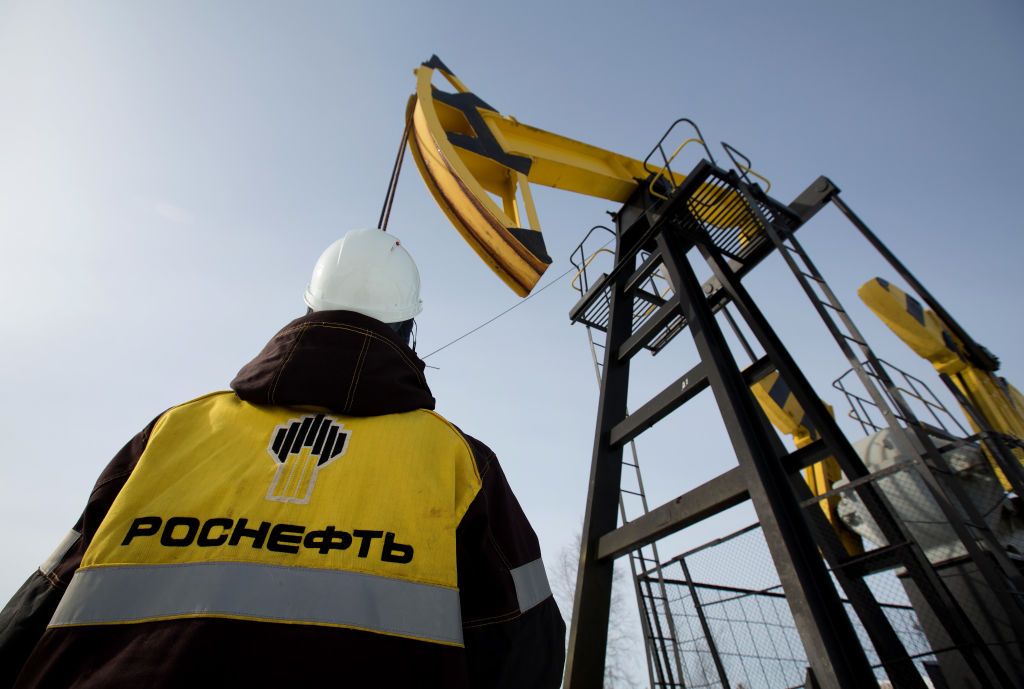
Russia's largest oil company's net income drops by 73% in 2025
#Rosneft #net income #oil company #sanctions #revenue #Russia #2025
📌 Key Takeaways
- Rosneft's net income fell 73% in 2025 compared to the previous year.
- The decline is attributed to Western sanctions and a global shift away from fossil fuels.
- The company's revenue also decreased significantly due to reduced export volumes.
- This financial drop reflects broader economic pressures on Russia's energy sector.
📖 Full Retelling
🏷️ Themes
Energy, Economy
📚 Related People & Topics

Russia
Country in Eastern Europe and North Asia
Russia, or the Russian Federation, is a country in Eastern Europe and North Asia. It is the largest country in the world, spanning eleven time zones and sharing land borders with fourteen countries. With a population of over 140 million, Russia is the most populous country in Europe and the ninth-mo...

Rosneft
Russian energy company headquartered in Moscow
PJSC Rosneft Oil Company (Russian: Роснефть, romanized: Rosneft', IPA: [ˌrosˈnʲeftʲ] stylized as ROSNEFT) is a Russian integrated energy company headquartered in Moscow. Rosneft specializes in the exploration, extraction, production, refining, transport, and sale of petroleum, natural gas, and petro...
Entity Intersection Graph
Connections for Russia:
Mentioned Entities
Deep Analysis
Why It Matters
This dramatic 73% drop in net income for Russia's largest oil company signals severe economic pressure on Russia's most important industry, which accounts for approximately 40% of federal budget revenues. The decline affects global energy markets by potentially reducing Russia's oil export capacity and investment in new production. This matters to European energy security as Russia remains a significant supplier despite sanctions, and to global oil prices which could become more volatile. The financial strain could also limit Russia's ability to fund its military operations and social programs, impacting both domestic stability and geopolitical dynamics.
Context & Background
- Russia's oil and gas sector has historically contributed 15-20% of the country's GDP and funded much of its state budget
- Western sanctions since 2022 have restricted Russia's access to international markets, technology, and financing for energy projects
- The G7 price cap on Russian oil exports has forced Russia to sell at discounted prices, primarily to Asian markets like China and India
- Russia previously relied on European markets for about 40% of its oil exports before the Ukraine conflict
- Major Russian energy companies like Rosneft, Lukoil, and Gazprom Neft have faced asset freezes and restricted access to Western capital markets
What Happens Next
Russia will likely increase oil shipments to non-Western partners like China and India while seeking alternative payment systems to bypass sanctions. The company may cut dividends to shareholders including the Russian government, affecting state revenues. Expect accelerated development of Arctic oil fields and expanded energy partnerships with Middle Eastern countries. International energy agencies will monitor whether production declines affect global supply, potentially leading to OPEC+ adjustments to stabilize prices.
Frequently Asked Questions
The 73% decline results from Western sanctions limiting market access, price caps forcing discounted sales, and reduced investment capacity due to restricted technology imports. Additionally, higher transportation costs to distant Asian markets and currency exchange challenges have squeezed profit margins significantly.
If Russian production declines substantially due to financial constraints, global supply could tighten, potentially pushing prices upward. However, OPEC+ may adjust output to stabilize markets, and increased production from other countries could offset some Russian losses.
This severely impacts Russia's main revenue source, potentially forcing budget cuts, reduced social spending, or increased domestic taxation. The government may need to dip deeper into its sovereign wealth fund or increase borrowing to maintain current expenditure levels.
Yes, the dramatic income drop suggests sanctions are significantly impacting Russia's energy sector. However, Russia continues developing workarounds through alternative markets and payment systems, so the long-term effectiveness depends on maintaining international coordination and closing loopholes.
All major Russian energy firms face similar challenges with reduced Western markets and technology access. Smaller companies may struggle more with financing and logistics, potentially leading to industry consolidation under state-controlled entities.