
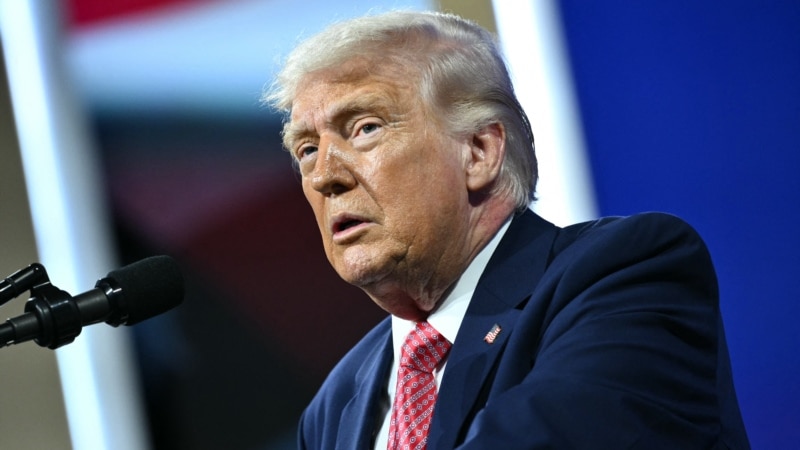
Trump Gives Tehran 48 Hours To Make Deal, Open Strait Or Face 'Hell'
#Trump #Tehran #ultimatum #Strait of Hormuz #Iran #U.S. foreign policy #oil shipments
📌 Key Takeaways
- President Trump issued a 48-hour ultimatum to Tehran to negotiate a deal and reopen the Strait of Hormuz.
- Failure to comply would result in severe consequences, described as facing 'hell'.
- The demand highlights escalating tensions between the U.S. and Iran over maritime security.
- The ultimatum underscores the strategic importance of the Strait of Hormuz for global oil shipments.
📖 Full Retelling
🏷️ Themes
Geopolitical Tensions, Maritime Security
📚 Related People & Topics

Iran
Country in West Asia
# Iran **Iran**, officially the **Islamic Republic of Iran** and historically known as **Persia**, is a sovereign country situated in West Asia. It is a major regional power, ranking as the 17th-largest country in the world by both land area and population. Combining a rich historical legacy with a...

Tehran
Capital and largest city of Iran
Tehran is the capital and largest city of Iran. It is also the capital of Tehran province and the administrative center for Tehran County and its Central District. With a population of around 9 million in the city, and 16.8 million in the metropolitan area, Tehran is the most populous city in Iran a...

Strait of Hormuz
Strait between the Gulf of Oman and the Persian Gulf
The Strait of Hormuz ( Persian: تنگهٔ هُرمُز Tangeh-ye Hormoz , Arabic: مَضيق هُرمُز Maḍīq Hurmuz) is a strait between the Persian Gulf and the Gulf of Oman. It provides the only sea passage from the Persian Gulf to the open ocean and is one of the world's most strategically important choke points. ...

Donald Trump
President of the United States (2017–2021; since 2025)
Donald John Trump (born June 14, 1946) is an American politician, media personality, and businessman who is the 47th president of the United States. A member of the Republican Party, he served as the 45th president from 2017 to 2021. Born into a wealthy New York City family, Trump graduated from the...
Entity Intersection Graph
Connections for Iran:
Mentioned Entities
Deep Analysis
Why It Matters
This development matters because it represents a significant escalation in U.S.-Iran tensions that could trigger regional conflict and disrupt global energy supplies. The 48-hour ultimatum creates immediate pressure on Tehran while putting U.S. credibility on the line. This affects global oil markets, shipping companies, regional allies like Saudi Arabia and Israel, and potentially draws other powers like China and Russia into the confrontation. The Strait of Hormuz's closure would impact 20% of global oil trade, making this a critical economic security issue worldwide.
Context & Background
- The Strait of Hormuz is the world's most important oil transit chokepoint, with approximately 21 million barrels of oil passing through daily
- U.S.-Iran tensions have been high since Trump withdrew from the 2015 nuclear deal (JCPOA) in 2018 and reimposed sanctions
- Iran has previously threatened to close the Strait in response to U.S. sanctions and military pressure
- The U.S. maintains significant naval presence in the Persian Gulf, including the Fifth Fleet based in Bahrain
- Recent months have seen tanker seizures, drone incidents, and proxy attacks escalating tensions between the two nations
What Happens Next
Within 48 hours, Iran will likely respond either with defiance (testing U.S. resolve) or tactical compliance while seeking diplomatic off-ramps. Regional allies will increase military readiness, and oil prices will experience volatility. If Iran doesn't comply, the U.S. may initiate naval operations to secure the Strait, potentially leading to military confrontation. International diplomatic efforts will intensify, with European, Chinese, and Russian mediators attempting to de-escalate the situation.
Frequently Asked Questions
The Strait is a narrow waterway between Oman and Iran through which about 20% of the world's oil passes daily. It's the only sea route from the Persian Gulf to open oceans, making it essential for global energy security. Any disruption here immediately impacts oil prices worldwide.
This likely means Iran must cease any military exercises threatening shipping lanes, withdraw naval assets from choke points, and guarantee safe passage for commercial vessels. It may also involve releasing any seized tankers and committing to not interfere with maritime traffic.
Iran could test U.S. resolve with limited provocations while seeking diplomatic solutions through intermediaries. Alternatively, they might partially comply while escalating elsewhere through proxies. Direct military confrontation remains possible but costly for both sides.
Oil prices would spike immediately, potentially reaching $100+ per barrel, triggering inflation worldwide. Shipping insurance costs would skyrocket, and alternative routes would add significant transportation expenses. Global stock markets would react negatively to the uncertainty.
Regional allies like Saudi Arabia and UAE will support U.S. actions but fear being drawn into direct conflict. European allies may urge restraint while increasing their naval presence. Israel will support strong action against Iran but worry about Hezbollah retaliation.