
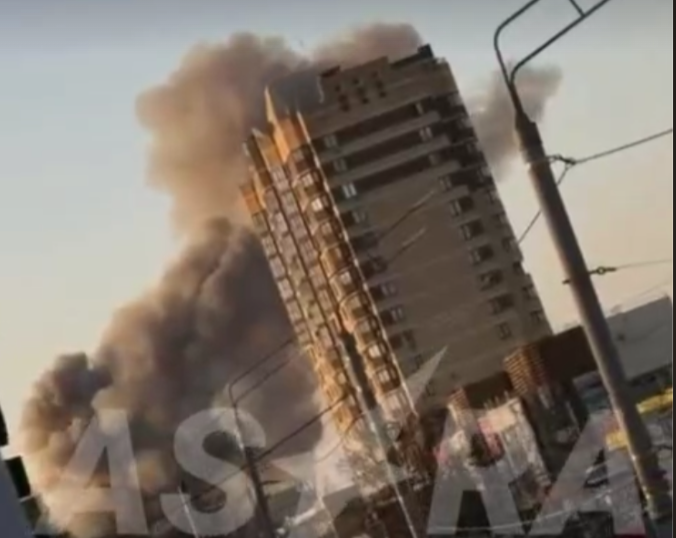
Ukraine strikes missile control systems plant in Russia's Bryansk Oblast, Zelensky says
#Ukraine #Russia #Bryansk Oblast #missile control systems #Zelensky #plant strike #military attack
📌 Key Takeaways
- Ukraine conducted a strike on a missile control systems plant in Russia's Bryansk Oblast
- President Zelensky confirmed Ukraine's responsibility for the attack
- The target was specifically a facility involved in missile control systems production
- The strike represents continued Ukrainian military operations on Russian territory
📖 Full Retelling
🏷️ Themes
Military conflict, Cross-border strikes
📚 Related People & Topics

Bryansk Oblast
First-level administrative division of Russia
Bryansk Oblast (Russian: Бря́нская о́бласть, romanized: Bryanskaya oblastʹ), also known as Bryanshchina (Брянщина, IPA: [ˈbrʲænʲɕːɪnə]), is a federal subject of Russia (an oblast). Its administrative center is the city of Bryansk. As of the 2021 Census, its population was 1,169,161.
Entity Intersection Graph
No entity connections available yet for this article.
Mentioned Entities
Deep Analysis
Why It Matters
This strike represents a significant escalation in Ukraine's military strategy, demonstrating their capability to target critical Russian defense infrastructure deep within Russian territory. It directly impacts Russia's ability to produce and maintain missile guidance systems, potentially degrading their long-range strike capabilities against Ukrainian cities and military targets. The attack affects both military planners in Moscow and Ukrainian civilians who face daily missile threats, while also signaling to Western allies that Ukraine can effectively disrupt Russian war production.
Context & Background
- Bryansk Oblast borders northeastern Ukraine and has been used as a staging ground for Russian forces since the invasion began in February 2022
- Ukraine has gradually expanded its long-range strike capabilities with Western-supplied weapons and domestically developed drones
- Previous Ukrainian strikes inside Russia have primarily targeted military bases, fuel depots, and airfields rather than specialized defense manufacturing facilities
- Russia has relocated some defense production deeper into its territory following earlier Ukrainian strikes on border regions
- Missile control systems are critical components for precision-guided weapons Russia uses in its daily attacks on Ukrainian infrastructure
What Happens Next
Russia will likely increase air defenses around critical defense industrial facilities in border regions and may relocate more production further east. Ukraine will probably continue targeting Russian military production capabilities, possibly expanding to other types of defense plants. The incident may prompt renewed debate among Western allies about restrictions on using supplied weapons to strike Russian territory. Russia may retaliate with intensified missile attacks on Ukrainian energy infrastructure in coming days.
Frequently Asked Questions
Bryansk borders Ukraine's Chernihiv and Sumy regions and has served as a key logistics hub for Russian forces. Its proximity to Ukraine makes it vulnerable to strikes while still housing important military infrastructure that supports operations in Ukraine.
The plant likely produces guidance and control systems for various Russian missiles including Iskander ballistic missiles, Kalibr cruise missiles, and potentially components for Kinzhal hypersonic weapons. These systems are essential for target acquisition and precision strikes.
Ukraine likely used long-range drones or possibly adapted Soviet-era weapons with extended range. Recent Western intelligence sharing and technological adaptations have enhanced Ukraine's ability to identify and strike high-value targets inside Russia.
Yes, damaging production facilities will strain Russia's ability to replenish precision-guided munitions. Russia has already been experiencing shortages of advanced components due to sanctions, and this strike further pressures their military-industrial capacity.
Unlikely, as NATO maintains its position of not directly engaging Russian forces. However, it may influence discussions about providing Ukraine with longer-range weapons systems that could reach deeper into Russian territory.