
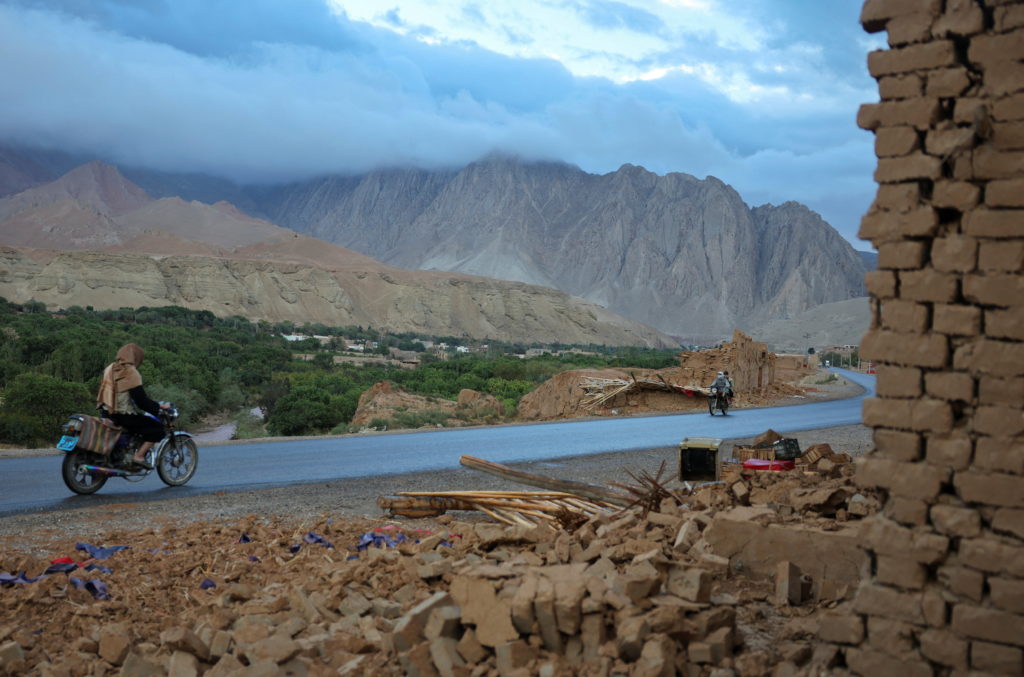
5.8 magnitude earthquake hits Afghanistan and Pakistan, killing 8 on outskirts of Kabul
#earthquake #Afghanistan #Pakistan #Kabul #magnitude #deaths #tremor
📌 Key Takeaways
- A 5.8 magnitude earthquake struck Afghanistan and Pakistan.
- The earthquake resulted in at least 8 fatalities.
- The deaths occurred on the outskirts of Kabul, Afghanistan.
- The quake's impact was felt across both countries.
📖 Full Retelling
🏷️ Themes
Natural Disaster, Casualties
📚 Related People & Topics

Kabul
Capital and the largest city of Afghanistan
Kabul is the capital and largest city of Afghanistan. It is within the jurisdiction of Kabul District and has an estimated population of 5,333,284 people. Located in the eastern half of the country, forming part of the Kabul Province, the city is administratively divided into five zones and 22 munic...

Pakistan
Country in South Asia
Pakistan, officially the Islamic Republic of Pakistan, is a country in South Asia. It is the fifth-most populous country, with a population of over 241.5 million, having the second-largest Muslim population as of 2023. Islamabad is the nation's capital, while Karachi is its largest city and financia...

Afghanistan
Country in Central and South Asia
Afghanistan, officially the Islamic Emirate of Afghanistan, is a landlocked country located at the crossroads of Central and South Asia. It is bordered by Pakistan to the east and south, Iran to the west, Turkmenistan to the northwest, Uzbekistan to the north, Tajikistan to the northeast, and China ...
Entity Intersection Graph
Connections for Kabul:
View full profileMentioned Entities
Deep Analysis
Why It Matters
This earthquake matters because it has caused immediate loss of life and likely significant damage in a region already grappling with humanitarian crises and political instability. It affects vulnerable populations in Afghanistan, where infrastructure is weak and emergency response capabilities are limited following the Taliban takeover. The disaster also impacts neighboring Pakistan, potentially straining cross-border resources and highlighting regional seismic risks in the Hindu Kush mountain range.
Context & Background
- Afghanistan and Pakistan are located in a seismically active zone where the Indian tectonic plate collides with the Eurasian plate, making earthquakes common
- The region has experienced devastating earthquakes before, including a 2005 quake in Pakistan-administered Kashmir that killed approximately 75,000 people
- Afghanistan's emergency response capacity has been severely weakened since the Taliban regained power in 2021, with many international aid organizations reducing operations
- The Hindu Kush region experiences frequent seismic activity, with dozens of smaller quakes occurring annually in the area
What Happens Next
Search and rescue operations will continue in affected areas over the next 48-72 hours, with international aid organizations likely mobilizing assistance. Damage assessments will determine the full extent of destruction, particularly in remote villages. The Afghan Taliban government may request international humanitarian aid despite political tensions, while Pakistan's National Disaster Management Authority will coordinate response in affected border regions.
Frequently Asked Questions
Earthquakes are particularly deadly in Afghanistan due to poor construction standards, mountainous terrain that makes rescue difficult, and limited emergency response infrastructure. Many buildings are made of unreinforced masonry that collapses easily during seismic events.
At magnitude 5.8, this is a moderate earthquake compared to historical events in the region. The 2005 Kashmir earthquake measured 7.6 and caused far greater destruction, but even moderate quakes can be devastating in areas with vulnerable infrastructure.
Rescue teams will face challenges including damaged roads in mountainous terrain, potential aftershocks, limited medical facilities, and political complications in Afghanistan where international organizations have reduced presence since the Taliban takeover.
Yes, aftershocks are likely in the coming days and weeks. The region remains seismically active, and this earthquake may have altered stress patterns along fault lines, potentially triggering additional seismic events.
This disaster may temporarily shift humanitarian priorities toward emergency response, potentially diverting resources from ongoing food security and healthcare programs. It could also create opportunities for increased international engagement despite political tensions.