
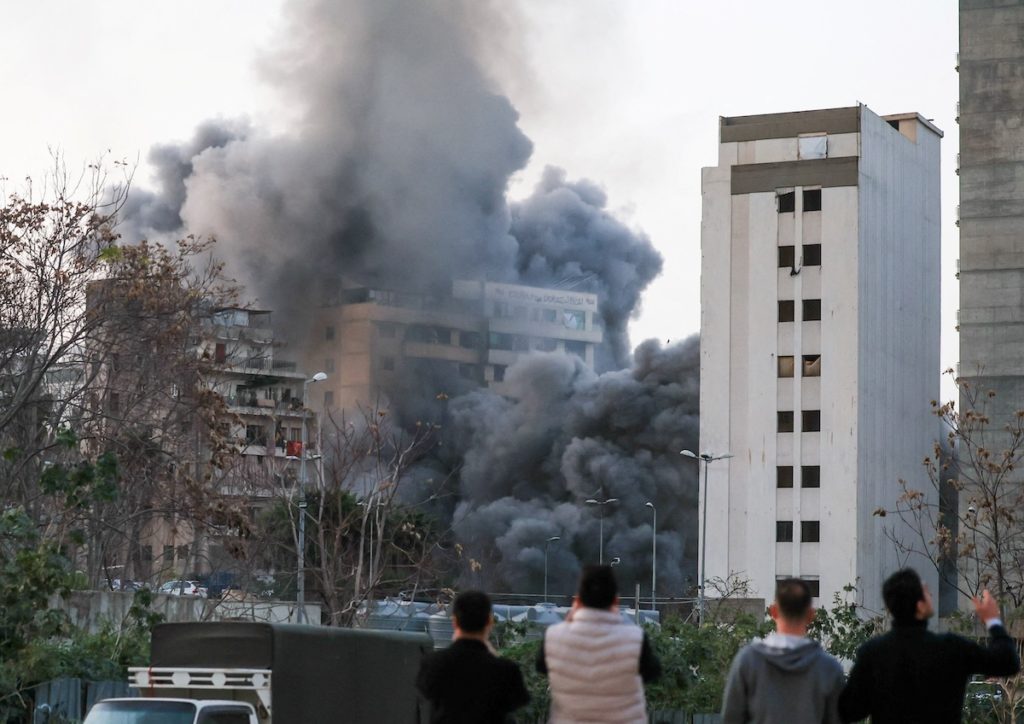
Christian villages in Lebanon suffer as Israel targets Hezbollah
#Lebanon #Christian villages #Israel #Hezbollah #collateral damage #military operations #civilian suffering #geopolitical tension
📌 Key Takeaways
- Christian villages in Lebanon are experiencing significant collateral damage as Israel conducts military operations against Hezbollah.
- The conflict highlights the impact on civilian populations caught in crossfire between Israeli forces and Hezbollah militants.
- Local Christian communities face destruction of property, displacement, and disruption of daily life due to the ongoing hostilities.
- The situation underscores the broader humanitarian and geopolitical tensions in the region involving Lebanon, Israel, and non-state actors.
📖 Full Retelling
🏷️ Themes
Conflict Impact, Humanitarian Crisis
📚 Related People & Topics
Hezbollah
Islamist movement and militant group based in Lebanon
Hezbollah is a Shia Islamist Lebanese political party and paramilitary group. Hezbollah's paramilitary wing is the Jihad Council, and its political wing is the Loyalty to the Resistance Bloc party in the Lebanese Parliament. Its armed strength was assessed to be equivalent to that of a medium-sized ...

Lebanon
Country in West Asia
Lebanon, officially the Lebanese Republic, is a country in the Levant region of West Asia. Situated at the crossroads of the Mediterranean Basin and the Arabian Peninsula, it is bordered by Syria to the north and east, Israel to the south, and the Mediterranean Sea to the west; Cyprus lies a short d...

Israel
Country in West Asia
Israel, officially the State of Israel, is a country in the Southern Levant region of West Asia. It is bordered by Lebanon to the north, Syria to the northeast, Jordan to the east, and Egypt to the southwest. Israel occupies the West Bank and the Gaza Strip of the Palestinian territories, as well as...
Entity Intersection Graph
Connections for Hezbollah:
View full profileMentioned Entities
Deep Analysis
Why It Matters
This news matters because it highlights the expanding humanitarian crisis in Lebanon's Christian communities, who are caught in the crossfire between Israel and Hezbollah. It affects thousands of civilians who face displacement, property damage, and threats to their safety despite not being direct participants in the conflict. The situation risks deepening sectarian tensions in Lebanon and could influence regional Christian diaspora communities. International observers are concerned about potential violations of international humanitarian law regarding the protection of civilians.
Context & Background
- Lebanon has a significant Christian population (approximately 30-40%) with historical political influence through the National Pact power-sharing system
- Hezbollah, a Shiite militant group and political party, has maintained a strong military presence in southern Lebanon since the 1980s
- Israel and Hezbollah have engaged in periodic conflicts since the 2006 Lebanon War, with recent escalations following the October 2023 Hamas attacks
- Christian communities in southern Lebanon have historically tried to maintain neutrality in Hezbollah-Israel conflicts
- Lebanon is experiencing one of the worst economic crises in modern history, with over 80% of the population living in poverty
What Happens Next
Increased international diplomatic pressure is likely, particularly from Western nations and the Vatican, calling for protection of religious minorities. The Lebanese government may face demands to better secure civilian areas, though its limited capacity makes this challenging. Continued Israeli operations could lead to further displacement of Christian communities northward. The situation may influence upcoming parliamentary discussions about Hezbollah's military role in southern Lebanon.
Frequently Asked Questions
Israel claims it is targeting Hezbollah military infrastructure and operatives that are embedded in or near civilian areas, including Christian villages. The Israeli military states it follows international law and takes precautions to avoid civilian casualties, though collateral damage occurs when Hezbollah positions itself in populated regions.
Many Christian villagers are fleeing to safer areas in northern Lebanon or staying with relatives in Beirut. Community leaders are appealing to both the Lebanese government and international organizations for protection and humanitarian assistance. Some are calling for Hezbollah to avoid positioning military assets near their villages.
Hezbollah maintains both political and military presence throughout southern Lebanon, including areas with Christian populations. While Christians generally don't support Hezbollah's ideology, the group provides social services and security in some regions where the state is weak, creating complex local dynamics.
The targeting of Christian villages threatens to upset Lebanon's delicate sectarian balance by alienating Christian communities from the government's security approach. This could weaken the position of Christian political parties and potentially lead to increased calls for international intervention to protect minority groups.
The Vatican and several Western governments have expressed concern about the protection of Christian communities. UN agencies are monitoring displacement and humanitarian needs. Human rights organizations are documenting potential violations of international humanitarian law regarding distinction between military targets and civilian objects.