
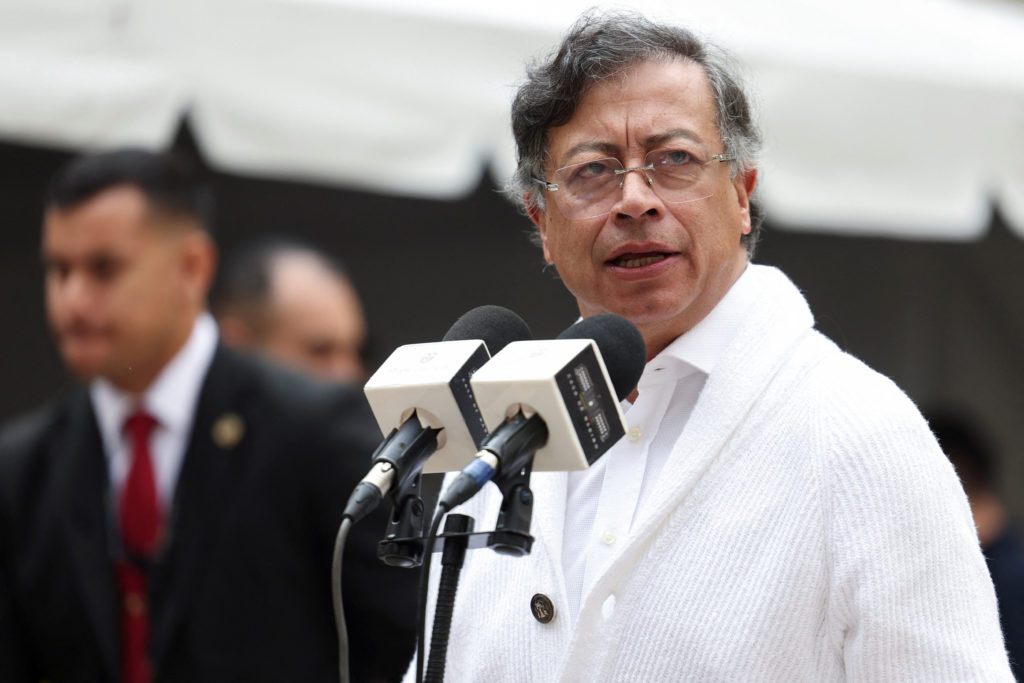
DEA names Colombian President Petro 'priority target' amid U.S. probe of drug trafficker ties
#DEA #Colombia #Gustavo Petro #drug trafficking #investigation #priority target #U.S. probe
📌 Key Takeaways
- The DEA has designated Colombian President Gustavo Petro as a 'priority target' in an investigation.
- The U.S. probe is examining alleged ties between Petro and drug traffickers.
- This designation signifies a high level of investigative focus by U.S. authorities.
- The allegations could strain diplomatic relations between Colombia and the United States.
📖 Full Retelling
🏷️ Themes
International Relations, Drug Trafficking, Political Scandal
📚 Related People & Topics

Colombia
Country in South America
Colombia, officially the Republic of Colombia, is a country primarily located in South America with insular regions in North America. The Colombian mainland is bordered by the Caribbean Sea to the north, Venezuela to the east and northeast, Brazil to the southeast, Peru and Ecuador to the south and ...

Drug Enforcement Administration
United States federal law enforcement agency
The Drug Enforcement Administration (DEA) is a United States federal law enforcement agency under the U.S. Department of Justice tasked with combating illicit drug trafficking and distribution within the U.S. It is the lead agency for domestic enforcement of the Controlled Substances Act, sharing co...

Gustavo Petro
President of Colombia since 2022
Gustavo Francisco Petro Urrego (born 19 April 1960) is a Colombian politician, former guerrilla leader, and economist who has served as the 35th president of Colombia since 2022. Upon inauguration, he became the first left-wing president in the recent history of Colombia. At 17 years old, Petro joi...
Entity Intersection Graph
Connections for Colombia:
Mentioned Entities
Deep Analysis
Why It Matters
This development matters because it represents an unprecedented escalation in U.S.-Colombian relations, potentially destabilizing a key regional ally in the war on drugs. It directly affects President Petro's ability to govern and implement his progressive agenda, while also impacting Colombia's international standing and access to U.S. aid. The situation could undermine decades of counter-narcotics cooperation between the two nations and create diplomatic tensions across Latin America.
Context & Background
- Colombia has been the United States' closest regional partner in the war on drugs for decades, receiving billions in military and development aid through Plan Colombia
- President Gustavo Petro, elected in 2022, is Colombia's first leftist president and has advocated for shifting from militarized drug policies to social approaches
- The DEA has historically focused investigations on drug cartel leaders and traffickers rather than sitting heads of state of allied nations
- Previous Colombian presidents have faced allegations of paramilitary or drug trafficking connections, but none were formally designated as DEA 'priority targets' while in office
- U.S.-Colombian relations have been strained under Petro due to his criticism of U.S. drug policies and his pursuit of peace talks with armed groups
What Happens Next
The U.S. State Department will likely face pressure to clarify its position on the DEA's designation, possibly within weeks. Colombia may formally protest through diplomatic channels, potentially leading to bilateral meetings. Congressional hearings in both countries could examine the evidence behind the designation. The situation may affect upcoming votes on U.S. aid packages to Colombia, with some lawmakers calling for suspension pending investigation outcomes.
Frequently Asked Questions
A 'priority target' designation indicates the DEA considers the individual a high-value subject for investigation, potentially involving surveillance, intelligence gathering, and coordination with other agencies. For a sitting head of state, this represents an extraordinary escalation that typically only occurs with leaders of hostile nations or those already facing international sanctions.
This could severely damage joint operations, intelligence sharing, and extraditions that have been cornerstones of anti-drug efforts. Colombian security forces may become reluctant to collaborate with DEA agents, while U.S. officials might restrict sensitive information sharing. Existing programs like aerial eradication and maritime interdiction could face immediate operational challenges.
The DEA would typically require substantial, credible evidence of direct involvement with drug trafficking organizations, such as communications intercepts, financial transactions, or witness testimony. Given Petro's position, the threshold would be exceptionally high, likely involving multiple corroborating sources that suggest personal knowledge or benefit from trafficking activities.
Previous allegations against politicians like former President Álvaro Uribe involved paramilitary ties rather than direct drug trafficking, and investigations occurred after leaving office. The DEA's public designation of a sitting president as a 'priority target' represents an unprecedented formalization of suspicion at the highest level of U.S. law enforcement during their term.
Domestically, this could trigger impeachment proceedings, weaken his political coalition, and embolden opposition parties. It may also affect his ability to implement peace negotiations with armed groups and economic reforms. However, it could also rally his base who might view the designation as political interference from the United States.
No sitting Latin American president of a U.S. ally has been publicly named a DEA 'priority target' while in office. Some leaders like Panama's Manuel Noriega were investigated, but that occurred after relations had completely broken down, and he was already indicted on drug charges before the U.S. invasion removed him from power.