
Denmark’s PM Frederiksen suffers election setback after standing up to Trump over Greenland
#Denmark #Mette Frederiksen #election setback #Donald Trump #Greenland #Arctic sovereignty #US-Denmark relations
📌 Key Takeaways
- Danish PM Mette Frederiksen's party lost seats in the recent election.
- The setback is linked to her firm stance against former US President Trump's interest in purchasing Greenland.
- Frederiksen's government remains in power but with a weakened parliamentary position.
- The incident highlights tensions in US-Denmark relations over Arctic sovereignty.
📖 Full Retelling
🏷️ Themes
Political fallout, International relations
📚 Related People & Topics

Denmark
Country in Northern Europe
Denmark is a Nordic country in Northern Europe. It is the metropole and most populous constituent of the Kingdom of Denmark, also known as the Danish Realm, a constitutionally unitary state that includes the autonomous territories of the Faroe Islands and Greenland in the north Atlantic Ocean. Metro...

Mette Frederiksen
Prime Minister of Denmark since 2019
Mette Frederiksen (Danish: [ˈmetə ˈfʁeðˀəʁeksn̩] ; born 19 November 1977) is a Danish politician who has served as the Prime Minister of Denmark since 2019 and the Leader of the Social Democrats since 2015. She is the second woman to hold either office and is also the youngest prime minister in Dan...

Greenland
Autonomous territory of Denmark
Greenland is an autonomous territory of the Kingdom of Denmark and is the largest of the kingdom's three constituent parts by land area, the others being Denmark proper and the Faroe Islands. Citizens of Greenland are citizens of Denmark. They are thus citizens of the European Union (EU), although G...

Donald Trump
President of the United States (2017–2021; since 2025)
Donald John Trump (born June 14, 1946) is an American politician, media personality, and businessman who is the 47th president of the United States. A member of the Republican Party, he served as the 45th president from 2017 to 2021. Born into a wealthy New York City family, Trump graduated from the...
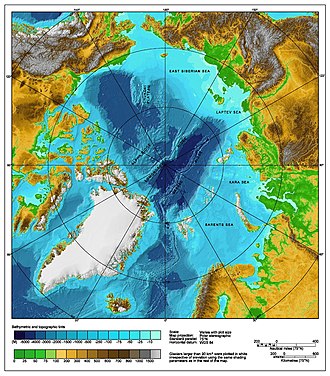
Territorial claims in the Arctic
The Arctic consists of land, internal waters, territorial seas, exclusive economic zones (EEZs) and international waters above the Arctic Circle (66 degrees 33 minutes North latitude). All land, internal waters, territorial seas and EEZs in the Arctic are under the jurisdiction of one of the eight A...
Entity Intersection Graph
Connections for Denmark:
Mentioned Entities
Deep Analysis
Why It Matters
This news is important because it highlights the political consequences for leaders who challenge major international powers, specifically the U.S., on issues of national sovereignty. It affects Danish domestic politics, potentially weakening Prime Minister Mette Frederiksen's government and influencing future foreign policy decisions. The setback could also signal to other European leaders the risks of confronting U.S. interests, impacting transatlantic relations and Greenland's strategic significance in Arctic geopolitics.
Context & Background
- In 2019, then-U.S. President Donald Trump publicly expressed interest in purchasing Greenland from Denmark, calling it a 'large real estate deal'.
- Prime Minister Mette Frederiksen firmly rejected the proposal, stating Greenland was not for sale and that the idea was 'absurd', straining U.S.-Denmark relations.
- Greenland is an autonomous territory within the Kingdom of Denmark, with Denmark handling its defense and foreign affairs, while Greenland has self-rule over domestic matters.
- The Arctic region, where Greenland is located, has gained geopolitical importance due to climate change opening new shipping routes and access to natural resources.
- Frederiksen leads a Social Democratic minority government in Denmark, which has relied on support from other left-leaning parties to pass legislation.
What Happens Next
Frederiksen may face increased pressure from opposition parties, potentially leading to government instability or early elections if support erodes further. Denmark's foreign policy stance toward the U.S. and Arctic issues could be reassessed, with possible diplomatic efforts to mend relations. The situation may also influence Greenland's push for greater independence, as local parties could leverage the incident to advance self-determination goals.
Frequently Asked Questions
Trump was interested in Greenland for its strategic location in the Arctic, which offers military advantages and access to untapped natural resources like minerals and fossil fuels. The U.S. already operates Thule Air Base there, and control would enhance American influence in the region amid growing competition with Russia and China.
While the article does not specify details, an election setback typically refers to poor results in a local or national vote, such as losing seats or support in parliament. This could weaken her government's ability to pass laws and may reflect voter disapproval of her handling of the Greenland issue or other policies.
This incident reinforces Greenland's desire for greater autonomy or independence from Denmark, as it highlights external interests in its territory. It may lead to increased political discussions in Greenland about self-governance, with local leaders seeking more control over foreign affairs and resource management to prevent similar proposals in the future.
Relations may remain strained, especially if the U.S. continues to view Greenland as a strategic asset. However, both countries are NATO allies, so they will likely work to maintain cooperation on security issues, with Denmark possibly adopting a more cautious approach in future dealings with the U.S. to avoid further domestic backlash.
Yes, other European nations with Arctic interests or close ties to the U.S. might take note, becoming more wary of confronting American demands to avoid political fallout. It could also encourage collective EU or NATO discussions on Arctic policy to present a united front against external pressures on sovereignty matters.