
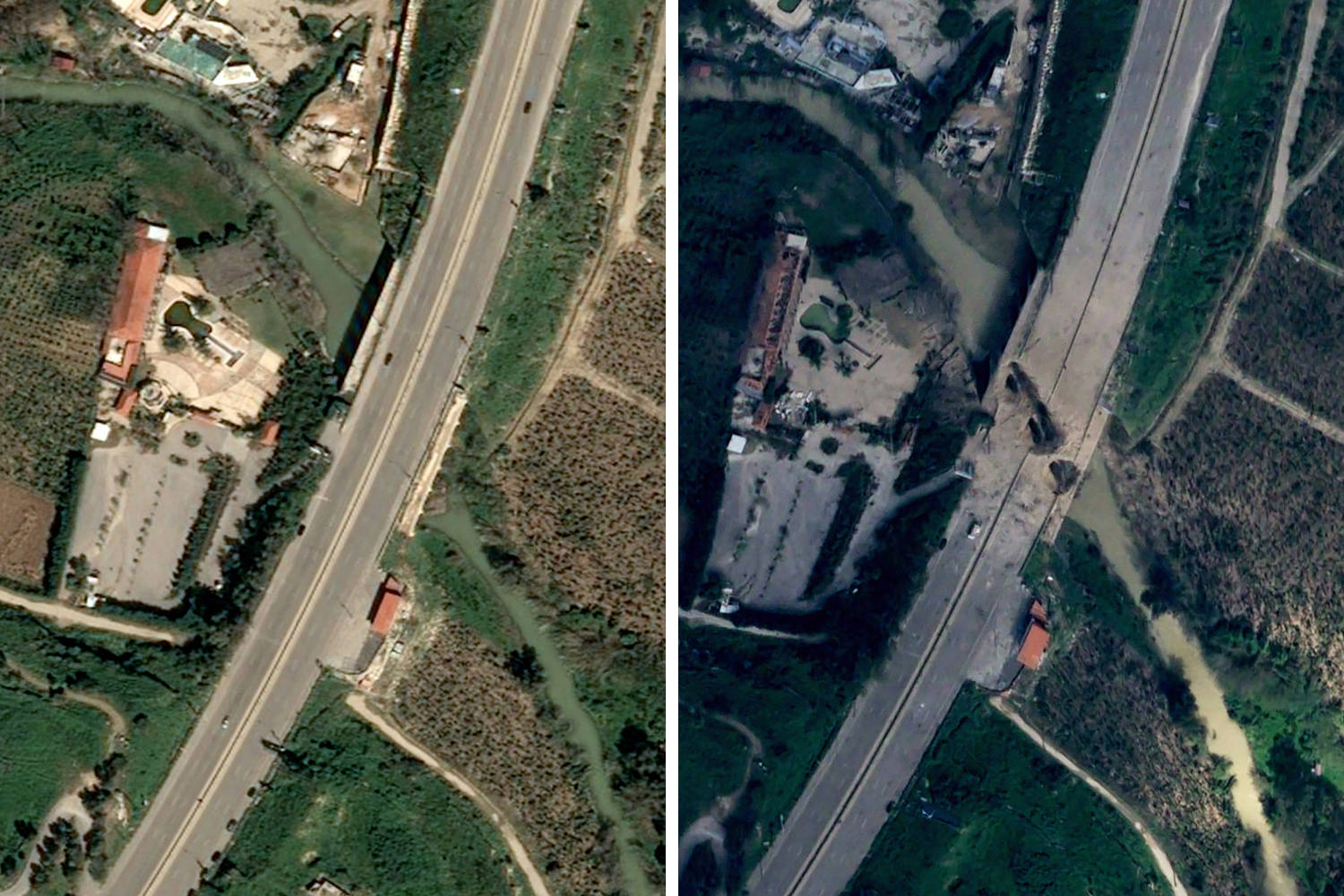
Fears Israel could replicate its 'Gaza model' in Lebanon as satellite imagery captures destruction
#Israel #Lebanon #Gaza model #satellite imagery #destruction #military tactics #regional tensions
📌 Key Takeaways
- Satellite imagery shows significant destruction in Lebanon, raising concerns about potential Israeli military actions.
- Analysts and officials fear Israel may apply tactics similar to those used in Gaza to Lebanon.
- The situation highlights escalating tensions and the risk of broader regional conflict.
- The 'Gaza model' refers to intensive military operations causing widespread damage and civilian impact.
🏷️ Themes
Regional Conflict, Military Strategy
📚 Related People & Topics

Lebanon
Country in West Asia
Lebanon, officially the Lebanese Republic, is a country in the Levant region of West Asia. Situated at the crossroads of the Mediterranean Basin and the Arabian Peninsula, it is bordered by Syria to the north and east, Israel to the south, and the Mediterranean Sea to the west; Cyprus lies a short d...

Israel
Country in West Asia
Israel, officially the State of Israel, is a country in the Southern Levant region of West Asia. It is bordered by Lebanon to the north, Syria to the northeast, Jordan to the east, and Egypt to the southwest. Israel occupies the West Bank and the Gaza Strip of the Palestinian territories, as well as...
Entity Intersection Graph
Connections for Lebanon:
View full profileMentioned Entities
Deep Analysis
Why It Matters
This news matters because it signals potential escalation of the Israel-Lebanon conflict into a full-scale military operation similar to Gaza, which could destabilize the entire Middle East region. It affects Lebanese civilians facing displacement, Israeli communities near the northern border, and regional powers like Iran and Hezbollah. The destruction captured by satellite imagery provides concrete evidence of military buildup and raises humanitarian concerns about civilian infrastructure damage. International diplomatic efforts to prevent wider war are also impacted by these developments.
Context & Background
- Israel and Hezbollah have engaged in cross-border skirmishes since October 2023 following Hamas's attack on Israel
- Hezbollah is an Iran-backed militant group and political party that controls southern Lebanon and has an estimated arsenal of 150,000 rockets
- The 2006 Israel-Lebanon War resulted in approximately 1,200 Lebanese and 165 Israeli deaths and caused massive infrastructure damage in Lebanon
- Israel's military operation in Gaza since October 2023 has resulted in over 38,000 Palestinian deaths according to Gaza health authorities
- UN Security Council Resolution 1701 (2006) called for disarmament of armed groups in Lebanon and deployment of Lebanese army to the southern border
What Happens Next
Increased diplomatic pressure from the US and European allies to prevent escalation, possible limited Israeli ground incursions into southern Lebanon if cross-border attacks continue, potential emergency UN Security Council meetings in July 2024, and possible mobilization of Lebanese army forces to border areas. Hezbollah may increase rocket attacks if Israel expands operations, risking regional proxy war expansion involving Iran.
Frequently Asked Questions
The 'Gaza model' refers to Israel's intensive military campaign involving aerial bombardment, ground invasions, and urban warfare tactics used against Hamas since October 2023. This approach emphasizes overwhelming force against militant infrastructure but has resulted in significant civilian casualties and destruction in densely populated areas.
Hezbollah possesses an estimated 150,000 rockets and missiles that can reach most of Israel, including precision-guided munitions. The group has gained combat experience fighting in Syria and represents Iran's most capable proxy force, creating a northern front that could overwhelm Israel's missile defense systems if fully engaged.
Commercial satellite imagery from companies like Maxar and Planet Labs provides objective, verifiable evidence of destruction patterns, military movements, and infrastructure damage. This data is crucial for humanitarian organizations tracking displacement and for journalists verifying claims when ground access is restricted due to security concerns.
The US serves as Israel's primary military ally and diplomatic supporter while also attempting to prevent regional escalation. American officials are engaged in shuttle diplomacy between Israeli and Lebanese authorities, warning against full-scale war while continuing to supply Israel with military equipment.
Lebanon presents more challenging terrain with mountainous regions and a better-armed adversary in Hezbollah. The conflict would likely involve more sophisticated weaponry on both sides, potentially drawing in Iranian forces directly, and could trigger mass refugee flows into Syria and Europe given Lebanon's economic collapse.
Lebanon's already collapsed economy and refugee-hosting crisis would worsen dramatically, with potential for hundreds of thousands of new displacements. Critical infrastructure like Beirut's airport and port could be targeted, disrupting food and medical supplies for the entire country including Syrian and Palestinian refugee populations.