
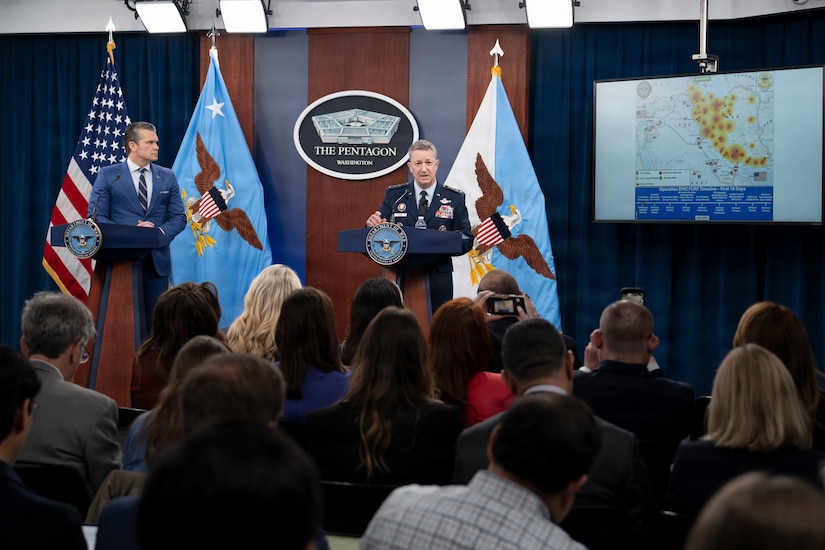
Hegseth Says U.S. Attacks Intensify Under Epic Fury, While Iranian Responses Slow
#Hegseth #U.S. attacks #Operation Epic Fury #Iran #military escalation #regional conflict #geopolitics
📌 Key Takeaways
- Hegseth reports U.S. attacks are intensifying under Operation Epic Fury.
- Iranian responses to these attacks are described as slowing down.
- The situation highlights escalating military tensions between the U.S. and Iran.
- The dynamic suggests a shift in the pace and nature of regional conflict.
📖 Full Retelling
🏷️ Themes
Military Conflict, Geopolitical Tensions
📚 Related People & Topics
2026 Israeli–United States strikes on Iran
Ongoing military operation
On 28 February 2026, Israel and the United States launched a joint attack on various targets in Iran. The operation, codenamed Roaring Lion (Hebrew: מִבְצַע שְׁאָגַת הָאֲרִי, romanized: mivtsá she'agát ha'arí) in Israel, Operation Epic Fury by the United States Department of Defense, began with a se...

Pete Hegseth
American government official and television personality (born 1980)
Peter Brian Hegseth (born June 6, 1980) is an American government official and former television personality who has served as the 29th United States secretary of defense since 2025. Hegseth studied politics at Princeton University, where he was the publisher of The Princeton Tory, a conservative st...

Iran
Country in West Asia
# Iran **Iran**, officially the **Islamic Republic of Iran** and historically known as **Persia**, is a sovereign country situated in West Asia. It is a major regional power, ranking as the 17th-largest country in the world by both land area and population. Combining a rich historical legacy with a...
Entity Intersection Graph
Connections for 2026 Israeli–United States strikes on Iran:
View full profileMentioned Entities
Deep Analysis
Why It Matters
This news matters because it highlights escalating military tensions between the U.S. and Iran, which could lead to broader regional conflict affecting global oil markets and international security. It impacts U.S. military personnel in the Middle East, Iranian-backed militia groups, and civilians in conflict zones. The intensification of attacks suggests deteriorating diplomatic relations and increased risk of miscalculation that could draw other regional powers into confrontation.
Context & Background
- U.S.-Iran tensions have been high since the 2018 U.S. withdrawal from the Iran nuclear deal (JCPOA)
- Iran supports proxy militias across the Middle East including in Iraq, Syria, Yemen and Lebanon
- Previous U.S. operations against Iranian targets include the 2020 drone strike that killed Iranian General Qasem Soleimani
- Iran has developed asymmetric warfare capabilities including drone and missile programs to counter U.S. military superiority
What Happens Next
Expect increased U.S. military deployments to the region and potential retaliatory strikes from Iranian proxies. Diplomatic efforts through intermediaries like Oman or Qatar may intensify to prevent full-scale conflict. The situation could escalate further if attacks target U.S. bases with significant casualties or if Iran directly engages U.S. naval assets in the Persian Gulf.
Frequently Asked Questions
Epic Fury appears to be a U.S. military operation or campaign name targeting Iranian-backed forces. Such names are typically assigned to coordinated military efforts against specific threats in conflict zones.
Iran may be calibrating its response to avoid direct confrontation while maintaining pressure through proxies. Slower responses could indicate internal debate about escalation risks or logistical challenges in coordinating proxy forces.
Increased tensions in the Middle East typically cause oil price volatility due to concerns about supply disruptions. Major shipping routes through the Strait of Hormuz could be threatened, affecting approximately 20% of global oil trade.
The primary risks include accidental escalation to direct U.S.-Iran conflict, increased attacks on commercial shipping, destabilization of regional governments, and potential disruption to global energy supplies that could trigger economic consequences worldwide.