
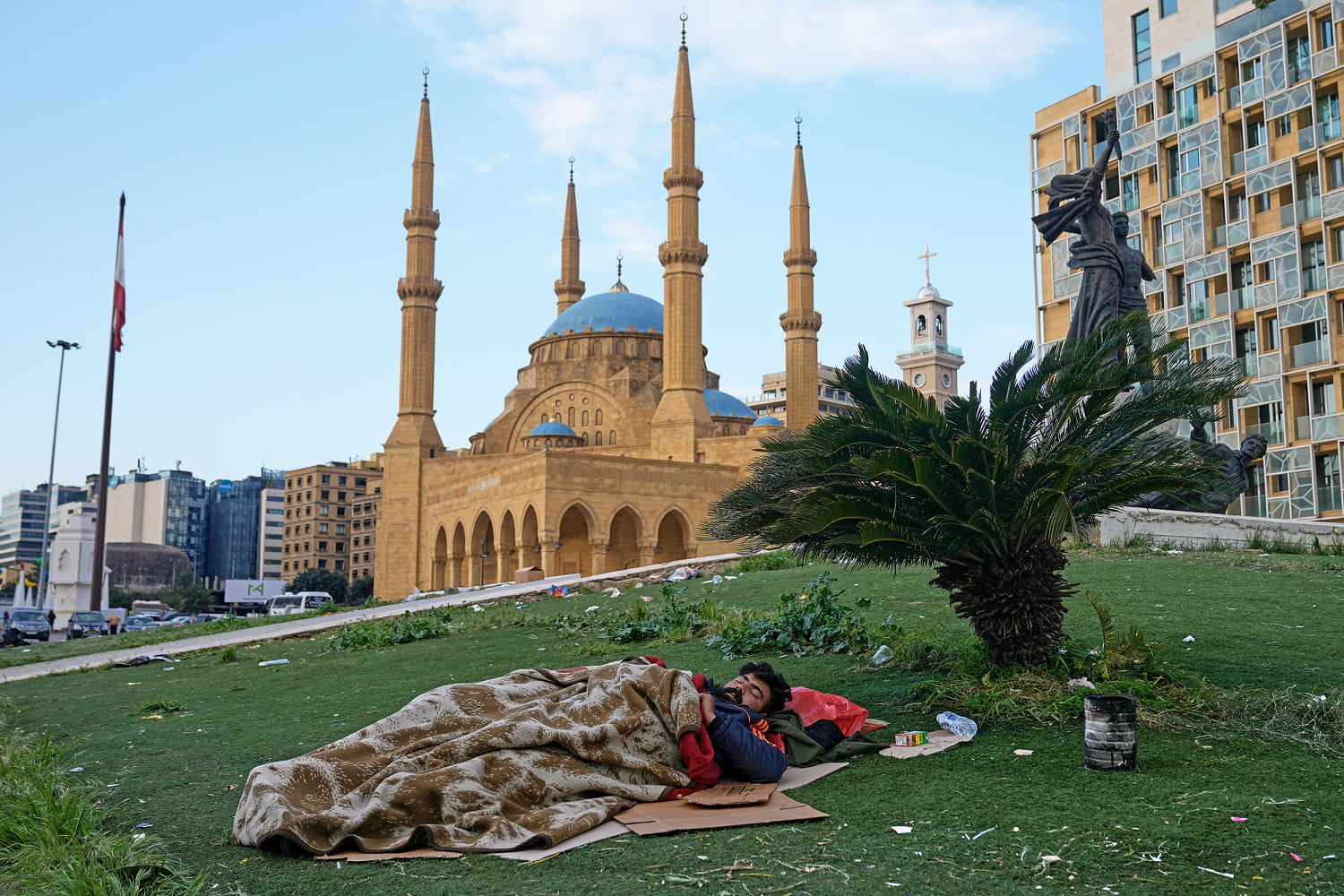
Humanitarian crisis looms in Lebanon where nearly 750,000 people have been displaced by war
#Lebanon #displaced #war #humanitarian crisis #refugees #aid #conflict #emergency
📌 Key Takeaways
- Nearly 750,000 people have been displaced by war in Lebanon.
- The displacement is creating a severe humanitarian crisis.
- The situation is escalating and poses immediate risks to the affected population.
- Urgent humanitarian aid and intervention are likely needed to address the crisis.
📖 Full Retelling
🏷️ Themes
Humanitarian Crisis, Displacement
📚 Related People & Topics

Lebanon
Country in West Asia
Lebanon, officially the Lebanese Republic, is a country in the Levant region of West Asia. Situated at the crossroads of the Mediterranean Basin and the Arabian Peninsula, it is bordered by Syria to the north and east, Israel to the south, and the Mediterranean Sea to the west; Cyprus lies a short d...
Entity Intersection Graph
Connections for Lebanon:
View full profileMentioned Entities
Deep Analysis
Why It Matters
This displacement crisis matters because it represents one of the largest forced migrations in Lebanon's recent history, threatening to overwhelm the country's already fragile infrastructure and social services. It affects not only the displaced families who have lost homes and livelihoods, but also host communities facing increased competition for resources and strained public services. The situation creates regional instability risks as Lebanon struggles with economic collapse and political paralysis, potentially triggering secondary migration flows to Europe and neighboring countries. Humanitarian organizations face immense challenges delivering aid amid security concerns and funding shortages.
Context & Background
- Lebanon has hosted Syrian refugees since 2011, with approximately 1.5 million registered refugees pre-crisis, making it the country with the highest per capita refugee population worldwide
- The country has been experiencing severe economic collapse since 2019, with currency losing over 95% of its value and more than 80% of the population living below the poverty line
- Lebanon's infrastructure, including electricity, water, and healthcare systems, was already critically strained before this displacement wave due to years of mismanagement and the 2020 Beirut port explosion
- The country has experienced periodic conflicts along its southern border with Israel, most recently in 2006, creating previous displacement patterns in southern regions
- Lebanon's political system operates on a delicate sectarian power-sharing arrangement that has been paralyzed since 2022 without a functioning president or fully empowered government
What Happens Next
International aid organizations will likely issue emergency appeals in the coming weeks as winter approaches, with donor conferences expected by early 2025. The Lebanese government may establish formal displacement camps despite historical resistance to permanent refugee settlements. Regional diplomatic efforts will intensify to contain the conflict and address root causes, with potential UN Security Council discussions scheduled for November. Humanitarian access negotiations will continue with various armed groups controlling affected areas.
Frequently Asked Questions
Lebanon is uniquely vulnerable due to its ongoing economic collapse, with bankrupt state institutions unable to provide basic services, and existing refugee populations already straining resources. The country's political paralysis prevents coordinated crisis response, while its small geographic size and population make absorption of large displacement waves particularly challenging.
Displaced populations are primarily moving to urban centers like Beirut, Tripoli, and Sidon, where they often crowd into existing refugee settlements or seek shelter with relatives. Some are occupying unfinished buildings, schools, and public spaces, while others are attempting to reach relatively safer rural areas in the north and Bekaa Valley.
Immediate needs include shelter, food, clean water, and medical care, with particular urgency for winterization assistance as temperatures drop. Psychological support is crucial for trauma victims, while protection services are needed for vulnerable groups including women, children, and the elderly facing exploitation risks in overcrowded conditions.
The displacement crisis exacerbates existing tensions between communities competing for dwindling resources, increasing risks of social unrest and sectarian violence. It further strains public services already near collapse, while creating security challenges as state authority weakens in areas with large displaced populations.
UN agencies and NGOs are scaling up operations despite funding shortages and access challenges, while diplomatic efforts focus on conflict de-escalation. Donor countries are providing emergency aid, though long-term solutions require political settlements to the underlying conflicts causing displacement.