
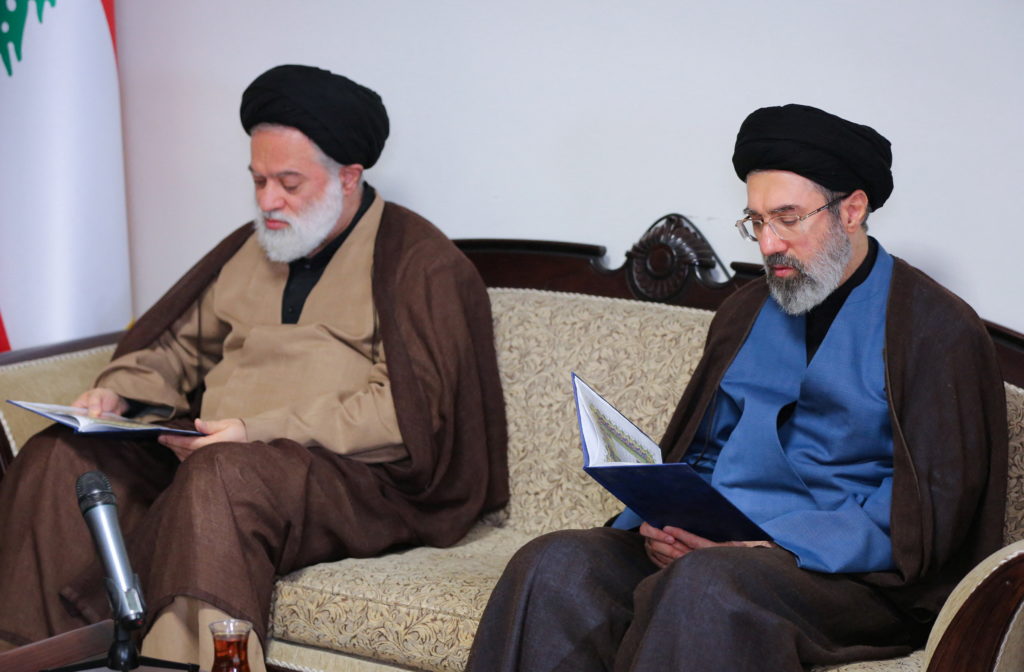
Iran names Mojtaba Khamenei successor to the late supreme leader
#Iran #Mojtaba Khamenei #Supreme Leader #successor #leadership transition
📌 Key Takeaways
- Iran has named Mojtaba Khamenei as the successor to the late Supreme Leader.
- The appointment follows the death of the previous supreme leader.
- Mojtaba Khamenei is now positioned to lead Iran's political and religious institutions.
- This succession marks a significant transition in Iran's leadership structure.
📖 Full Retelling
🏷️ Themes
Leadership Succession, Iran Politics
📚 Related People & Topics
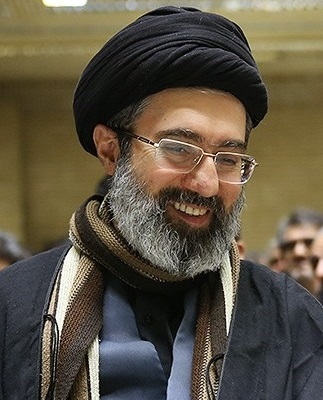
Mojtaba Khamenei
Iranian politician and cleric (born 1969)
Mojtaba Hosseini Khamenei (born 8 September 1969) is an Iranian politician and Muslim cleric. The second eldest child of Ali Khamenei, the former supreme leader of Iran, Mojtaba Khamenei served in the Iran–Iraq War from 1987 to 1988, and also reportedly took control of the Basij that was used to sup...

Iran
Country in West Asia
# Iran **Iran**, officially the **Islamic Republic of Iran** and historically known as **Persia**, is a sovereign country situated in West Asia. It is a major regional power, ranking as the 17th-largest country in the world by both land area and population. Combining a rich historical legacy with a...
Supreme Leader
Topics referred to by the same term
A supreme leader or supreme ruler is a powerful figure with an unchallenged authority.
Entity Intersection Graph
Connections for Mojtaba Khamenei:
Mentioned Entities
Deep Analysis
Why It Matters
This news is critically important because it signals a potential dynastic succession in Iran's highest leadership position, which could shape the country's domestic and foreign policies for decades. It affects Iran's 85 million citizens by determining who will wield ultimate authority over all state matters, including nuclear policy, regional conflicts, and social restrictions. The international community, particularly the U.S., Israel, and Gulf states, will be watching closely as this transition could influence Middle East stability, nuclear negotiations, and proxy conflicts in Syria, Yemen, and Lebanon.
Context & Background
- Iran's Supreme Leader is the highest-ranking political and religious authority in the Islamic Republic, with powers exceeding those of the president or parliament.
- The position has been held by only two individuals since the 1979 revolution: Ruhollah Khomeini (1979-1989) and Ali Khamenei (1989-2024).
- Succession is determined by the Assembly of Experts, an 88-member clerical body elected by the public but vetted by the Guardian Council.
- Mojtaba Khamenei is the second son of the late leader and has been a influential behind-the-scenes figure in Iran's security and political apparatus for years.
- The Islamic Revolutionary Guard Corps (IRGC) holds significant influence in succession decisions due to their economic, military, and intelligence power.
What Happens Next
The Assembly of Experts will formally convene to confirm Mojtaba Khamenei's appointment, likely within the next 30 days. International reactions will follow, with Western nations monitoring for policy continuity or shifts. Domestic protests may emerge from reformist factions opposing dynastic succession. Key policy decisions on nuclear negotiations, regional conflicts, and economic reforms will be delayed until the new leadership consolidates power over the coming 6-12 months.
Frequently Asked Questions
The Supreme Leader controls the military, intelligence services, judiciary, and state media, appoints key officials including half the Guardian Council and the head of judiciary, and has final say on all state matters including foreign policy and nuclear decisions.
Mojtaba Khamenei is the son of the previous Supreme Leader, marking the first time leadership would pass within a family rather than to an unrelated senior cleric, potentially establishing a hereditary system in Iran's Islamic Republic.
Initial continuity is likely as Mojtaba has been involved in security decisions, but long-term policy may harden as he seeks to consolidate support among conservative and military factions who oppose concessions to Western powers.
Most Iranians will see little immediate change in daily life, but economic policies, social restrictions, and internet controls may tighten as the new leader establishes authority, potentially increasing dissatisfaction among youth and reform-minded citizens.
Both nations will view this as continuity of hostile policies, with Israel likely increasing covert operations and Saudi Arabia strengthening regional alliances, while both prepare for potential escalation in proxy conflicts across the Middle East.