
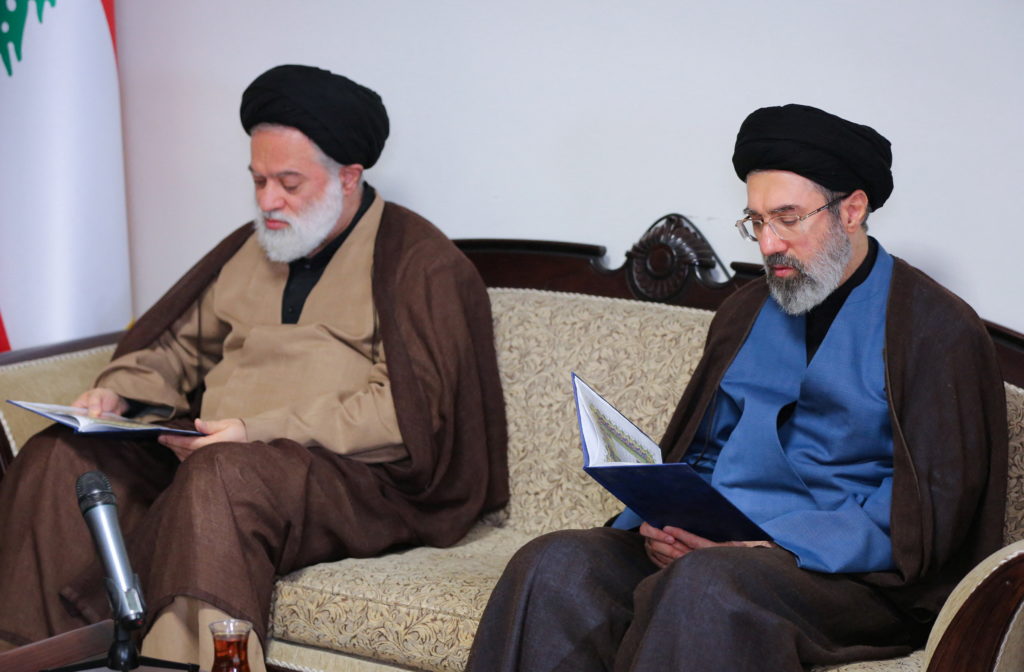
Iranian state TV says Mojtaba Khamenei named successor to the late supreme leader
#Iran #Mojtaba Khamenei #Supreme Leader #Successor #State TV #Leadership Transition #Political Change
📌 Key Takeaways
- Iranian state TV reports Mojtaba Khamenei named as successor to the late supreme leader.
- The announcement indicates a potential transition in Iran's highest leadership position.
- Mojtaba Khamenei is the son of the late Supreme Leader Ayatollah Ali Khamenei.
- This development could have significant implications for Iran's political future and regional stability.
📖 Full Retelling
🏷️ Themes
Leadership Succession, Iran Politics
📚 Related People & Topics
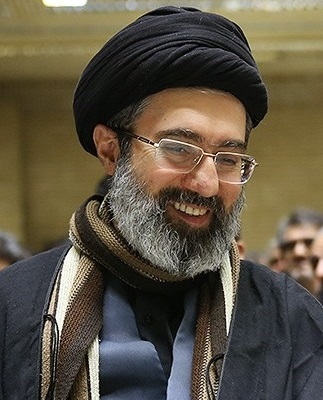
Mojtaba Khamenei
Iranian politician and cleric (born 1969)
Mojtaba Hosseini Khamenei (born 8 September 1969) is an Iranian politician and Muslim cleric. The second eldest child of Ali Khamenei, the former supreme leader of Iran, Mojtaba Khamenei served in the Iran–Iraq War from 1987 to 1988, and also reportedly took control of the Basij that was used to sup...

Iran
Country in West Asia
# Iran **Iran**, officially the **Islamic Republic of Iran** and historically known as **Persia**, is a sovereign country situated in West Asia. It is a major regional power, ranking as the 17th-largest country in the world by both land area and population. Combining a rich historical legacy with a...
Supreme Leader
Topics referred to by the same term
A supreme leader or supreme ruler is a powerful figure with an unchallenged authority.
Entity Intersection Graph
Connections for Mojtaba Khamenei:
Mentioned Entities
Deep Analysis
Why It Matters
This announcement is critically important because it reveals the potential future leadership of Iran, a nation with significant regional influence and nuclear ambitions. It affects Iran's 85 million citizens who live under theocratic rule, neighboring Middle Eastern countries concerned about Iran's foreign policy direction, and global powers engaged in nuclear negotiations with Tehran. The succession plan could determine whether Iran maintains its current revolutionary ideology or potentially moderates its stance on international relations.
Context & Background
- Iran has been governed by a Supreme Leader since the 1979 Islamic Revolution, with only two individuals holding the position: Ruhollah Khomeini (1979-1989) and Ali Khamenei (1989-present).
- The Assembly of Experts, an 88-member clerical body, is constitutionally responsible for selecting the Supreme Leader, though in practice the current leadership heavily influences the succession process.
- Mojtaba Khamenei, born in 1969, is the second son of current Supreme Leader Ali Khamenei and has been involved in religious and political circles, though he maintains a relatively low public profile compared to other Iranian political figures.
- Previous speculation about succession has included other potential candidates such as President Ebrahim Raisi and senior clerics like Ahmad Jannati, making this announcement particularly significant.
What Happens Next
Following this announcement, expect increased political maneuvering within Iran's power structures as factions align behind or against Mojtaba Khamenei. The Assembly of Experts will need to formally confirm the succession upon the current Supreme Leader's passing, which could happen at any time given Ali Khamenei's advanced age (85). International observers will closely monitor how this affects Iran's nuclear negotiations, regional proxy activities, and domestic policies in the coming months.
Frequently Asked Questions
The Assembly of Experts, Iran's clerical governing body, holds constitutional authority to appoint the Supreme Leader. However, in practice, the current leadership and powerful institutions like the Islamic Revolutionary Guard Corps significantly influence this decision.
A succession to Mojtaba Khamenei would likely maintain Iran's current revolutionary ideology and confrontational foreign policy. As the son of the current leader, he would probably continue supporting regional proxies and resisting Western influence, though his exact policies remain uncertain.
He would face significant challenges including economic crises, youth discontent, international sanctions, and potential opposition from rival factions within Iran's complex power structure. His relative lack of independent political experience compared to other candidates could also present legitimacy challenges.
This succession plan creates uncertainty in nuclear negotiations as Western powers must consider whether a future Supreme Leader would honor any agreements. Negotiators may accelerate talks to secure deals before leadership transitions occur, or conversely, pause negotiations awaiting clarity on Iran's future direction.
While not unprecedented in Iranian history, familial succession would mark a departure from the current system's emphasis on clerical qualifications. This could provoke debates about nepotism versus meritocracy within Iran's Islamic Republic framework.