
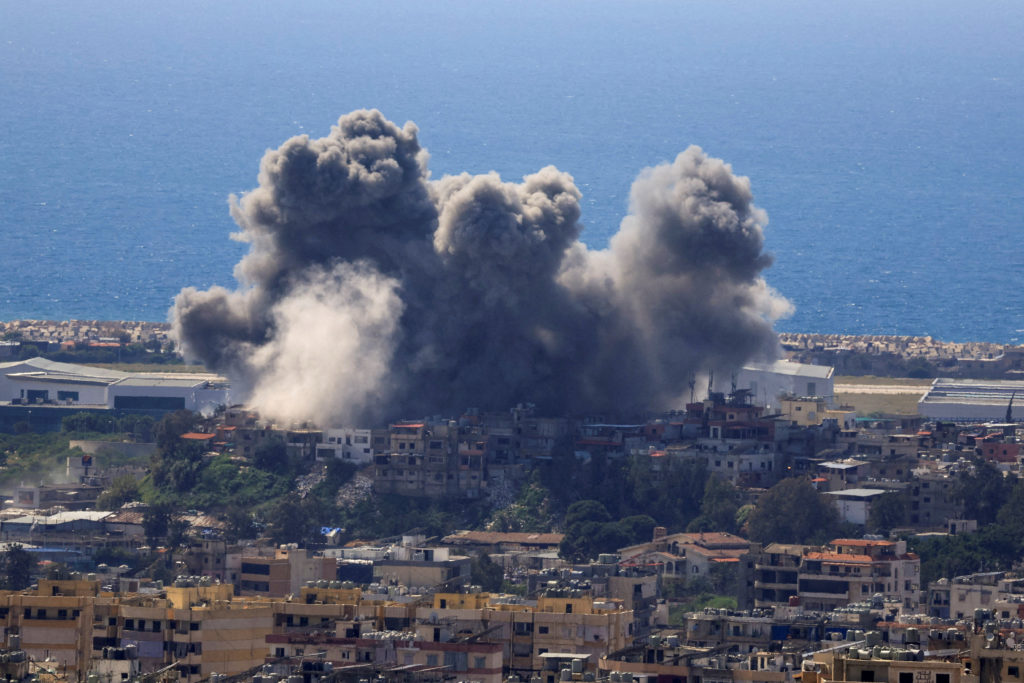
Israel strikes Lebanon without warning, hours after Iran ceasefire announced
#Israel #Lebanon #airstrikes #US-Iran ceasefire #Hezbollah #regional escalation #diplomacy
📌 Key Takeaways
- Israel launched airstrikes in Lebanon hours after a U.S.-Iran ceasefire was announced.
- The action was a response to rocket fire and targeted Hezbollah infrastructure.
- The timing has created significant diplomatic confusion and risks undermining the ceasefire.
- The incident highlights the challenge of managing regional conflicts with multiple independent actors.
📖 Full Retelling
🏷️ Themes
Geopolitical Tension, Ceasefire Fragility, Regional Security
📚 Related People & Topics
Hezbollah
Islamist movement and militant group based in Lebanon
Hezbollah is a Shia Islamist Lebanese political party and paramilitary group. Hezbollah's paramilitary wing is the Jihad Council, and its political wing is the Loyalty to the Resistance Bloc party in the Lebanese Parliament. Its armed strength was assessed to be equivalent to that of a medium-sized ...

Lebanon
Country in West Asia
Lebanon, officially the Lebanese Republic, is a country in the Levant region of West Asia. Situated at the crossroads of the Mediterranean Basin and the Arabian Peninsula, it is bordered by Syria to the north and east, Israel to the south, and the Mediterranean Sea to the west; Cyprus lies a short d...

Israel
Country in West Asia
Israel, officially the State of Israel, is a country in the Southern Levant region of West Asia. It is bordered by Lebanon to the north, Syria to the northeast, Jordan to the east, and Egypt to the southwest. Israel occupies the West Bank and the Gaza Strip of the Palestinian territories, as well as...
Entity Intersection Graph
Connections for Hezbollah:
View full profileMentioned Entities
Deep Analysis
Why It Matters
This news is critical because it demonstrates the extreme fragility of diplomatic agreements in the Middle East when third-party actors pursue independent security agendas. It directly affects civilians in Lebanon and Israel who face the immediate danger of escalated violence, while challenging the United States' ability to manage both its allies and adversaries simultaneously. Furthermore, the incident significantly increases the risk of a broader regional war involving Iranian-backed proxies, which could destabilize the entire Middle East.
Context & Background
- Hezbollah is a powerful Shia Islamist political party and militant group based in Lebanon, backed by Iran, and considered a major adversary of Israel.
- The conflict described is part of the broader regional spillover following the October 7, 2023, Hamas attack on Israel and the subsequent war in Gaza.
- Cross-border skirmishes between the IDF and Hezbollah along the Israel-Lebanon border have been ongoing since the start of the Gaza war, forcing civilians from both sides to evacuate.
- The United States has historically acted as a primary mediator in the region while maintaining a strong strategic alliance with Israel.
- Tensions between Israel and Hezbollah have existed for decades, most notably resulting in the 2006 Lebanon War which lasted 34 days.
What Happens Next
Analysts forecast a high likelihood of retaliatory strikes from Hezbollah, which could escalate the intensity of cross-border fire. The United States is expected to increase diplomatic pressure on all sides to contain the conflict and prevent the total collapse of the Iran ceasefire. International observers will be watching closely for any signs of a ground invasion or a shift in the scope of the military engagement.
Frequently Asked Questions
The Israeli military stated the strikes were a necessary response to ongoing rocket fire from Lebanese territory and targeted Hezbollah infrastructure.
The unilateral action by Israel creates diplomatic strain and threatens to unravel the fragile agreement by escalating tensions just as de-escalation was being pursued.
The U.S. brokered the ceasefire with Iran to stabilize the region but now faces the complex challenge of managing its ally Israel's military actions to prevent a wider war.
The primary actors are Israel, the Lebanese militant group Hezbollah, the United States, and Iran, with Hezbollah serving as a proxy for Iranian influence in the region.