
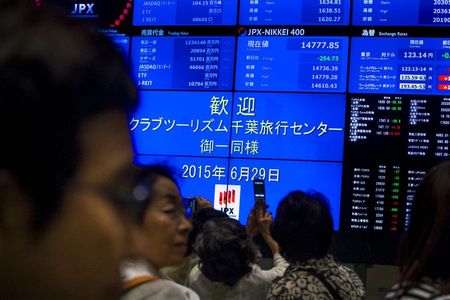
Japan stocks higher at close of trade; Nikkei 225 up 1.90%
#Nikkei 225 #Japanese stocks #yen depreciation #exporters #Tokyo Stock Exchange
📌 Key Takeaways
- The Nikkei 225 index rose 1.90% at the close of trade in Tokyo.
- A weakening Japanese yen against the U.S. dollar boosted export-heavy stocks.
- Gains were broad-based, led by major technology and automotive companies.
- The rally reflects improved market sentiment and shifting global monetary policy expectations.
📖 Full Retelling
🏷️ Themes
Financial Markets, Macroeconomics, Currency
📚 Related People & Topics

Tokyo Stock Exchange
Stock exchange in Tokyo, Japan
The Tokyo Stock Exchange (東京証券取引所, Tōkyō Shōken Torihikijo), abbreviated as Tosho (東証) or TSE/TYO, is a stock exchange located in Tokyo, Japan. The exchange is owned by Japan Exchange Group (JPX), a holding company that it also lists (TYO: 8697), and operated by Tokyo Stock Exchange, Inc., a wholly ...
Entity Intersection Graph
Connections for Tokyo Stock Exchange:
Mentioned Entities
Deep Analysis
Why It Matters
This rally signals a renewed risk appetite among investors following recent volatility in Japanese markets. It highlights the critical sensitivity of the Japanese economy to currency fluctuations, particularly the USD/JPY exchange rate. For global investors, this movement reflects shifting expectations regarding US monetary policy and its impact on international equities. The rise in export-heavy stocks suggests improved profitability expectations for multinational corporations dependent on overseas revenue. Ultimately, this trend affects portfolio valuations for institutional and retail investors exposed to Asian markets.
Context & Background
- The Bank of Japan (BoJ) has maintained an ultra-loose monetary policy and negative interest rates for years, contrasting sharply with the tightening seen in the US and Europe.
- A weaker yen generally benefits Japanese exporters like Toyota and Sony by making their goods cheaper abroad and increasing the value of overseas profits when converted back to yen.
- The Nikkei 225 is a price-weighted index consisting of 225 large, publicly-owned companies in Japan, heavily weighted toward manufacturing and technology.
- The US Federal Reserve has been aggressively raising interest rates to combat inflation, but recent market speculation suggests a pause in this cycle is imminent.
- Japan has historically struggled with deflation and stagnant growth, often referred to as the 'Lost Decades,' making export performance vital for its economic health.
What Happens Next
Investors will closely scrutinize upcoming corporate earnings reports to see if the positive currency impact translates to actual profit growth. Market participants will look for further signals from the Bank of Japan regarding any potential adjustments to its yield curve control policy. The Nikkei 225 is poised to test higher technical resistance levels if the yen remains weak and global risk sentiment persists.
Frequently Asked Questions
A weaker yen makes Japanese products cheaper and more competitive for foreign buyers. It also increases the value of revenue earned overseas when converted back into the local currency.
The article specifically highlights Toyota Motor and Sony Group as major beneficiaries due to their significant reliance on overseas revenue.
The divergence in monetary policies played a key role; the Bank of Japan's loose stance contrasted with speculation that the US Federal Reserve will stop raising rates, causing the yen to drop.
While the close was strong, traders remain cautious as they await upcoming corporate earnings reports and future signals from central banks.