
Judge halts Trump effort requiring colleges show they don't consider race
#Trump administration #college admissions #affirmative action #race #federal judge #Supreme Court #legal challenge
📌 Key Takeaways
- A federal judge blocked a Trump administration rule requiring colleges to prove they do not consider race in admissions.
- The rule aimed to enforce a Supreme Court ban on affirmative action in college admissions.
- The judge found the rule likely exceeded the administration's legal authority.
- The ruling temporarily prevents enforcement of the requirement while legal challenges proceed.
📖 Full Retelling
🏷️ Themes
Affirmative Action, Higher Education Policy
📚 Related People & Topics
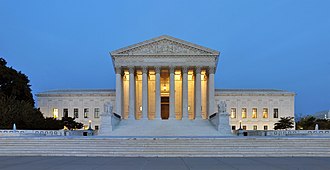
Supreme court
Highest court in a jurisdiction
In most legal jurisdictions, a supreme court, also known as a court of last resort, apex court, high (or final) court of appeal, and court of final appeal, is the highest court within the hierarchy of courts. Broadly speaking, the decisions of a supreme court are binding on all other courts in a nat...
Presidency of Donald Trump
Index of articles associated with the same name
Presidency of Donald Trump may refer to:
Entity Intersection Graph
Connections for Supreme court:
Mentioned Entities
Deep Analysis
Why It Matters
This ruling directly impacts how colleges and universities approach admissions policies, particularly regarding affirmative action and diversity initiatives. It affects millions of students applying to higher education institutions, especially those from underrepresented backgrounds who may benefit from race-conscious admissions. The decision also represents a significant legal setback for the Trump administration's efforts to reshape civil rights enforcement in education. This matters because it preserves the status quo in college admissions while broader legal battles over affirmative action continue to unfold.
Context & Background
- The Trump administration had been pushing to eliminate race-conscious admissions policies through various executive actions and Department of Education guidance.
- Affirmative action in college admissions has been legally contested for decades, with landmark Supreme Court cases like Regents of the University of California v. Bakke (1978) and Fisher v. University of Texas (2016) establishing current legal frameworks.
- Many selective colleges use holistic admissions processes that may consider race as one factor among many to achieve diverse student bodies.
- The Trump administration's approach represented a significant departure from Obama-era policies that encouraged colleges to consider race to promote diversity.
What Happens Next
The Trump administration may appeal this ruling to a higher court, potentially setting up further legal battles. Colleges will continue operating under existing admissions policies while awaiting final resolution. The broader question of affirmative action's constitutionality may eventually reach the Supreme Court again, especially with recent conservative appointments. Future presidential administrations will likely continue shaping this policy area through executive actions and Department of Education guidance.
Frequently Asked Questions
The Trump administration wanted to force colleges and universities to demonstrate they were not considering race in admissions decisions, essentially requiring them to prove they weren't using affirmative action policies. This would have shifted the burden of proof from those challenging race-conscious policies to the institutions themselves.
For now, this ruling means colleges can continue using their existing admissions policies without having to prove they don't consider race. Students applying to colleges this year will likely experience admissions processes similar to previous years, with many selective institutions continuing to consider race as one factor in holistic reviews.
The judge likely found that the Trump administration's requirement exceeded its authority or violated administrative procedures. Courts often require proper rule-making processes for significant policy changes, and the administration may have failed to follow required procedures for implementing such a major shift in education policy.
No, this ruling only temporarily blocks one specific Trump administration initiative. The broader constitutional questions about affirmative action remain unresolved and will likely be addressed in future court cases, potentially reaching the Supreme Court where the current conservative majority could reconsider previous rulings.
Selective colleges and universities with competitive admissions processes would have been most affected, particularly those that actively consider race to achieve diverse student bodies. This includes many Ivy League institutions, flagship public universities, and other selective colleges that use holistic admissions processes.