

Khamenei martyrdom narrative smooths path for son’s rise
#Khamenei #martyrdom #succession #Mojtaba Khamenei #Iran #leadership #political narrative
📌 Key Takeaways
- Iran's Supreme Leader Khamenei is promoting a martyrdom narrative to bolster his legacy.
- This narrative is seen as a strategy to ease his son Mojtaba Khamenei's succession.
- The move aims to legitimize Mojtaba's rise within Iran's political and religious hierarchy.
- It reflects efforts to ensure a stable transition of power in the future.
📖 Full Retelling
🏷️ Themes
Succession Planning, Political Strategy
📚 Related People & Topics
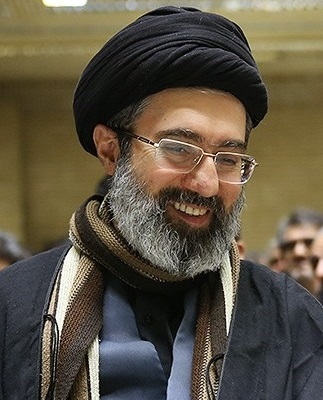
Mojtaba Khamenei
Iranian politician and cleric (born 1969)
Mojtaba Hosseini Khamenei (born 8 September 1969) is an Iranian politician and Muslim cleric. The second eldest child of Ali Khamenei, the former supreme leader of Iran, Mojtaba Khamenei served in the Iran–Iraq War from 1987 to 1988, and also reportedly took control of the Basij that was used to sup...

Iran
Country in West Asia
# Iran **Iran**, officially the **Islamic Republic of Iran** and historically known as **Persia**, is a sovereign country situated in West Asia. It is a major regional power, ranking as the 17th-largest country in the world by both land area and population. Combining a rich historical legacy with a...

Khamenei family
Ruling family of Iran (1989–present)
The Khamenei family is an Iranian religious and political family that has played a prominent role in Iranian politics since the 1980s. The family is of Iranian Azerbaijani and Persian origin and claim to be Sayyids, descended from Ali al-Sajjad, the fourth Shia imam. They have ruled Iran since 1989 ...
Entity Intersection Graph
Connections for Mojtaba Khamenei:
Mentioned Entities
Deep Analysis
Why It Matters
This development is crucial because it signals potential succession planning within Iran's highest leadership, which could determine the country's political and religious direction for decades. It affects Iran's domestic politics, regional foreign policy, and international relations, particularly with Western nations. The narrative construction around Supreme Leader Ali Khamenei's potential martyrdom serves to legitimize his son Mojtaba Khamenei's rise by linking it to religious sacrifice and continuity, which could help maintain regime stability during a sensitive transition.
Context & Background
- Iran's Supreme Leader holds ultimate authority over all state matters, combining religious and political power since the 1979 Islamic Revolution
- Succession has been a sensitive issue since the death of founding Supreme Leader Ruhollah Khomeini in 1989, when Ali Khamenei was elevated despite not having the highest religious credentials
- Mojtaba Khamenei has remained largely out of public view but is known to have influence within conservative circles and security apparatuses
- Previous succession discussions have focused on whether leadership would pass to another cleric or to a council of religious figures
- The 'martyrdom narrative' draws on Shia Islamic traditions that venerate martyrs and their descendants
What Happens Next
Increased behind-the-scenes maneuvering among Iran's political factions will likely occur as they position themselves for potential leadership change. Formal succession mechanisms through the Assembly of Experts may be tested if Khamenei's health declines. Regional proxies and international observers will closely monitor any signs of transition, which could occur within the next 2-5 years given Khamenei's age (85).
Frequently Asked Questions
Mojtaba Khamenei is the second son of current Supreme Leader Ali Khamenei, born in 1969. He has operated in the background of Iranian politics, reportedly advising his father and maintaining connections with powerful Revolutionary Guard commanders and conservative clerics, making him a potential continuity candidate.
The narrative frames Ali Khamenei's leadership as sacrificial service that could culminate in martyrdom, creating religious and emotional legitimacy for his son's potential rise. This connects to Shia traditions where martyrdom confers special status on descendants, potentially overcoming Mojtaba's lack of senior religious credentials.
Mojtaba lacks the formal religious qualifications traditionally expected of Supreme Leaders, having not attained the rank of marja' (source of emulation). Additionally, some clerics oppose hereditary succession as contradicting revolutionary principles, while reformists and moderates would likely resist his conservative alignment.
A Mojtaba succession would likely maintain or intensify current hardline policies toward the West and regional rivals. His close ties to Revolutionary Guard commanders suggest continuity in supporting proxy groups and resisting nuclear concessions, potentially prolonging tensions with the United States and Gulf states.
The Assembly of Experts, an 88-member body of senior clerics elected every 8 years, is constitutionally responsible for selecting and supervising the Supreme Leader. However, the Revolutionary Guard and other power centers exert significant influence behind the scenes.