
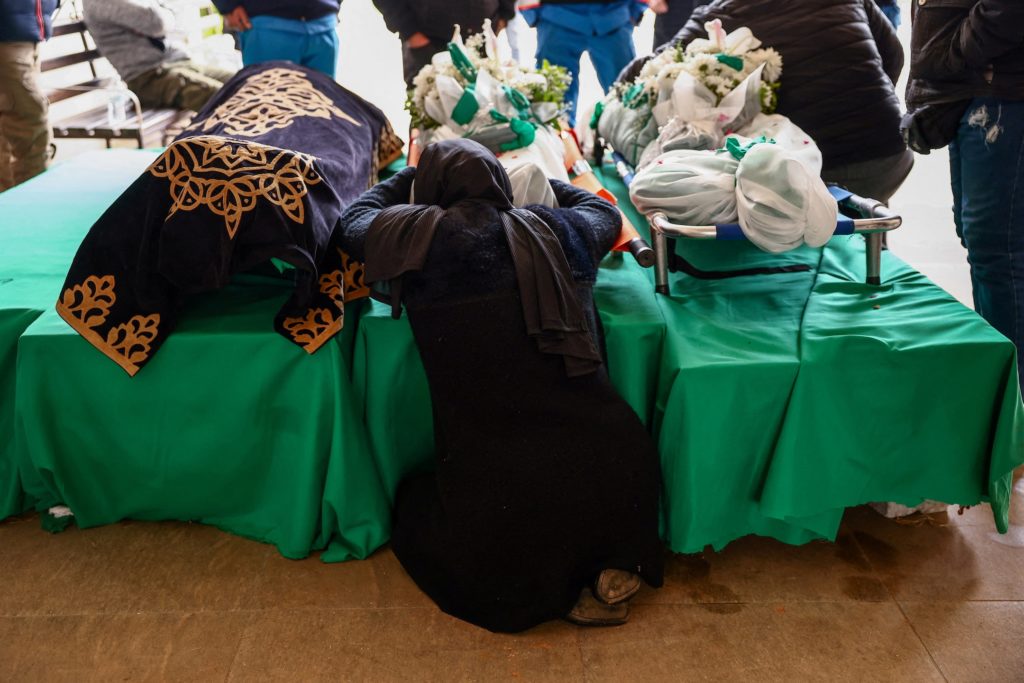
Lebanese emergency workers risk lives to aid civilians during ongoing Israeli attacks
📖 Full Retelling
📚 Related People & Topics

Lebanon
Country in West Asia
Lebanon, officially the Lebanese Republic, is a country in the Levant region of West Asia. Situated at the crossroads of the Mediterranean Basin and the Arabian Peninsula, it is bordered by Syria to the north and east, Israel to the south, and the Mediterranean Sea to the west; Cyprus lies a short d...
Entity Intersection Graph
Connections for Lebanon:
View full profileMentioned Entities
Deep Analysis
Why It Matters
This news highlights the humanitarian crisis unfolding in Lebanon as emergency workers operate under extreme danger during Israeli attacks. It matters because it reveals the human cost of the conflict beyond combatants, affecting civilians who rely on these rescue services for survival. The situation impacts Lebanon's already fragile infrastructure and healthcare system, while raising concerns about potential violations of international humanitarian law regarding protection of medical and rescue personnel. This affects not only Lebanese civilians but also regional stability and international diplomatic efforts to de-escalate tensions.
Context & Background
- The Lebanon-Israel border has experienced periodic clashes since the 2006 Lebanon War, with recent escalations tied to the broader Israel-Hamas conflict in Gaza
- Hezbollah, the Iranian-backed militant group based in southern Lebanon, has been exchanging fire with Israeli forces since October 2023
- Lebanon has been experiencing a severe economic crisis since 2019, with collapsed infrastructure and limited government capacity to respond to emergencies
- International humanitarian law, including the Geneva Conventions, provides special protections for medical personnel and civilian rescue workers during armed conflicts
- Previous conflicts in Lebanon have resulted in significant civilian casualties and displacement, including the 2006 war that killed approximately 1,200 Lebanese civilians
What Happens Next
The situation will likely continue as long as the Israel-Hamas conflict persists, with potential for further escalation if diplomatic efforts fail. International organizations may increase pressure for humanitarian corridors and protection of emergency workers. Lebanon's already strained emergency services could face complete collapse if attacks intensify, potentially requiring increased international aid. The UN may convene emergency sessions to address the protection of civilians and rescue personnel in southern Lebanon.
Frequently Asked Questions
Emergency workers are at risk because they operate in active conflict zones where Israeli strikes occur, often with little warning. They face danger from both direct targeting (though illegal under international law) and from operating near legitimate military targets. Their visible vehicles and movements in damaged areas make them vulnerable to collateral damage.
The Geneva Conventions and Additional Protocols specifically protect medical personnel, humanitarian workers, and civilian defense personnel. These laws require all parties to distinguish between combatants and civilians, avoid targeting medical facilities and personnel, and allow humanitarian access. Violations can constitute war crimes under international law.
The attacks are further straining Lebanon's collapsed economy by damaging infrastructure, disrupting livelihoods, and increasing healthcare costs. The government has limited funds to support emergency services, forcing reliance on under-equipped volunteers. This exacerbates the country's financial crisis and could lead to greater humanitarian needs requiring international intervention.
Hezbollah's military activities along the border have provoked Israeli responses that endanger civilians and emergency workers. While Hezbollah operates independently from the Lebanese government, its actions directly impact civilian safety. The group's presence complicates humanitarian efforts and international responses to the crisis.
Some international organizations and donor countries are providing humanitarian aid, but access remains limited due to security concerns. The UN and Red Cross are active in the region, but face significant operational challenges. Regional powers and Western nations are primarily focused on diplomatic efforts to prevent full-scale war rather than direct emergency support.