
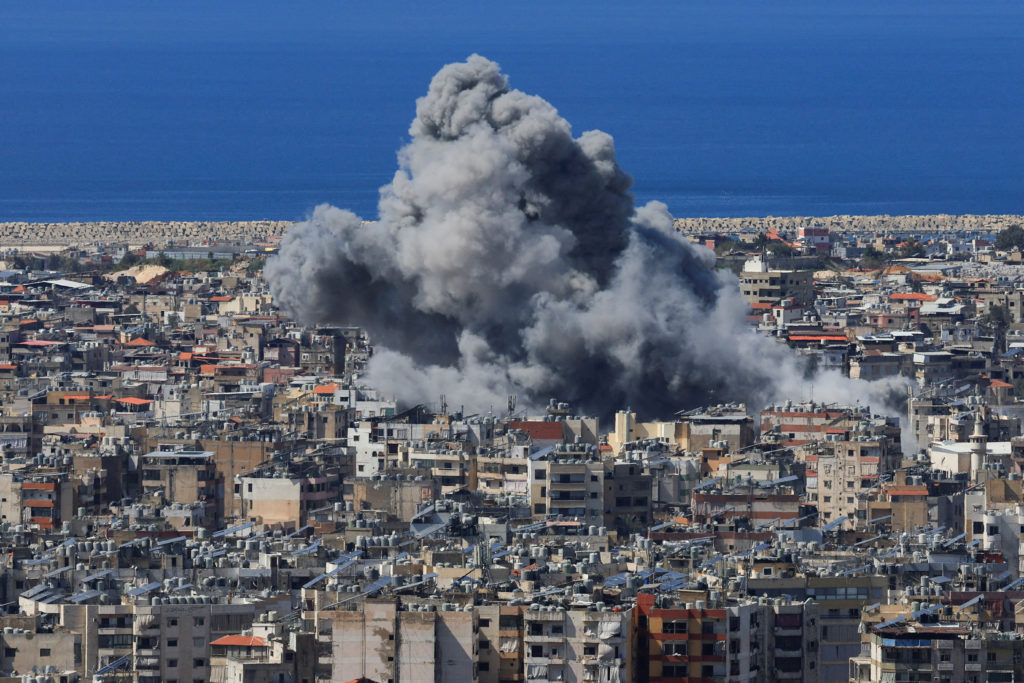
Lebanese parliament extends term by 2 years as Israel intensifies attacks on Lebanon
#Lebanon #parliament #term extension #Israel #attacks #conflict #security #governance
📌 Key Takeaways
- Lebanese parliament extends its term by two years amid regional tensions.
- Extension occurs as Israel intensifies military attacks on Lebanon.
- Decision reflects political instability and security concerns in Lebanon.
- Move may impact domestic governance and international relations in the region.
📖 Full Retelling
🏷️ Themes
Political Extension, Regional Conflict
📚 Related People & Topics

Lebanon
Country in West Asia
Lebanon, officially the Lebanese Republic, is a country in the Levant region of West Asia. Situated at the crossroads of the Mediterranean Basin and the Arabian Peninsula, it is bordered by Syria to the north and east, Israel to the south, and the Mediterranean Sea to the west; Cyprus lies a short d...

Israel
Country in West Asia
Israel, officially the State of Israel, is a country in the Southern Levant region of West Asia. It is bordered by Lebanon to the north, Syria to the northeast, Jordan to the east, and Egypt to the southwest. Israel occupies the West Bank and the Gaza Strip of the Palestinian territories, as well as...
Entity Intersection Graph
Connections for Lebanon:
View full profileMentioned Entities
Deep Analysis
Why It Matters
This development matters because it represents a significant suspension of democratic processes in Lebanon during a period of heightened regional conflict. It affects Lebanese citizens by delaying elections and maintaining the current political status quo while the country faces economic collapse and security threats. The extension also has regional implications as it occurs alongside escalating cross-border hostilities between Hezbollah and Israel, potentially influencing Lebanon's stability and governance during a volatile period.
Context & Background
- Lebanon has been without a president since October 2022 when Michel Aoun's term ended, creating a prolonged political vacuum
- The Lebanese parliament previously extended its own term multiple times since 2013, citing security concerns and political deadlock
- Hezbollah, the Iran-backed militant group and political party, holds significant influence in Lebanese politics and parliament
- Lebanon has been experiencing its worst economic crisis in modern history since 2019, with currency collapse and widespread poverty
- Cross-border exchanges between Hezbollah and Israel have increased since October 2023 following Hamas's attack on Israel
What Happens Next
The extension likely maintains the current political configuration through 2026, delaying any potential electoral shifts. Continued Israeli military operations along the Lebanon-Israel border may intensify, potentially drawing Lebanon deeper into regional conflict. International diplomatic efforts, particularly by France and the United States, will likely increase to prevent full-scale war between Israel and Hezbollah while pushing for political reforms in Lebanon.
Frequently Asked Questions
The parliament cited security concerns and political instability as justification, arguing that holding elections during heightened conflict with Israel would be impractical and potentially dangerous. This follows a pattern of previous extensions during periods of crisis in Lebanon.
The extension perpetuates political stagnation by maintaining the current power distribution and delaying potential changes through elections. It occurs alongside a presidential vacuum and ongoing government dysfunction, further complicating efforts to address Lebanon's economic collapse.
The timing suggests the security situation with Israel provided justification for postponing elections. The extension allows the current parliament, where Hezbollah holds significant influence, to continue governing during a period of military escalation that directly involves Hezbollah forces.
Many Lebanese likely view this negatively as another democratic setback by political elites, following previous extensions in 2014, 2017, and 2022. However, some may accept it as necessary given the security situation and economic collapse.
The extension maintains Hezbollah's parliamentary influence during escalating conflict with Israel, potentially affecting Lebanon's ability to make independent diplomatic decisions. Regional powers including Iran, Saudi Arabia, and Syria will monitor how this affects Lebanon's stability and Hezbollah's position.