
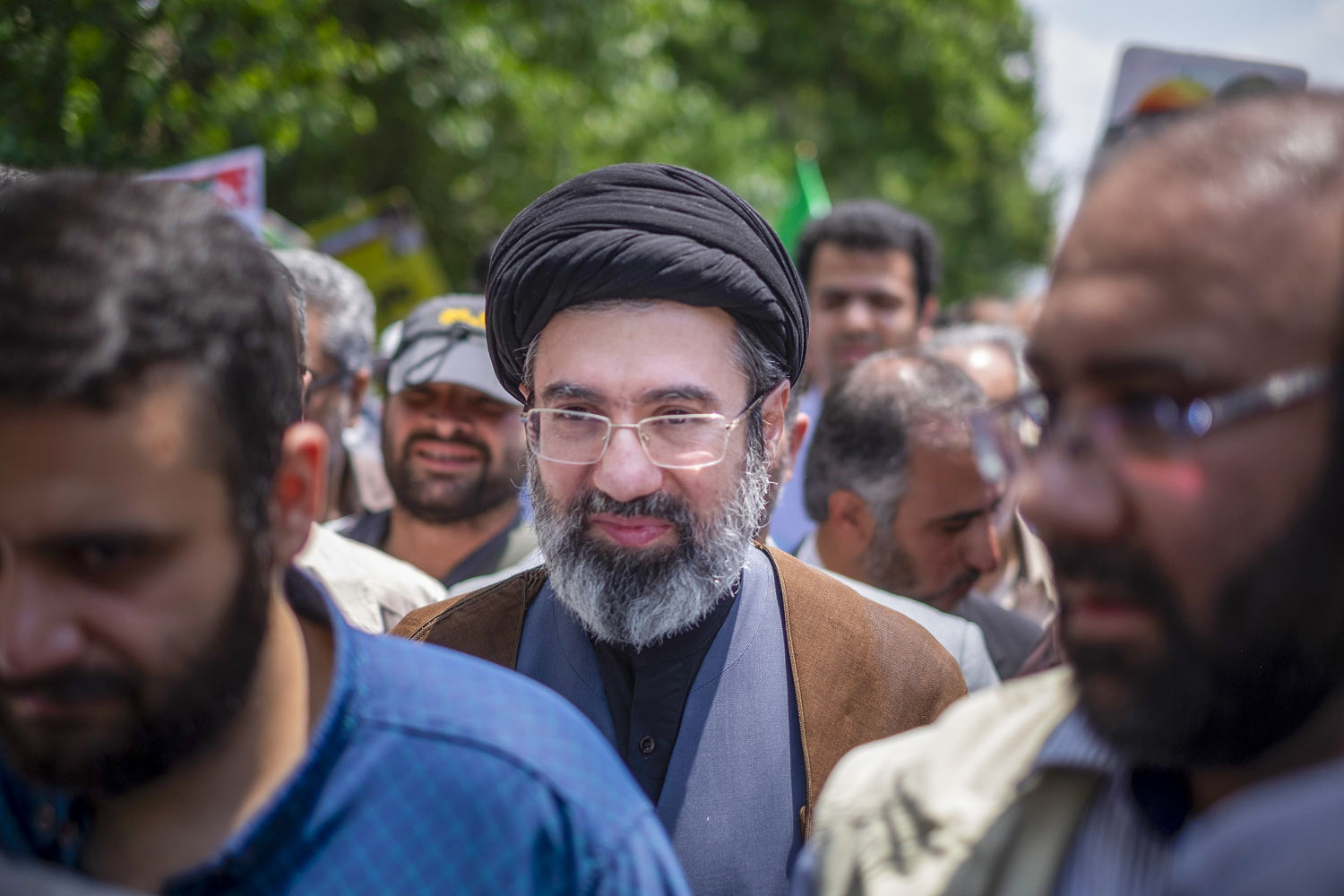
Mojtaba Khamenei, son of late ayatollah, named Iran's new supreme leader
#Mojtaba Khamenei #supreme leader #Iran #Ayatollah #succession #leadership #political transition
📌 Key Takeaways
- Mojtaba Khamenei has been appointed as Iran's new supreme leader
- He is the son of the late Ayatollah Khamenei
- This marks a significant leadership transition in Iran
- The appointment follows the death of the previous supreme leader
📖 Full Retelling
🏷️ Themes
Leadership change, Iran politics
📚 Related People & Topics
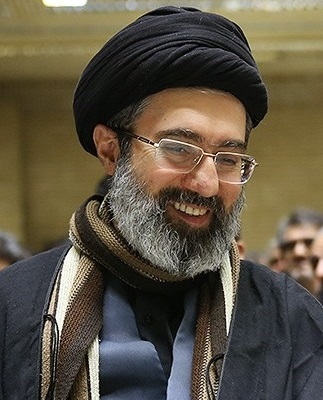
Mojtaba Khamenei
Iranian politician and cleric (born 1969)
Mojtaba Hosseini Khamenei (born 8 September 1969) is an Iranian politician and Muslim cleric. The second eldest child of Ali Khamenei, the former supreme leader of Iran, Mojtaba Khamenei served in the Iran–Iraq War from 1987 to 1988, and also reportedly took control of the Basij that was used to sup...

Iran
Country in West Asia
# Iran **Iran**, officially the **Islamic Republic of Iran** and historically known as **Persia**, is a sovereign country situated in West Asia. It is a major regional power, ranking as the 17th-largest country in the world by both land area and population. Combining a rich historical legacy with a...

Ayatollah
High-ranking title given to Usuli Twelver Shī'a Muslim clerics
Ayatollah (Arabic: آية الله, romanized: ʾāyatu llāh, lit. 'sign of god') is a title for high-ranking Twelver Shia clergy. It came into widespread usage in the 20th century. Those who hold this title must be men and specialists in Islamic sciences such as jurisprudence (fiqh) and principles (usul), o...
Entity Intersection Graph
Connections for Mojtaba Khamenei:
Mentioned Entities
Deep Analysis
Why It Matters
This news is critically important because it represents a fundamental shift in Iran's power structure, potentially consolidating control within a single family dynasty for the first time since the 1979 Islamic Revolution. The appointment affects Iran's 85 million citizens directly, as the Supreme Leader holds ultimate authority over all state matters including foreign policy, military decisions, and religious interpretation. It also impacts regional stability in the Middle East and international relations with Western powers who have been negotiating with Iran on nuclear and security issues. The succession decision signals potential continuity in Iran's conservative policies while raising questions about hereditary power transfer in what was established as an Islamic Republic.
Context & Background
- The position of Supreme Leader was created after the 1979 Iranian Revolution, with Ayatollah Ruhollah Khomeini serving as the first holder until his death in 1989
- Ali Khamenei (father of Mojtaba) served as Supreme Leader from 1989 until his recent death, making him the second and longest-serving leader in Iran's post-revolution history
- The Assembly of Experts, an 88-member body of Islamic scholars, is constitutionally responsible for selecting the Supreme Leader, though their independence has been questioned by critics
- Mojtaba Khamenei has been a prominent conservative figure within Iran's political circles for years, serving as a senior advisor to his father and maintaining close ties with the Islamic Revolutionary Guard Corps
- Iran's Supreme Leader holds ultimate authority over all branches of government, controls the military and intelligence services, and serves as the highest religious authority in the country's theocratic system
What Happens Next
In the coming weeks, we can expect formal inauguration ceremonies and Mojtaba Khamenei's first major policy addresses outlining his vision for Iran. International reactions from key players like the United States, European Union, Saudi Arabia, and Israel will likely follow within days, potentially affecting ongoing nuclear negotiations. Domestically, there may be cabinet reshuffles and realignments within Iran's political factions as the new leader consolidates power. The next 3-6 months will reveal whether Mojtaba maintains his father's policies or implements changes in areas like economic reform, social restrictions, or foreign relations.
Frequently Asked Questions
The Supreme Leader is Iran's highest authority, controlling the military, judiciary, and media while appointing key officials including the head of judiciary, military commanders, and half of Guardian Council members. This position also guides general state policies and has final say on all matters of national importance.
This marks the first time a Supreme Leader's direct descendant has assumed the position, potentially establishing hereditary succession in what was designed as an Islamic Republic. Previous transitions involved prominent clerics from outside the ruling family, making this a significant departure from established norms.
Initial continuity is likely as Mojtaba has been closely involved in his father's policies, but his personal relationships with hardline factions could strengthen conservative positions. The transition period may temporarily slow negotiations as international counterparts assess the new leader's approach and reliability.
The succession could initially suppress dissent through heightened security measures during the transition, but may eventually fuel further protests if perceived as dynastic consolidation. Younger Iranians already discontent with theocratic rule may view hereditary succession as particularly illegitimate.
Constitutionally, the Assembly of Experts must elect the Supreme Leader, but their selection of Mojtaba suggests either genuine consensus or political pressure from powerful institutions like the Revolutionary Guards. Their decision-making process and voting results will face scrutiny regarding transparency and independence.