
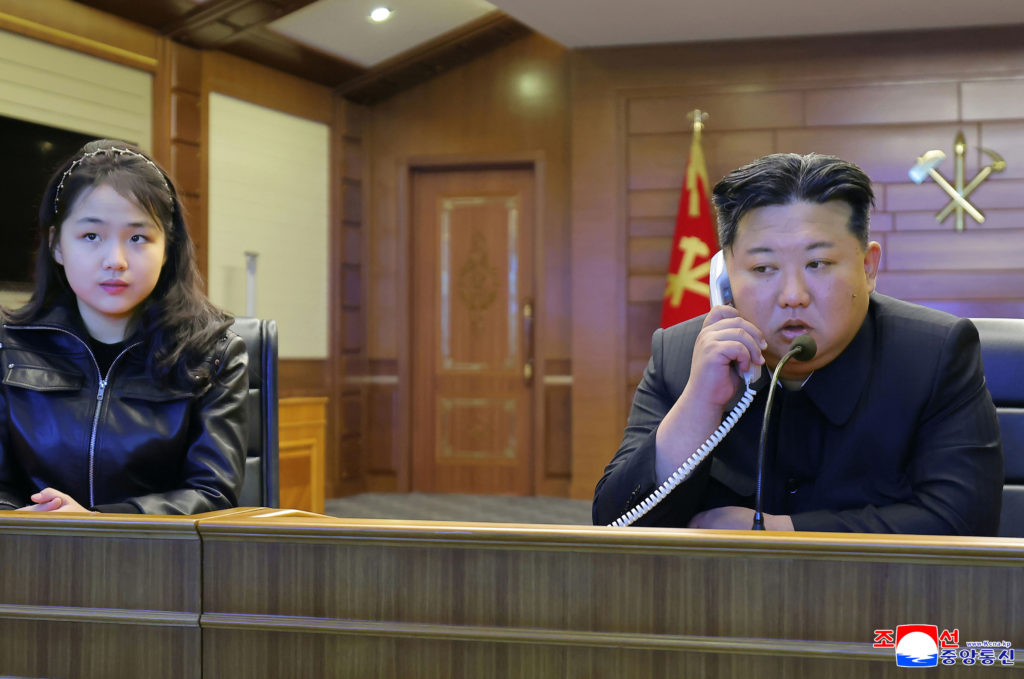
North Korean leader Kim watches cruise missile tests with his daughter
#North Korea #Kim Jong-un #cruise missile #military test #daughter #weapons development #dynasty
📌 Key Takeaways
- North Korean leader Kim Jong-un observed cruise missile tests
- His daughter accompanied him during the military demonstration
- The event highlights ongoing weapons development in North Korea
- The presence of his daughter suggests potential dynastic symbolism
📖 Full Retelling
🏷️ Themes
Military, Leadership
📚 Related People & Topics
North Korean
Topics referred to by the same term
North Korean may refer to: Something of, from, or related to the country of North Korea A Korean from North Korea, or of North Korean descent.

North Korea
Country in East Asia
North Korea, officially the Democratic People's Republic of Korea (DPRK), is a country in East Asia. It constitutes the northern half of the Korean Peninsula and borders China and Russia to the north at the Yalu (Amnok) and Tumen rivers, and South Korea to the south at the Korean Demilitarized Zone ...
Entity Intersection Graph
Connections for North Korean:
Mentioned Entities
Deep Analysis
Why It Matters
This news is important because it signals North Korea's continued focus on military development and missile testing, which escalates regional tensions and challenges international non-proliferation efforts. It affects neighboring countries like South Korea and Japan, who face direct security threats, as well as global powers including the United States and China involved in diplomatic negotiations. The involvement of Kim's daughter highlights potential dynastic succession plans, impacting the regime's future stability and international relations.
Context & Background
- North Korea has conducted numerous missile tests in recent years, including ballistic and cruise missiles, often in violation of UN Security Council resolutions.
- Kim Jong Un's daughter, believed to be named Kim Ju Ae, has appeared at several high-profile military events since 2022, fueling speculation about her role as a potential successor.
- Cruise missiles are a key part of North Korea's arsenal due to their lower flight altitude and maneuverability, making them harder to detect and intercept compared to ballistic missiles.
- International sanctions have been imposed on North Korea to curb its weapons programs, but the country has continued to advance its military capabilities despite economic hardships.
What Happens Next
North Korea is likely to conduct additional missile tests in the coming months, possibly including more advanced systems, which could prompt stronger sanctions or military responses from the US, South Korea, and Japan. Diplomatic efforts, such as potential resumption of talks, may be stalled unless there is a shift in North Korea's stance. Monitoring of Kim's daughter's public appearances will continue to assess succession dynamics within the regime.
Frequently Asked Questions
North Korea views missile development as crucial for national defense and as leverage in diplomatic negotiations, believing it deters external threats. Sanctions have not halted these programs due to the regime's prioritization of military strength over economic welfare.
Her presence suggests she is being groomed for a leadership role, possibly as a successor, which could influence the regime's future policies and stability. It also serves domestic propaganda to reinforce the Kim family's control over the military.
Cruise missiles fly at lower altitudes and can maneuver, making them harder to detect and intercept by defense systems like THAAD. They are often used for precision strikes against regional targets, increasing immediate security risks for neighbors.
Countries like the US, South Korea, and Japan typically condemn the tests and call for stricter sanctions, while China and Russia often urge dialogue. Joint military exercises and enhanced defense partnerships are common countermeasures in the region.
It is unlikely in the short term, as such tests are seen as provocative and may harden positions, but past cycles have shown that escalations can sometimes precede negotiations if both sides seek de-escalation.