
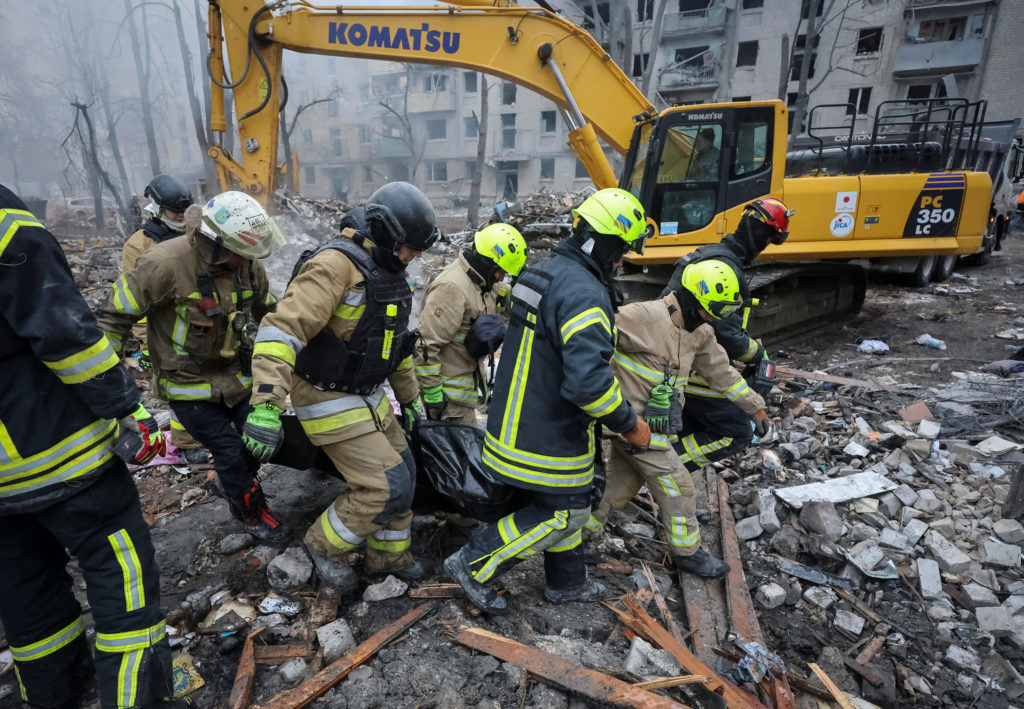
Russian missile hits apartment building in Ukraine's Kharkiv killing at least 10
#Russia #Ukraine #Kharkiv #Missile strike #Apartment building #Civilian casualties #War
📌 Key Takeaways
- A Russian missile struck an apartment building in Kharkiv, Ukraine.
- The attack has resulted in at least 10 confirmed deaths.
- Emergency responders are currently working at the site.
- The incident highlights the ongoing conflict in the region.
📖 Full Retelling
🏷️ Themes
Warfare, Casualties, Infrastructure
📚 Related People & Topics

Missile
Self-propelled guided weapon system
A missile is an airborne ranged weapon capable of self-propelled flight aided usually by a propellant, jet engine or rocket motor. Historically, 'missile' referred to any projectile that is thrown, shot or propelled towards a target; this usage is still recognized today with any unguided jet- or roc...

Ukraine
Country in Eastern Europe
# Ukraine **Ukraine** is a country located in Eastern Europe. It is the second-largest country in Europe by area, after Russia. Known for its extensive fertile plains, the nation serves as a critical global exporter of grain and is considered a middle power in international affairs. ## Geography a...

Russia
Country in Eastern Europe and North Asia
Russia, or the Russian Federation, is a country in Eastern Europe and North Asia. It is the largest country in the world, spanning eleven time zones and sharing land borders with fourteen countries. With a population of over 140 million, Russia is the most populous country in Europe and the ninth-mo...

Kharkiv
City in Kharkiv Oblast, Ukraine
Kharkiv, also known as Kharkov, is the second-largest city in Ukraine. Located in the northeast of the country, it is the largest city of the historic region of Sloboda Ukraine. Kharkiv is the administrative center of Kharkiv Oblast and Kharkiv Raion.

Apartment
Self-contained housing unit occupying part of a building
An apartment (North American English), flat (British English, Indian English, South African English) or unit (Australian English), is a self-contained housing unit that occupies part of a building. The housing tenure of apartments also varies considerably, from large-scale public housing, to owner o...
Entity Intersection Graph
Connections for Missile:
View full profileMentioned Entities
Deep Analysis
Why It Matters
This attack represents a significant escalation in civilian targeting during the Russia-Ukraine war, directly impacting innocent families and violating international humanitarian law. The strike on residential infrastructure in Ukraine's second-largest city demonstrates Russia's continued willingness to target urban centers far from frontlines, potentially signaling a shift toward terror tactics. This affects not only Ukrainian civilians who face daily survival threats but also international diplomatic efforts as Western nations must reconsider military aid and sanctions responses. The psychological impact on Ukrainian morale and global public opinion could influence both battlefield dynamics and long-term reconstruction planning.
Context & Background
- Kharkiv is Ukraine's second-largest city located just 40 kilometers from the Russian border, making it vulnerable to frequent shelling since the invasion began in February 2022
- This attack follows a pattern of Russian strikes on civilian infrastructure including previous apartment building attacks in Dnipro (January 2023, 46 killed) and Mariupol (March 2022, hundreds killed)
- The timing coincides with Ukraine's ongoing counteroffensive operations in eastern regions, suggesting possible Russian retaliation or diversion tactics
- International law under the Geneva Conventions prohibits deliberate attacks on civilian residences unless they're being used for military purposes
- Kharkiv had been partially liberated from Russian occupation in September 2022 but remains under constant threat due to its proximity to Russia
What Happens Next
Ukrainian emergency services will continue search and rescue operations through the coming days with potential for rising casualty counts. International investigations will likely be launched by UN agencies and war crimes prosecutors to document evidence. NATO countries may respond with accelerated weapons deliveries, particularly air defense systems, ahead of upcoming summits. Russia will probably continue similar strikes on urban centers while denying deliberate civilian targeting in diplomatic forums.
Frequently Asked Questions
Military analysts suggest these attacks serve multiple purposes: terrorizing Ukrainian populations to undermine morale, stretching Ukrainian air defense resources, and creating humanitarian crises that burden Ukraine's government. Some attacks may represent inaccurate targeting or weapons malfunctions rather than deliberate policy.
Based on previous similar attacks, Russia likely used either Kalibr cruise missiles launched from ships in the Black Sea or Iskander ballistic missiles from Russian territory. These weapons can carry large warheads capable of collapsing multi-story buildings, though exact identification requires forensic analysis of debris.
Such attacks make immediate peace talks less likely as they harden Ukrainian public opinion against any territorial concessions. They increase international pressure for war crimes accountability, potentially complicating future diplomatic channels that might require amnesty discussions for Russian officials.
Ukraine operates layered air defense including Western-supplied systems like Patriot and NASAMS, but cannot protect every location simultaneously. Civilian protection relies on early warning systems, underground shelters, and evacuation protocols, though these offer limited defense against direct hits on residential structures.
Initial counts typically underestimate totals as many victims remain buried under rubble for days. Ukrainian emergency services historically revise numbers upward as search operations progress, while Russian sources often dispute Ukrainian figures without providing alternative evidence.