
Supreme Court conservatives lean toward Republican bid to limit mail-in voting
#Supreme Court #mail-in voting #conservative justices #Republican #voting restrictions #election access #legal challenge
📌 Key Takeaways
- Conservative Supreme Court justices appear to support Republican-led restrictions on mail-in voting
- The case could significantly impact voting access and election procedures nationwide
- The decision may influence future election laws and voter turnout strategies
- Legal arguments center on the interpretation of existing voting rights and state authority
📖 Full Retelling
🏷️ Themes
Voting Rights, Election Law
📚 Related People & Topics
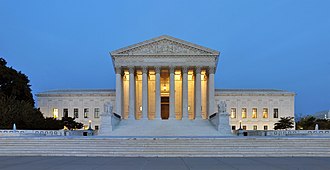
Supreme court
Highest court in a jurisdiction
In most legal jurisdictions, a supreme court, also known as a court of last resort, apex court, high (or final) court of appeal, and court of final appeal, is the highest court within the hierarchy of courts. Broadly speaking, the decisions of a supreme court are binding on all other courts in a nat...
Entity Intersection Graph
Connections for Republican:
Mentioned Entities
Deep Analysis
Why It Matters
This news matters because it could significantly impact voting access for millions of Americans, particularly elderly, disabled, and rural voters who rely on mail-in ballots. The Supreme Court's decision could reshape election administration ahead of the 2024 presidential election, potentially affecting outcomes in key swing states. It represents a major legal battle in the ongoing partisan conflict over voting rules, with implications for democratic participation and election integrity debates.
Context & Background
- Mail-in voting expanded dramatically during the COVID-19 pandemic, with many states adopting or expanding no-excuse absentee voting
- The 2020 election saw record mail-in voting, which became a focal point for election fraud claims despite numerous studies showing minimal fraud
- Previous Supreme Court decisions have gradually weakened the Voting Rights Act of 1965, giving states more latitude to set voting rules
- Republican-led states have passed numerous voting restrictions since 2020, while Democratic-led states have expanded voting access
- The current Supreme Court has a 6-3 conservative majority that has shown willingness to reconsider established voting rights precedents
What Happens Next
The Supreme Court will issue its ruling by late June 2024, potentially setting new nationwide standards for mail-in voting restrictions. State legislatures will likely respond with new voting laws depending on the decision's scope. The ruling will immediately affect ongoing litigation in multiple states challenging various voting restrictions ahead of the 2024 elections.
Frequently Asked Questions
The case likely involves restrictions such as witness requirements, ballot receipt deadlines, drop box limitations, or signature matching rules. These technical requirements can create barriers that disproportionately affect certain voter groups while being framed as election security measures.
Stricter mail-in voting rules could reduce turnout in key demographics and geographic areas, potentially shifting outcomes in competitive states. Both parties are preparing legal and ground operations based on anticipated voting rule changes for the upcoming election cycle.
Republicans typically argue that states have constitutional authority to regulate elections and that restrictions prevent fraud. Democrats and voting rights advocates counter that many restrictions disproportionately burden minority, elderly, and disabled voters without evidence of significant fraud.
Lower courts have issued conflicting rulings, with some striking down restrictions as violating the Voting Rights Act or Constitution, while others have upheld them as legitimate state election administration. This split creates the need for Supreme Court clarification.
States with Republican legislatures would likely implement additional voting restrictions, while Democratic states might expand mail-in voting protections. The decision could trigger new legislation at both state and federal levels regarding voting access standards.