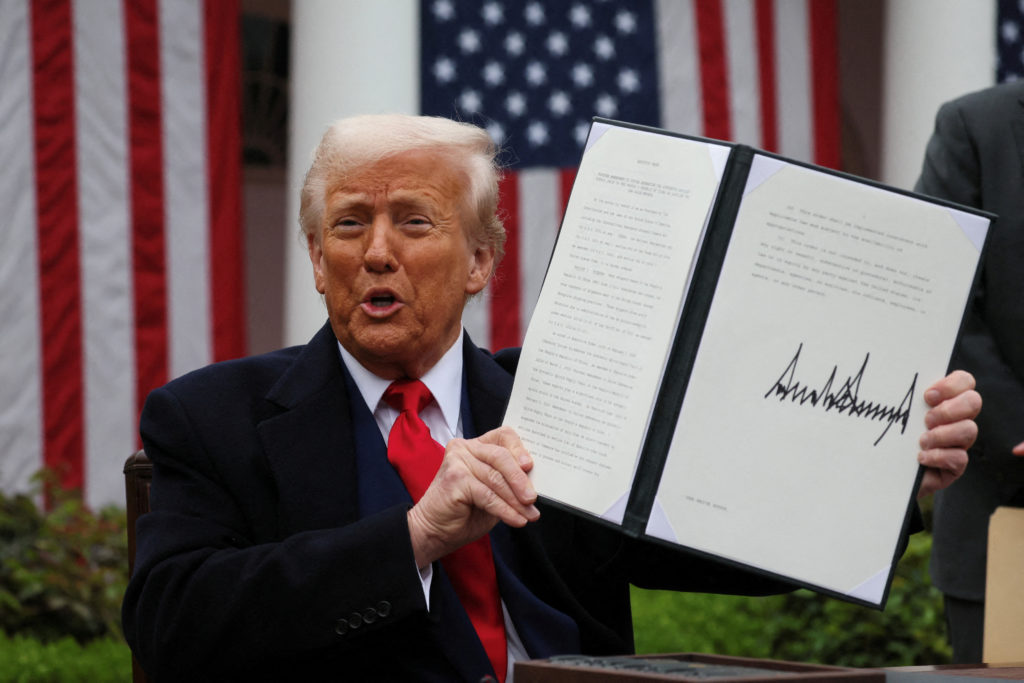
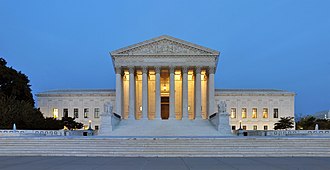
Supreme Court rules 6-3 to invalidate Trump's tariffs enacted under emergency powers.
The court found the president exceeded constitutional authority reserved for Congress.
Economic impact estimated at $3 trillion over a decade, with $133 billion already collected.
Administration plans to pursue tariffs under different legal authorities despite the setback.
📖 Full Retelling
The United States Supreme Court in Washington delivered a significant blow to President Donald Trump’s economic agenda on Friday, February 20, 2026, by striking down his far-reaching global tariffs in a decisive 6-3 ruling. The decision invalidates the sweeping "reciprocal" tariffs and other duties imposed under a 1977 emergency powers law, which the administration had utilized to target nearly every country in an effort to address trade deficits and drug trafficking. The justices determined that the president exceeded his constitutional authority, upholding the principle that the power to levy taxes resides with Congress, not the executive branch.
This landmark case represents the first major component of Trump’s policy agenda to face definitive judgment by a Supreme Court that includes three justices he appointed during his first term. While the president had previously secured victories on the emergency docket regarding federal staffing and funding cuts, this legal challenge drew opposition from a wide political spectrum, including libertarian and pro-business groups typically aligned with the Republican Party. The challengers, comprising a dozen largely Democratic-leaning states and various small businesses ranging from plumbing suppliers to toy manufacturers, argued that the emergency statute does not explicitly authorize tariff imposition and failed the same legal scrutiny that doomed President Joe Biden's student loan forgiveness program.
The economic ramifications of the ruling are substantial, as the Congressional Budget Office estimated the tariffs would cost approximately $3 trillion over the next decade. Federal data indicates the Treasury had already collected more than $133 billion from these import taxes since they were implemented in April 2025 and earlier that year. With the legal authority for these specific levies removed, major corporations like Costco and numerous small businesses are now positioned to demand refunds for the taxes they paid. Although the administration has indicated it will attempt to maintain a tariff framework using other statutory authorities, the decision curtails the speed and severity of presidential action on trade, reinforcing the separation of powers in economic policy.
🏷️ Themes
US Politics, Supreme Court, Trade Policy, Constitutional Law
In most legal jurisdictions, a supreme court, also known as a court of last resort, apex court, high (or final) court of appeal, and court of final appeal, is the highest court within the hierarchy of courts. Broadly speaking, the decisions of a supreme court are binding on all other courts in a nat...
President of the United States (2017–2021; since 2025)
Donald John Trump (born June 14, 1946) is an American politician, media personality, and businessman who is the 47th president of the United States. A member of the Republican Party, he served as the 45th president from 2017 to 2021.
Born into a wealthy New York City family, Trump graduated from the...
By — Lindsay Whitehurst, Associated Press Lindsay Whitehurst, Associated Press Leave your feedback Share Copy URL https://www.pbs.org/newshour/politics/supreme-court-strikes-down-trumps-sweeping-tariffs Email Facebook Twitter LinkedIn Pinterest Tumblr Share on Facebook Share on Twitter Supreme Court strikes down Trump's sweeping tariffs Politics Feb 20, 2026 10:11 AM EST WASHINGTON — The Supreme Court struck down President Donald Trump's far-reaching global tariffs on Friday, handing him a significant loss on an issue crucial to his economic agenda. The 6-3 decision centers on tariffs imposed under an emergency powers law, including the sweeping "reciprocal" tariffs he levied on nearly every other country. It's the first major piece of Trump's broad agenda to come squarely before the nation's highest court, which he helped shape with the appointments of three conservative jurists in his first term. Justices Samuel Alito, Clarence Thomas and Brett Kavanaugh dissented. The Republican president has been vocal about the case, calling it one of the most important in U.S. history and saying a ruling against him would be an economic body blow to the country. But legal opposition crossed the political spectrum, including libertarian and pro-business groups that are typically aligned with the GOP. Polling has found tariffs aren't broadly popular with the public, amid wider voter concern about affordability. Educate your inbox Subscribe to Here’s the Deal, our politics newsletter for analysis you won’t find anywhere else. Enter your email address Subscribe Form error message goes here. Thank you. Please check your inbox to confirm. The Supreme Court ruling comes despite a series of short-term wins on the court's emergency docket that have allowed Trump to push ahead with extraordinary flexes of executive power on issues ranging from high-profile firings to major federal funding cuts. The tariffs decision doesn't stop Trump from imposing duties under other laws. While those ha...