
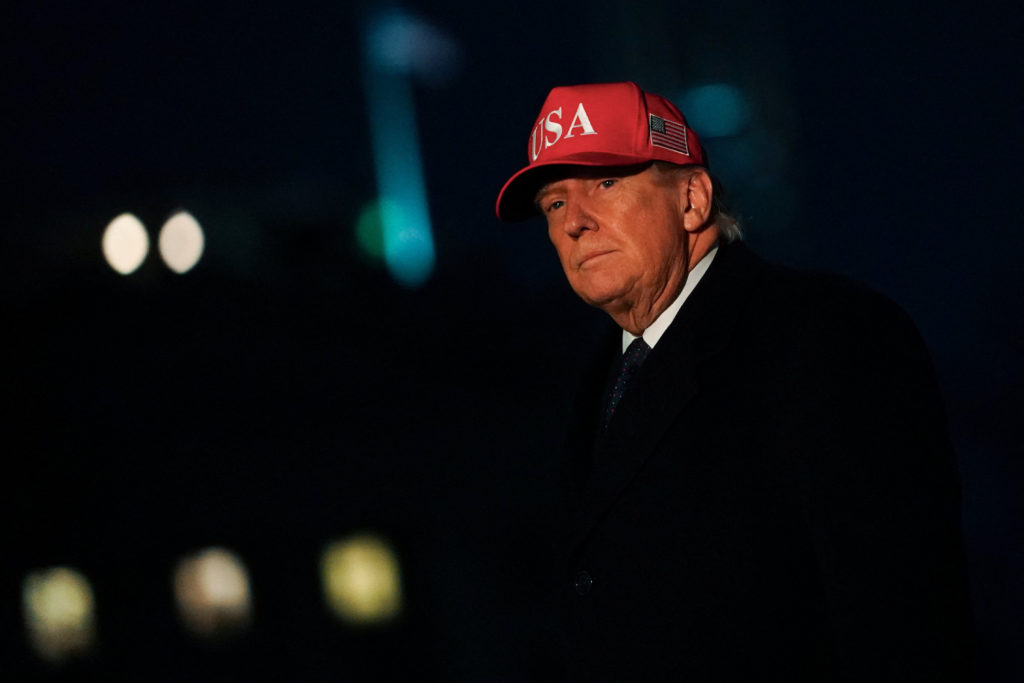
Trump rules out talks absent Iran's 'unconditional surrender' as Israel strikes Lebanon
#Trump #Iran #Israel #Lebanon #military strikes #unconditional surrender #Middle East #escalation
📌 Key Takeaways
- Former President Trump demands Iran's unconditional surrender before any talks.
- Israel conducts military strikes in Lebanon, escalating regional tensions.
- The statement links Iran's actions to broader Middle East conflicts.
- The situation raises concerns about potential wider military escalation.
📖 Full Retelling
🏷️ Themes
Geopolitical Conflict, Diplomatic Stance
📚 Related People & Topics

Iran
Country in West Asia
# Iran **Iran**, officially the **Islamic Republic of Iran** and historically known as **Persia**, is a sovereign country situated in West Asia. It is a major regional power, ranking as the 17th-largest country in the world by both land area and population. Combining a rich historical legacy with a...

Middle East
Transcontinental geopolitical region
The Middle East is a geopolitical region encompassing the Arabian Peninsula, Egypt, Iran, Iraq, the Levant, and Turkey. The term came into widespread usage by Western European nations in the early 20th century as a replacement of the term Near East (both were in contrast to the Far East). The term ...

Lebanon
Country in West Asia
Lebanon, officially the Lebanese Republic, is a country in the Levant region of West Asia. Situated at the crossroads of the Mediterranean Basin and the Arabian Peninsula, it is bordered by Syria to the north and east, Israel to the south, and the Mediterranean Sea to the west; Cyprus lies a short d...

Israel
Country in West Asia
Israel, officially the State of Israel, is a country in the Southern Levant region of West Asia. It is bordered by Lebanon to the north, Syria to the northeast, Jordan to the east, and Egypt to the southwest. Israel occupies the West Bank and the Gaza Strip of the Palestinian territories, as well as...

Donald Trump
President of the United States (2017–2021; since 2025)
Donald John Trump (born June 14, 1946) is an American politician, media personality, and businessman who is the 47th president of the United States. A member of the Republican Party, he served as the 45th president from 2017 to 2021. Born into a wealthy New York City family, Trump graduated from the...
Entity Intersection Graph
Connections for Iran:
Mentioned Entities
Deep Analysis
Why It Matters
This news matters because it signals a major escalation in Middle East tensions with potential global consequences. The combination of Trump's hardline stance against Iran and Israel's military action in Lebanon creates a volatile situation that could spiral into broader regional conflict. This affects not only the immediate countries involved but also global energy markets, international diplomacy, and regional stability. The refusal to negotiate without 'unconditional surrender' represents a significant departure from traditional diplomatic approaches to international disputes.
Context & Background
- The U.S.-Iran relationship has been strained since the 1979 Iranian Revolution and subsequent hostage crisis
- Israel and Lebanon have had periodic conflicts, most notably the 2006 Lebanon War between Israel and Hezbollah
- The Trump administration withdrew from the Iran nuclear deal (JCPOA) in 2018 and implemented maximum pressure sanctions
- Iran has expanded its regional influence through proxy groups in Lebanon, Syria, Iraq, and Yemen
- Israel has conducted numerous airstrikes in Lebanon targeting Hezbollah positions and Iranian-linked facilities
What Happens Next
Increased military posturing is likely in the coming weeks, with potential for retaliatory strikes from Iranian-backed groups. Diplomatic efforts by European and regional powers may intensify to prevent full-scale conflict. The situation could impact global oil prices if shipping routes through the Strait of Hormuz are threatened. Further Israeli military operations in Lebanon may occur if Hezbollah responds to the strikes.
Frequently Asked Questions
It means the U.S. demands Iran completely capitulate to all American demands without any negotiations or concessions. This would likely include ending its nuclear program, withdrawing support for regional proxies, and accepting stringent verification measures without receiving sanctions relief in return.
Israel is likely targeting Iranian-backed Hezbollah positions or weapons transfers in Lebanon. These strikes are part of Israel's ongoing campaign to prevent Iran from establishing military infrastructure near its northern border and to counter Hezbollah's growing arsenal.
Iran could respond through proxy attacks by Hezbollah in Lebanon or other allied groups in Syria and Iraq. They might also accelerate their nuclear program or conduct naval exercises in the Persian Gulf to demonstrate military capability.
The main risks include triggering a wider regional war, destabilizing Lebanon further, disrupting global oil supplies, and eliminating diplomatic pathways that could prevent nuclear proliferation. It could also strain U.S. relations with European allies who favor negotiation.
Civilians face increased risk of violence, economic hardship from potential sanctions or conflict, and displacement if hostilities escalate. Lebanese citizens already suffering from economic crisis would be particularly vulnerable to further instability.