
SP
BravenNow
Daylight saving time
🌐 Entity

Daylight saving time

Seasonal change of clock settings

📊 Rating

2 news mentions · 👍 0 likes · 👎 0 dislikes

💡 Information Card

# Daylight Saving Time


---


Who / What

Daylight saving time (DST) is a seasonal adjustment of clock settings to optimize daylight usage during summer months. It involves shifting clocks forward by one hour in spring and backward in autumn, aligning the period with natural daylight hours.


---


Background & History

Daylight saving time originated as a practical solution to conserve energy during World War I, when Germany first implemented it in 1916. The idea was later adopted globally after its success in extending evening light for leisure activities. Key milestones include the U.S. adoption of DST under President Woodrow Wilson (1918), though it was repealed in 1920 before being reinstated in 1945 during wartime energy shortages. The practice became standardized in many countries, particularly after the 1973 oil crisis, to reduce electricity demand.


---


Why Notable

DST enhances productivity and leisure by extending evening daylight hours, benefiting sectors like retail, tourism, and outdoor recreation. It also influences economic activity, public safety (e.g., reduced traffic accidents during darker evenings), and energy conservation efforts. While debated for its effectiveness, DST remains a widely observed practice in over 100 countries.


---


In the News

Recent debates center on DST’s sustainability amid climate change discussions and shifting daylight patterns due to global warming. Some regions (e.g., Arizona, Hawaii) have permanently abandoned DST, while others face calls for reform or permanent standard time. Its impact on sleep patterns and health remains a topic of ongoing research.


---


Key Facts

  • **Type:** Seasonal clock adjustment practice
  • **Also known as:**
  • Daylight savings time (U.S./Canada)
  • Summer time (UK, EU, Australia)
  • European summer time (EU-specific)
  • **Founded / Born:** No formal founding date; first implemented in **1916** by Germany.
  • **Key dates:**
  • **1918**: U.S. adopts DST during WWI (later repealed).
  • **1945–1972**: Permanent DST in the U.S. during wartime/energy crises.
  • **2007**: U.S. federal law (Energy Policy Act) standardizes start dates (March last Sunday to November first Sunday).
  • **Geography:**
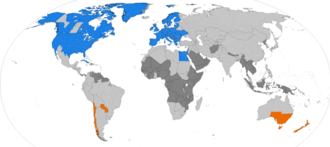
  • Observed in **~100+ countries**, including EU, Canada, Australia, parts of the Americas, and Africa.
  • Exemptions exist (e.g., Arizona, Hawaii, Switzerland’s Ticino).
  • **Affiliation:** No parent organization; governed by national laws or regional agreements.

  • ---

    Links

  • [Wikipedia](https://en.wikipedia.org/wiki/Daylight_saving_time)
  • Sources

    📌 Topics

    • Time Policy (2)
    • Public Health (2)
    • Energy Conservation (1)
    • Political Division (1)

    🏷️ Keywords

    Daylight Saving Time (2) · 2026 (1) · sleep disruption (1) · energy savings (1) · legislation (1) · public debate (1) · health risks (1) · time change (1) · Clock Change (1) · Sleep Disruption (1) · Legislative Action (1) · Circadian Rhythms (1) · Public Opinion (1) · Time Policy (1)

    📖 Key Information

    Daylight saving time (DST), also referred to as daylight savings time, daylight time (United States and Canada), or summer time (United Kingdom, European Union, and others), is the practice of advancing clocks to make better use of the longer daylight available during summer so that darkness falls at a later clock time. The typical implementation of DST is to adjust clocks ahead of standard time by one hour in spring or late winter, and to set clocks back by one hour in the autumn (or fall in North American English, hence the mnemonic: "spring forward and fall back"). In many countries, the part of the year when DST is observed is much longer than the part aligned to standard time.

    📰 Related News (2)

    🔗 Entity Intersection Graph

    Circadian rhythm(1)Daylight saving time

    People and organizations frequently mentioned alongside Daylight saving time:

    🔗 External Links