Who / What
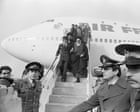
The Iranian Revolution refers to a series of events that took place in Iran between 1978 and 1979. It resulted in the overthrow of the Pahlavi dynasty and the establishment of the Islamic Republic of Iran. The revolution is primarily associated with Ruhollah Khomeini, an Islamist cleric who became the central figure in the new regime.
Background & History
The Iranian Revolution began in 1978 as a series of popular protests against the rule of Shah Mohammad Reza Pahlavi. These protests stemmed from dissatisfaction with his autocratic rule and perceived Western influence. The revolution culminated in 1979 with the overthrow of the Shah and the return of Khomeini from exile. This marked the end of Iran's monarchy and the beginning of a theocratic republic.
Why Notable
The Iranian Revolution is a pivotal event in modern history, fundamentally reshaping Iran's political and social landscape. It led to the establishment of a powerful Islamic state with significant regional influence. The revolution had far-reaching consequences for the Middle East and the global balance of power, influencing conflicts and political movements for decades to come.
In the News
The Iranian Revolution remains relevant due to its ongoing impact on Iranian politics, international relations, and regional conflicts. Recent developments include the continued influence of the Islamic Republic in the Middle East, its nuclear program, and its involvement in regional conflicts like those in Syria and Yemen. Understanding the revolution is crucial for comprehending contemporary geopolitical dynamics.