
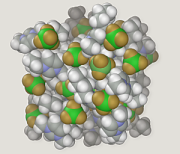
Molecular Modelling
Molecular modelling encompasses theoretical and computational methods used to simulate the behavior of molecules. It's employed across fields like computational chemistry, drug design, computational biology, and materials science to study molecular systems. While basic calculations can be done manually, computers are essential for modeling reasonably sized systems.
Background & History
The field of molecular modelling emerged with the development of computers in the mid-20th century, providing the computational power needed to simulate molecular interactions. Early methods focused on simple force fields and basic molecular geometries. Over time, advancements in computational power and theoretical understanding led to increasingly sophisticated methods capable of handling larger and more complex systems. The development of molecular dynamics simulations and quantum mechanical calculations were key milestones in the field's evolution.
Why Notable
Molecular modelling is crucial for understanding chemical properties and predicting molecular behavior without requiring extensive experimental work. It plays a vital role in drug discovery by enabling researchers to virtually screen and optimize drug candidates. It also aids in materials science by allowing the design of new materials with desired properties. The ability to simulate complex systems has led to numerous advancements in various scientific disciplines, significantly accelerating research and development.
In the News
Molecular modelling is increasingly important in areas like personalized medicine, where it can be used to design drugs tailored to individual patients. Recent developments include improved algorithms for simulating protein folding and advancements in using AI/ML to accelerate molecular simulations. The field continues to advance as computational power grows and new theoretical methods are developed, leading to more accurate and efficient simulations.

