
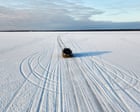
Drive the ‘ice road’, Estonians told – just don’t fasten your seatbelt
#Estonia #Ice road #Baltic Sea #Saaremaa #Hiiumaa #Winter travel #Arctic weather
📌 Key Takeaways
- A 20km ice road has opened between the Estonian islands of Saaremaa and Hiiumaa due to extreme cold.
- Drivers are strictly prohibited from wearing seatbelts to allow for a quick escape if the ice breaks.
- Specific speed limits are enforced to avoid creating resonant waves that could shatter the ice.
- The road serves as a shortcut across the frozen Baltic Sea, replacing the standard ferry routes.
📖 Full Retelling
Estonian transport authorities officially opened a unique 20-kilometer ice road connecting the western islands of Saaremaa and Hiiumaa this week following a sustained Arctic cold spell that froze the Baltic Sea. The seasonal route, situated between the Baltic Sea and the Gulf of Riga, was commissioned to provide a faster logistical link between the two island communities while temperatures across Northern Europe remain significantly below freezing. The opening of such roads is a rare occurrence that depends entirely on the thickness and stability of the sea ice, which must be rigorously tested before civilian vehicles are permitted to transit.
Driving on the frozen sea comes with a set of unconventional safety regulations that contradict standard road laws. Most notably, authorities have strictly forbidden the use of seatbelts while traversing the ice. This counterintuitive rule is designed to ensure that drivers and passengers can exit their vehicles as quickly as possible should the ice crack or the car begin to sink. Furthermore, motorists are prohibited from driving at speeds between 25 and 40 kilometers per hour (15-25 mph), as the vibrations generated at those specific speeds can create resonant waves in the ice, potentially causing it to fracture under the vehicle's weight.
In addition to the seatbelt and speed restrictions, vehicles must maintain a minimum distance of at least 250 meters from one another to avoid concentrated pressure on the frozen surface. The road is typically only open during daylight hours and may be closed at a moment's notice if weather conditions change or if the ice begins to weaken. For the residents of Saaremaa and Hiiumaa, this seasonal passage serves as a vital shortcut, bypassing the need for lengthy ferry journeys and demonstrating the unique ways in which Baltic nations adapt to extreme winter climates.
🏷️ Themes
Transport, Environment, Safety
Entity Intersection Graph
No entity connections available yet for this article.