
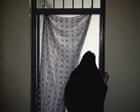
‘A few beatings won’t kill you’: judge rejects divorce request of woman abused by husband in Afghanistan
#Afghanistan #divorce #domestic abuse #judge #women's rights #legal system #violence
📌 Key Takeaways
- An Afghan judge denied a woman's divorce request despite evidence of domestic abuse.
- The judge dismissed the severity of the abuse with the statement 'A few beatings won’t kill you'.
- The case highlights systemic failures in protecting women from domestic violence in Afghanistan.
- The ruling reflects cultural and legal barriers women face in seeking justice and separation.
📖 Full Retelling
🏷️ Themes
Domestic Violence, Judicial Injustice
📚 Related People & Topics

Afghanistan
Country in Central and South Asia
Afghanistan, officially the Islamic Emirate of Afghanistan, is a landlocked country located at the crossroads of Central and South Asia. It is bordered by Pakistan to the east and south, Iran to the west, Turkmenistan to the northwest, Uzbekistan to the north, Tajikistan to the northeast, and China ...
Entity Intersection Graph
Connections for Afghanistan:
Mentioned Entities
Deep Analysis
Why It Matters
This case highlights systemic failures in Afghanistan's judicial system regarding domestic violence and women's rights, particularly under Taliban rule. It directly affects Afghan women seeking legal protection from abuse, demonstrating how cultural norms and patriarchal interpretations of Islamic law can override basic human rights protections. The ruling sets a dangerous precedent that normalizes domestic violence and denies victims legal recourse, potentially discouraging other abused women from seeking help through official channels.
Context & Background
- Afghanistan has historically had some of the world's highest rates of domestic violence, with UN reports indicating approximately 90% of Afghan women experience some form of abuse
- The Taliban's return to power in 2021 led to the dissolution of the Ministry of Women's Affairs and elimination of specialized courts for gender-based violence cases
- Under previous Western-backed governments, Afghanistan enacted the 2009 Elimination of Violence Against Women law, which criminalized various forms of abuse including beatings, though enforcement was inconsistent
- Traditional interpretations of Sharia law in Afghanistan often emphasize marital obligations over individual rights, with some judges viewing domestic discipline as permissible
- Afghanistan's divorce laws traditionally favor men, with women facing significant barriers including requirements to prove severe abuse or pay substantial compensation
What Happens Next
The woman may appeal to a higher court, though prospects remain dim under the current judicial system. International human rights organizations will likely document and condemn this case, increasing pressure on the Taliban government. Similar rulings are expected to continue unless fundamental changes occur in Afghanistan's legal interpretation or international intervention increases. The case may influence upcoming UN Human Rights Council discussions about Afghanistan's treatment of women.
Frequently Asked Questions
The judge's reasoning reflects deeply entrenched cultural and religious interpretations in Afghanistan that normalize domestic violence as marital discipline. Under the Taliban's interpretation of Islamic law, judges may view moderate physical punishment as permissible within marriage, prioritizing marital preservation over individual safety.
Options are extremely limited since the Taliban dissolved specialized courts for gender-based violence. Women can theoretically appeal to higher courts, but face similar patriarchal attitudes. Some seek help through informal community mediation or family networks, though these often pressure women to remain in abusive marriages.
The previous Western-backed government established legal protections including the 2009 Elimination of Violence Against Women law and created specialized courts. While enforcement was inconsistent and cultural barriers remained, women had significantly more legal avenues for addressing domestic violence than under current Taliban rule.
This case strengthens arguments for maintaining sanctions against the Taliban government and may affect diplomatic recognition efforts. It provides evidence for UN investigations into human rights violations and could influence humanitarian aid conditions tied to women's rights protections.
Some underground networks and international NGOs continue operating discreetly, providing safe houses and legal assistance despite Taliban restrictions. However, their capacity is severely limited, and workers face significant personal risk under the current regime's crackdown on women's rights organizations.