
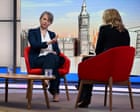
Cooper rejects Blair’s call for UK to have backed Trump’s strikes on Iran
#Yvette Cooper #Tony Blair #Trump #Iran strikes #UK foreign policy #military intervention #US-UK relations
📌 Key Takeaways
- Yvette Cooper rejects Tony Blair's suggestion that the UK should have supported Trump's strikes on Iran.
- The disagreement highlights a divide within UK political leadership on foreign policy alignment with the US.
- Cooper's stance reflects a cautious approach to military intervention in the Middle East.
- The exchange underscores ongoing debates over UK's independent foreign policy stance.
📖 Full Retelling
🏷️ Themes
Foreign Policy, Political Disagreement
📚 Related People & Topics
Foreign relations of the United Kingdom
The diplomatic foreign relations of the United Kingdom are conducted by the Foreign, Commonwealth and Development Office, headed by the foreign secretary. The prime minister and numerous other agencies play a role in setting policy, and many institutions and businesses have a voice and a role. The U...

Yvette Cooper
British politician (born 1969)
Yvette Cooper (born 20 March 1969) is a British politician who has served as Foreign Secretary since September 2025, having previously served as Home Secretary from 2024 to 2025. A member of the Labour Party, Cooper has been Member of Parliament (MP) for Pontefract, Castleford and Knottingley, previ...

Tony Blair
Prime Minister of the United Kingdom from 1997 to 2007
Sir Anthony Charles Lynton Blair (born 6 May 1953) is a British politician who served as Prime Minister of the United Kingdom from 1997 to 2007, and Leader of the Labour Party from 1994 to 2007. He was Leader of the Opposition from 1994 to 1997 and held shadow cabinet posts from 1987 to 1994. Blair ...

Donald Trump
President of the United States (2017–2021; since 2025)
Donald John Trump (born June 14, 1946) is an American politician, media personality, and businessman who is the 47th president of the United States. A member of the Republican Party, he served as the 45th president from 2017 to 2021. Born into a wealthy New York City family, Trump graduated from the...
Entity Intersection Graph
Connections for Foreign relations of the United Kingdom:
Mentioned Entities
Deep Analysis
Why It Matters
This news matters because it reveals a significant foreign policy disagreement between current UK Labour leadership and a former Prime Minister from the same party, highlighting evolving approaches to international alliances. It affects UK-US relations, UK-Iran relations, and demonstrates how political parties navigate legacy positions versus current geopolitical realities. The disagreement signals potential shifts in how the UK might engage with future US military actions under different administrations.
Context & Background
- Tony Blair was UK Prime Minister from 1997-2007 and strongly supported US military actions including the 2003 Iraq invasion
- Yvette Cooper is current Shadow Home Secretary and senior Labour Party figure positioning for potential future leadership
- The UK has historically been America's closest military ally but has shown more independence in recent years
- Iran-US tensions have escalated since Trump withdrew from the 2015 nuclear deal in 2018
- Labour Party has been rebuilding foreign policy positions after Jeremy Corbyn's more anti-interventionist leadership
What Happens Next
Labour will likely continue clarifying its foreign policy stance ahead of potential elections. The UK government may face pressure to define its position on future US military actions. This public disagreement could influence Labour's internal debates about transatlantic relations and intervention policy. Watch for further statements from Labour leadership and potential policy documents outlining their approach to UK-US security cooperation.
Frequently Asked Questions
It shows Labour distancing itself from Blair-era foreign policy, particularly the automatic alignment with US military actions. This reflects both changing party values and lessons learned from Iraq War criticisms.
It suggests future Labour governments might be more selective in supporting US military actions, requiring clearer justifications and international legitimacy. The 'special relationship' could become more conditional under different UK leadership.
It highlights ongoing Labour Party evolution on foreign policy and national security. The disagreement helps Cooper position herself as representing modern Labour values distinct from Blair's legacy.
Blair argued the UK should have supported Trump's strikes on Iran to maintain the special relationship with America, viewing consistent alliance support as crucial regardless of which US administration is in power.
The Conservative government under Boris Johnson has generally maintained close ties with Trump while being cautious about direct military involvement. Labour's position creates clearer alternative policy options for voters.