
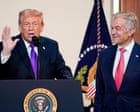
Trump announces ‘fraud’ crackdown in Democratic states as arrests begin in California
#Trump #fraud crackdown #Democratic states #arrests #California #electoral fraud #political action
📌 Key Takeaways
- Trump announces a 'fraud' crackdown targeting Democratic states.
- Arrests have begun in California as part of the initiative.
- The action is framed as a response to alleged electoral fraud.
- The move is politically charged, focusing on states with Democratic leadership.
📖 Full Retelling
🏷️ Themes
Political crackdown, Electoral fraud
📚 Related People & Topics

California
U.S. state
California () is a state in the Western United States that lies on the Pacific Coast. It borders Oregon to the north, Nevada and Arizona to the east, and shares an international border with the Mexican state of Baja California to the south. With almost 40 million residents across an area of 163,696 ...

Donald Trump
President of the United States (2017–2021; since 2025)
Donald John Trump (born June 14, 1946) is an American politician, media personality, and businessman who is the 47th president of the United States. A member of the Republican Party, he served as the 45th president from 2017 to 2021. Born into a wealthy New York City family, Trump graduated from the...
Entity Intersection Graph
Connections for California:
Mentioned Entities
Deep Analysis
Why It Matters
This announcement represents a significant escalation in political tensions between federal and state governments, potentially affecting millions of voters in Democratic-leaning states. It matters because it could lead to widespread voter intimidation, suppress legitimate voter participation, and undermine public confidence in election systems. The targeting of specific states based on political affiliation raises constitutional concerns about equal protection and federal overreach, affecting election officials, voters, and the broader democratic process.
Context & Background
- The 2020 presidential election saw unprecedented claims of voter fraud from the Trump campaign, though numerous audits and court cases found no evidence of widespread fraud
- Multiple states have implemented stricter voting laws since 2020, often along partisan lines, with Republican-led states generally tightening rules and Democratic-led states expanding access
- Federal election enforcement has historically been non-partisan, with previous administrations avoiding targeting specific states based on political affiliation
- California has been a frequent target of Republican criticism for its voting policies, including universal mail-in voting and same-day registration
What Happens Next
Legal challenges are expected immediately from California and other targeted states, potentially reaching the Supreme Court within weeks. Congressional hearings will likely be called to investigate the enforcement actions, with Democratic lawmakers demanding transparency about arrest criteria. Additional Democratic states may be added to the crackdown list in coming months, particularly before the midterm elections, creating further political polarization around voting rights.
Frequently Asked Questions
Federal authority comes from laws like the Voting Rights Act and Help America Vote Act, but states traditionally administer elections. This creates potential constitutional conflicts over federalism and states' rights that courts will need to resolve.
It could create voter confusion and suppression through intimidation, potentially reducing turnout. Election officials may face increased scrutiny and resource constraints while implementing normal voting procedures.
The announcement didn't specify evidence, but previous fraud claims have been largely debunked. Any prosecutions will require meeting legal standards of proof in court proceedings.
The announcement suggests this is part of broader targeting of Democratic states, making similar actions in states like New York, Illinois, or Washington likely in the near future.
Organizations like the ACLU and NAACP are preparing legal challenges and voter protection efforts, arguing these actions disproportionately target minority communities and violate voting rights.