
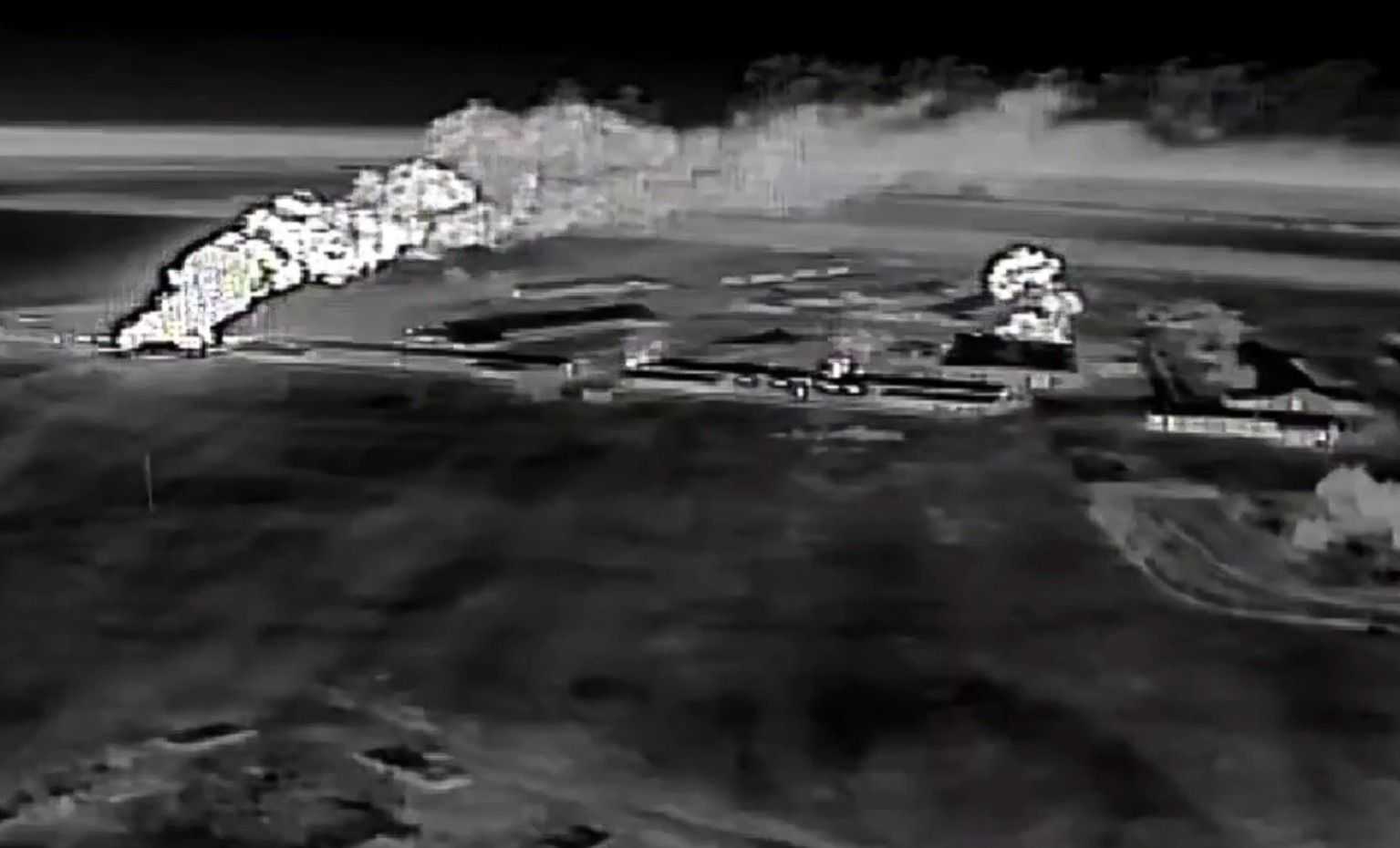
Ukrainian drone blitz hits Russian aircraft repair plant in occupied Crimea, SBU says
#Ukraine #Russia #Crimea #drone attack #SBU #aircraft repair plant #occupied territory
📌 Key Takeaways
- Ukrainian drones targeted a Russian aircraft repair plant in occupied Crimea.
- The Security Service of Ukraine (SBU) claimed responsibility for the attack.
- The strike is part of a recent escalation in Ukrainian drone operations against Russian military infrastructure.
- The attack demonstrates Ukraine's capability to conduct long-range strikes in occupied territories.
📖 Full Retelling
🏷️ Themes
Military Conflict, Drone Warfare
📚 Related People & Topics

Russia
Country in Eastern Europe and North Asia
Russia, or the Russian Federation, is a country in Eastern Europe and North Asia. It is the largest country in the world, spanning eleven time zones and sharing land borders with fourteen countries. With a population of over 140 million, Russia is the most populous country in Europe and the ninth-mo...

Crimea
Peninsula in Europe
Crimea ( kry-MEE-ə) is a peninsula in Eastern Europe, on the northern coast of the Black Sea, almost entirely surrounded by the Black Sea and the smaller Sea of Azov. The Isthmus of Perekop connects the peninsula to Kherson Oblast in mainland Ukraine. To the east, the Crimean Bridge, constructed in...

Ukraine
Country in Eastern Europe
# Ukraine **Ukraine** is a country located in Eastern Europe. It is the second-largest country in Europe by area, after Russia. Known for its extensive fertile plains, the nation serves as a critical global exporter of grain and is considered a middle power in international affairs. ## Geography a...
Entity Intersection Graph
Connections for Russia:
Mentioned Entities
Deep Analysis
Why It Matters
This attack demonstrates Ukraine's growing capability to strike strategic Russian military assets in occupied territories, potentially degrading Russia's air force maintenance capacity. It affects Ukrainian military strategy by showcasing their ability to project power into Crimea, which Russia considers vital territory. The strike also impacts regional security dynamics by challenging Russia's perceived control over annexed regions and could influence future Western military aid decisions based on demonstrated effectiveness.
Context & Background
- Russia annexed Crimea from Ukraine in 2014, a move condemned by most UN member states as illegal
- Crimea has served as a crucial military hub for Russia's Black Sea Fleet and air operations throughout the Ukraine war
- Ukraine has increasingly targeted Crimea with drone and missile strikes since 2023, aiming to disrupt Russian logistics and command centers
- The Security Service of Ukraine (SBU) has claimed responsibility for numerous sabotage operations behind Russian lines
- Aircraft repair facilities are high-value targets as they directly impact Russia's ability to maintain operational aircraft sortie rates
What Happens Next
Russia will likely enhance air defenses around critical Crimean infrastructure while conducting retaliatory strikes on Ukrainian targets. Ukraine may continue similar drone operations against other high-value targets in occupied territories. International observers will monitor whether this represents a new phase in Ukraine's capability to strike deeper into Russian-controlled areas ahead of potential spring offensives.
Frequently Asked Questions
Aircraft repair plants are critical for maintaining operational readiness of air forces. Damaging such facilities reduces Russia's ability to keep combat aircraft flying, potentially grounding planes that need maintenance and stretching already limited Russian repair capabilities.
Crimea serves as a major Russian military hub for operations in southern Ukraine. Striking targets there disrupts logistics, challenges Russian control of annexed territory, and has psychological impact by showing Ukraine can reach areas Russia considers secure.
Ukraine has developed and acquired various long-range drones including modified commercial models and purpose-built military UAVs. These often carry explosive payloads and can travel hundreds of kilometers, though specific capabilities remain classified for operational security.
Such strikes demonstrate Ukraine's evolving asymmetric warfare capabilities despite resource constraints. They force Russia to divert resources to rear-area defense and may influence Western allies' decisions about providing longer-range weapons systems to Ukraine.
The Security Service of Ukraine conducts intelligence, sabotage, and special operations. Their involvement suggests coordinated planning beyond conventional military strikes, potentially involving local resistance networks and sophisticated intelligence gathering in occupied territories.