
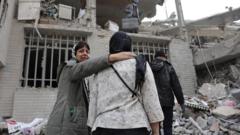
'What if we're left with ruins?': Doubts creep in for Iranians who supported war
#Iran #war support #doubts #ruins #public opinion #conflict #societal impact
📌 Key Takeaways
- Some Iranians who initially supported war are now expressing doubts about its consequences.
- Concerns are rising over potential long-term damage and societal ruin from continued conflict.
- The shift in public sentiment reflects growing war-weariness and questioning of strategic goals.
- The article highlights internal divisions and the psychological impact of prolonged military engagement.
🏷️ Themes
War Doubts, Public Sentiment
Entity Intersection Graph
No entity connections available yet for this article.
Deep Analysis
Why It Matters
This news matters because it reveals shifting public sentiment in Iran regarding military conflicts, which could impact government policy and regional stability. It affects ordinary Iranians facing economic hardship and security concerns, regional neighbors vulnerable to spillover effects, and international stakeholders monitoring Iran's geopolitical posture. The erosion of domestic support for war could constrain Iran's ability to pursue aggressive foreign interventions, potentially altering dynamics in conflicts where Iranian proxies are involved.
Context & Background
- Iran has been involved in regional proxy conflicts for decades, notably supporting groups in Syria, Yemen, Iraq, and Lebanon
- The country faces severe economic challenges including high inflation, unemployment, and international sanctions that have strained public resources
- Previous periods of war, such as the 1980-1988 Iran-Iraq War, left deep scars on Iranian society with significant casualties and economic damage
- Iran's government has historically framed military engagements as necessary for national security and regional influence, often rallying public support through nationalist and religious narratives
What Happens Next
Increased domestic pressure may force Iranian leadership to reconsider military expenditures and foreign policy priorities, potentially leading to diplomatic overtures or reduced support for proxy groups. Government propaganda efforts will likely intensify to counter dissent, while security measures could tighten against public protests. Regional adversaries may test Iran's resolve if perceived domestic weakness emerges, possibly escalating tensions in proxy conflict zones.
Frequently Asked Questions
Economic hardships from sanctions and domestic mismanagement have made military expenditures increasingly unpopular as citizens struggle with basic needs. The prolonged nature of regional conflicts with unclear benefits for ordinary Iranians has eroded initial patriotic support.
Reduced domestic support could limit Iran's ability to sustain costly proxy wars, potentially weakening its leverage in countries like Syria and Yemen. However, the government may attempt to maintain influence through less expensive means like political and ideological support.
International sanctions have crippled Iran's economy, causing currency devaluation, inflation exceeding 40%, and widespread unemployment. Citizens increasingly question military spending abroad while domestic infrastructure and social services deteriorate.
Authorities will likely intensify nationalist propaganda while suppressing dissent through increased surveillance and arrests. They may also announce symbolic domestic economic measures to placate public frustration while maintaining core foreign policy objectives.
Domestic pressure could push Iran toward more pragmatic nuclear negotiations to secure sanctions relief, though hardliners may resist concessions. The government faces balancing acts between economic needs and ideological commitments.