
Strait of Hormuz must remain closed as 'tool to pressure enemy,' Iran's new supreme leader says
#Strait of Hormuz #Mojtaba Khamenei #Iran-US relations #Oil prices #Middle East conflict #Military bases #Supreme Leader #Retaliation
📌 Key Takeaways
- Iran's new Supreme Leader Mojtaba Khamenei declared the Strait of Hormuz should remain closed as a pressure tool
- Khamenei demanded immediate closure of all U.S. military bases in the Middle East, warning they will be attacked
- The 56-year-old Khamenei made these remarks in his first public statement since succeeding his father
- Oil prices increased following his statement, reflecting concerns about global supply
📖 Full Retelling
🏷️ Themes
Geopolitical Tensions, Military Escalation, Energy Security, Leadership Transition
📚 Related People & Topics
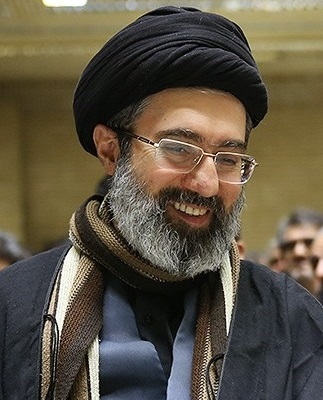
Mojtaba Khamenei
Iranian politician and cleric (born 1969)
Mojtaba Hosseini Khamenei (born 8 September 1969) is an Iranian politician and Muslim cleric. The second eldest child of Ali Khamenei, the former supreme leader of Iran, Mojtaba Khamenei served in the Iran–Iraq War from 1987 to 1988, and also reportedly took control of the Basij that was used to sup...

Military base
Facility directly owned and operated by or for the military
A military base is a facility directly owned and operated by or for the military or one of its branches that shelters military equipment and personnel, and facilitates training and operations. A military base always provides accommodations for one or more units, but it may also be used as a command ...

List of modern conflicts in the Middle East
List of Middle Eastern conflicts since 1914
This is a list of modern conflicts ensuing in the geographic and political region known as the Middle East. The "Middle East" is traditionally defined as the Fertile Crescent (Mesopotamia), Levant, and Egypt and neighboring areas of Arabia, Anatolia and Iran. It currently encompasses the area from E...

Strait of Hormuz
Strait between the Gulf of Oman and the Persian Gulf
The Strait of Hormuz ( Persian: تنگهٔ هُرمُز Tangeh-ye Hormoz , Arabic: مَضيق هُرمُز Maḍīq Hurmuz) is a strait between the Persian Gulf and the Gulf of Oman. It provides the only sea passage from the Persian Gulf to the open ocean and is one of the world's most strategically important choke points. ...

Price of oil
Spot price of a barrel of benchmark crude oil
The price of oil, or the oil price, generally refers to the spot price of a barrel (159 litres) of benchmark crude oil—a reference price for buyers and sellers of crude oil such as West Texas Intermediate (WTI), Brent Crude, Dubai Crude, OPEC Reference Basket, Tapis crude, Bonny Light, Urals oil, Is...
Entity Intersection Graph
Connections for Mojtaba Khamenei:
Mentioned Entities
Deep Analysis
Why It Matters
This news is significant as it indicates a major escalation in tensions between Iran and the United States/Israel following the assassination of Iran's long-time Supreme Leader. The new leader's hardline stance on closing the Strait of Hormuz - a critical global oil shipping route - threatens global energy supplies and could trigger a wider conflict in the Middle East. This affects oil prices worldwide, regional stability, and international relations between major powers.
Context & Background
- The Strait of Hormuz is a critical chokepoint through which approximately 20% of global oil supplies pass
- Ayatollah Ali Khamenei had been Iran's Supreme Leader since 1989, making him one of the longest-serving rulers in the Middle East
- The U.S. and Israel have a history of covert operations against Iranian nuclear and military targets
- Iran's nuclear program has been a source of international tension for decades, with multiple rounds of sanctions and negotiations
- The assassination of a sitting Supreme Leader would be unprecedented in modern Iranian history
- Iran's military capabilities, particularly its drone and missile programs, have significantly expanded in recent years
What Happens Next
We can expect continued military exchanges between Iran and U.S./Israeli forces in the coming weeks. Oil prices are likely to remain volatile as markets react to developments in the Strait of Hormuz. The U.S. may increase its military presence in the region to protect shipping lanes. Diplomatic efforts to de-escalate tensions may intensify, though prospects for successful negotiations appear slim given the hardline positions on both sides.
Frequently Asked Questions
Mojtaba Khamenei is the 56-year-old son of the late Ayatollah Ali Khamenei, who served as Iran's Supreme Leader for 36 years. While keeping a low profile before his succession, Mojtaba is viewed as more hardline and conservative than his father.
The Strait of Hormuz is a critical chokepoint through which approximately 20% of global oil supplies pass. Any disruption to shipping through this strait would have immediate and significant impacts on global oil prices and energy security.
Closing the Strait of Hormuz would likely cause a sharp spike in global oil prices, potentially leading to inflation and economic instability worldwide. It could disrupt supply chains and increase transportation costs for goods beyond just energy products.
The international community, particularly the U.S. and its allies, may respond with increased military presence in the region to protect shipping lanes. There may also be renewed diplomatic efforts to de-escalate tensions, though prospects appear limited given the hardline positions on both sides.
U.S.-Iran tensions date back to the 1979 Iranian Revolution that overthrew the U.S.-backed Shah. Relations have been consistently hostile since, with periods of heightened conflict including the Iran-Iraq War in the 1980s, the U.S. Embassy hostage crisis, and more recent confrontations over Iran's nuclear program.