
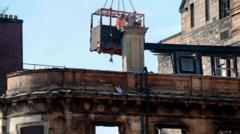
Demolition begins on building facade after Glasgow fire
#Glasgow #fire #demolition #building facade #safety #recovery #construction
📌 Key Takeaways
- Demolition has started on the facade of a building damaged in a Glasgow fire
- The fire incident necessitated the demolition for safety reasons
- The process is part of post-fire recovery efforts in the area
- Authorities are overseeing the demolition to ensure public safety
📖 Full Retelling
🏷️ Themes
Urban Safety, Disaster Recovery
📚 Related People & Topics

Glasgow
Largest city in Scotland
Glasgow is the most populous city in Scotland, located on the banks of the River Clyde in west central Scotland. It is the third-most populous city in the United Kingdom and the 27th-most populous city in Europe, and comprises 23 wards which represent the areas within the city boundaries. Glasgow is...
Entity Intersection Graph
Connections for Glasgow:
Mentioned Entities
Deep Analysis
Why It Matters
This demolition matters because it addresses immediate public safety concerns following a structural fire in a major Scottish city. The removal of potentially unstable building facades protects pedestrians, nearby residents, and emergency responders from collapse risks. It also represents the first tangible step in recovery for the affected urban area, impacting local businesses, property owners, and city infrastructure planning. The process will influence future fire safety regulations and building maintenance standards in historic urban centers.
Context & Background
- Glasgow has numerous historic buildings with aging infrastructure, making them vulnerable to fire damage
- The city experienced a devastating fire at the Glasgow School of Art's Mackintosh Building in 2018, highlighting preservation challenges
- UK building regulations require dangerous structures to be made safe following incidents, often through controlled demolition
- Urban fires in dense city centers frequently require facade removal when structural integrity is compromised
- Glasgow City Council typically coordinates with building owners and contractors for post-fire safety measures
What Happens Next
Contractors will complete the controlled demolition under safety supervision, followed by debris removal and site securing. Structural engineers will assess adjacent buildings for collateral damage. Insurance assessments and potential rebuilding plans will be developed over the coming months. The local council may review fire safety compliance for similar structures in the area.
Frequently Asked Questions
Fire-damaged facades often have compromised structural integrity that cannot be safely repaired. The heat weakens materials like brick and mortar, creating collapse hazards that make controlled demolition the safest option for public protection.
Controlled demolitions of building facades typically take several days to weeks depending on the structure's size and complexity. Safety preparations and debris removal often extend the timeline beyond the actual demolition work.
Yes, surrounding areas will likely experience road closures, pedestrian diversions, and potential business disruptions during demolition. Local authorities typically implement temporary traffic management plans to minimize impact while ensuring public safety.
Building owners' insurance typically covers demolition costs, though local authorities can intervene and recover expenses if owners fail to act. In some cases, government emergency funds may be allocated for immediate public safety measures.
The site will be secured and assessed for future use. Options may include complete rebuilding, partial reconstruction, or redevelopment depending on the extent of damage, historical significance, and owner intentions.