
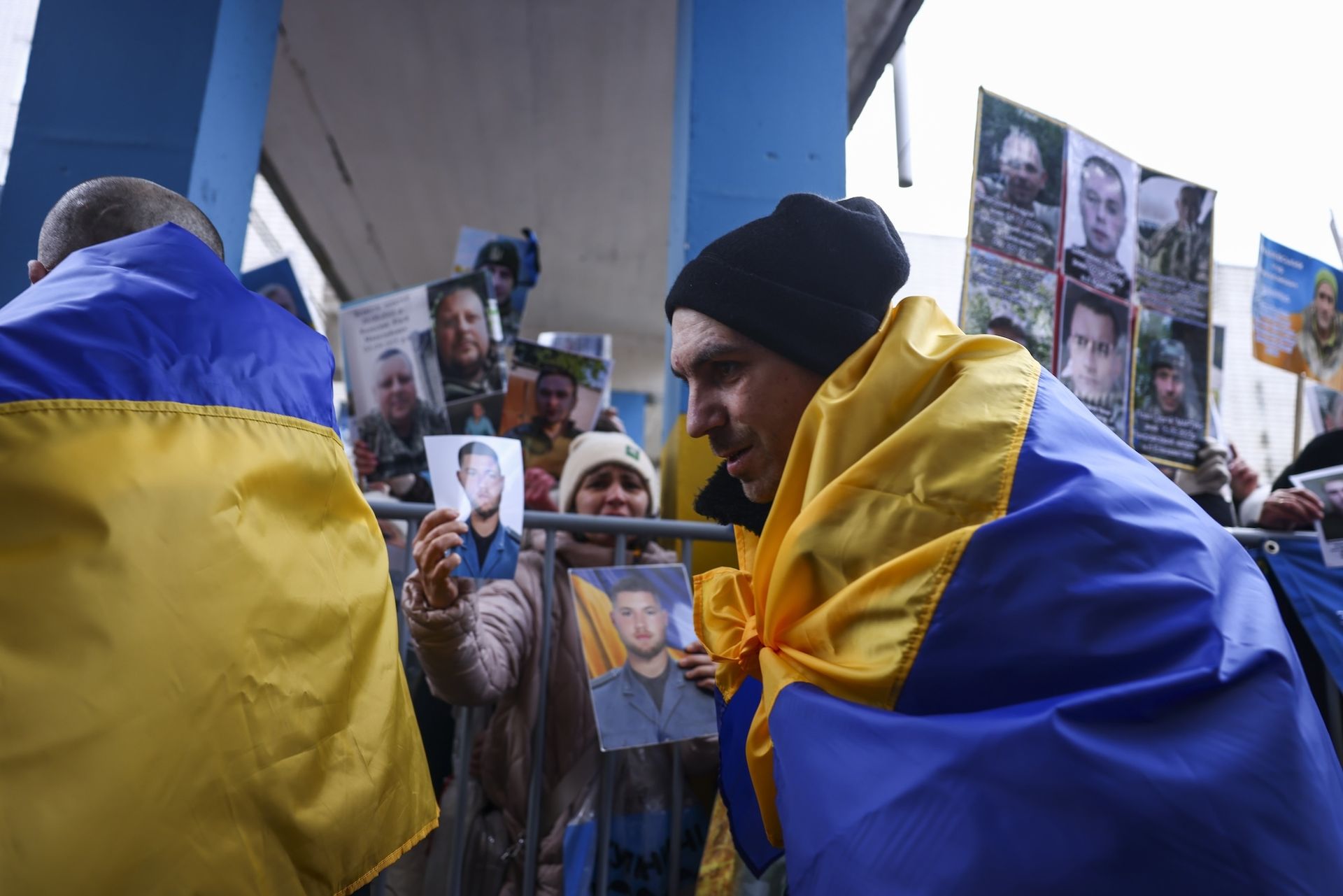
Ukraine secures release of 300 POWs, 2 civilians in second stage of exchange with Russia
#Ukraine #Russia #prisoner exchange #POWs #civilians #war #diplomacy #release
📌 Key Takeaways
- Ukraine secured the release of 300 prisoners of war (POWs) from Russia
- Two Ukrainian civilians were also freed in the exchange
- This marks the second stage of a prisoner swap between the two nations
- The exchange highlights ongoing diplomatic efforts amid the conflict
🏷️ Themes
Prisoner Exchange, Ukraine-Russia Conflict
📚 Related People & Topics

Russia
Country in Eastern Europe and North Asia
Russia, or the Russian Federation, is a country in Eastern Europe and North Asia. It is the largest country in the world, spanning eleven time zones and sharing land borders with fourteen countries. With a population of over 140 million, Russia is the most populous country in Europe and the ninth-mo...

Ukraine
Country in Eastern Europe
# Ukraine **Ukraine** is a country located in Eastern Europe. It is the second-largest country in Europe by area, after Russia. Known for its extensive fertile plains, the nation serves as a critical global exporter of grain and is considered a middle power in international affairs. ## Geography a...

Prisoner of war
Military term for a captive of the enemy
A prisoner of war (POW) is a person held captive by a belligerent power during or immediately after an armed conflict. The earliest recorded usage of the phrase "prisoner of war" dates back to 1610. Belligerents hold prisoners of war for a range of reasons.
Entity Intersection Graph
Connections for Russia:
View full profileMentioned Entities
Deep Analysis
Why It Matters
This prisoner exchange represents a rare instance of cooperation between Ukraine and Russia during active conflict, providing humanitarian relief to hundreds of families and potentially creating momentum for future diplomatic negotiations. The release of 300 POWs significantly impacts Ukraine's military capacity by returning experienced soldiers to the front lines, while the inclusion of civilians demonstrates attention to non-combatant suffering. Such exchanges also serve as confidence-building measures that could pave the way for broader peace talks, affecting international diplomatic efforts led by Turkey and other mediators.
Context & Background
- This marks the second stage of prisoner exchanges between Ukraine and Russia since the full-scale invasion began in February 2022, following previous smaller-scale swaps that have occurred sporadically throughout the conflict
- Prisoner exchanges have historically been contentious in the Russia-Ukraine conflict, with disputes over numbers, conditions, and verification processes delaying previous negotiations
- Turkey has frequently served as mediator in these exchanges, leveraging its unique diplomatic position with both Russia and NATO-member Ukraine to facilitate humanitarian agreements
- The Geneva Conventions establish protocols for prisoner of war treatment and exchange, though both sides have accused each other of violations throughout the conflict
What Happens Next
International observers will monitor the returned prisoners' conditions and testimonies for potential war crimes evidence. Diplomatic efforts will likely intensify to establish more regular exchange mechanisms, possibly through continued Turkish mediation. The success of this exchange may encourage negotiations for the remaining estimated thousands of prisoners still held by both sides, with the next round potentially occurring within weeks if momentum continues.
Frequently Asked Questions
Exact totals are difficult to verify, but this exchange of 302 people represents one of the larger single transfers. Previous exchanges have included dozens to hundreds of prisoners at various points since the conflict began, with estimates suggesting several thousand have been swapped overall through multiple rounds.
Returned prisoners typically undergo medical evaluation, psychological support, and debriefing by military intelligence. Ukrainian soldiers may eventually return to military service after assessment, while civilians receive humanitarian assistance and reunification support with families.
Exchanges provide humanitarian relief, boost morale for both militaries, and create diplomatic channels that could facilitate broader negotiations. They also allow countries to demonstrate commitment to international law regarding prisoner treatment, which can influence international support and perception.
Major obstacles include disputes over prisoner numbers and identities, verification processes, accusations of mistreatment, and political timing considerations. Both sides often use exchanges as leverage in broader negotiations, making humanitarian concerns secondary to strategic calculations.
The Third Geneva Convention establishes that prisoners of war must be released and repatriated without delay after cessation of active hostilities, but allows for earlier exchanges by mutual agreement. The International Committee of the Red Cross typically facilitates verification and transfer processes to ensure compliance with humanitarian standards.