
Ancient shipwreck gives up dazzling treasures after more than 1,300 years underwater
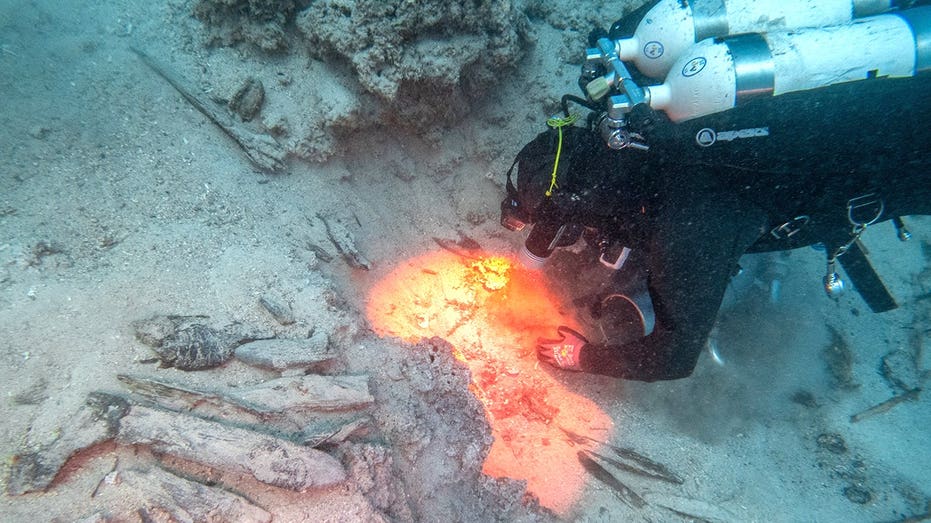
Archaeologists examining an ancient shipwreck recently revealed a trove of gold — and evidence that a wealthy and powerful passenger and his entourage may have been aboard.The findings were formally presented by the Croatian Conservation Institute this summer after years of underwater excavation, Reuters reported.The ship dates to the late 7th or early 8th century A.D., and was discovered on the seabed near the Croatian island of Mljet more than a decade ago.ARCHAEOLOGISTS UNEARTH SECRET CHURCH TIED TO COUNCIL OF NICAEA, CHRISTIANITY'S DEFINING MOMENTSystematic underwater excavations of the site have been underway since 2015.Pictures released by officials show a dazzling collection of jewelry — including an elaborate piece studded with pearls and a green gemstone.The buckles, decorated with rubies, emeralds and pearls, along with a golden signet ring, suggested the ship was carrying someone of considerable status.The ring, in particular, "certainly wouldn't be worn by just anyone," Pavle Dugonjic, head of the Department of Underwater Archaeology at the Croatian Conservation Institute, told Reuters.AUTHOR DINESH D'SOUZA CHALLENGES BIBLE SKEPTICS WITH 'STARTLING' ARCHAEOLOGICAL DISCOVERIESThe wreck also contained gold coins issued by four emperors of the Heraclian dynasty, which ruled the Byzantine Empire during the 7th and 8th centuries.The more than 1.3 pounds of gold represents the largest amount ever recovered from a shipwreck in the Mediterranean, according to Igor Miholjek, head of research at the Croatian Conservation Institute, per Reuters."This is an impressive amount of gold," he told the outlet.It's "the largest ever found on a shipwreck in the entire Mediterranean," he added. "It weighs over 600 grams when weighed after cleaning and restoration."CLICK HERE TO SIGN UP FOR OUR LIFESTYLE NEWSLETTERJustin Leidwanger, professor of archaeology at Stanford University, told Reuters that the Mljet wreck is "the most important shipwreck of its period.""If you're studying the end of the late Roman Empire and the transformation into the medieval world, this is a critical site for us to understand and to gain insights into how the Mediterranean was held together by its sea routes, how it fragmented, how the empire fell apart," he said.The Byzantine Empire, the eastern continuation of the Roman Empire, lasted until 1453 and once controlled vast stretches of the eastern Mediterranean.CLICK HERE FOR MORE LIFESTYLE NEWSThe shipwreck is among a number of significant Byzantine discoveries in recent years.In 2025, archaeologists unveiled a 1,600-year-old Byzantine-era mosaic from an ancient Christian monastery in southern Israel, putting it on public display for the first time.TEST YOURSELF WITH OUR LATEST LIFESTYLE QUIZThis summer, archaeologists uncovered a 1,700-year-old Byzantine city in Egypt, complete with a church and a deacon's home.Reuters contributed reporting.
Reported by 1 outlet — Fox News Latest. See all sources ↓
Read the full report at Fox News Latest ↗
Why it matters
A world story we're tracking; its significance and source trust firm up as more outlets confirm it.
- What's the story?
- Archaeologists examining an ancient shipwreck recently revealed a trove of gold — and evidence that a wealthy and powerful passenger and his entourage may have been aboard.The findings were formally presented by the Croatian Conservation Institute this summer after years of underwater excavation, Reuters reported.The ship dates to the late 7th or early 8th century A.D., and was discovered on the seabed near the Croatian island of Mljet more than a decade ago.ARCHAEOLOGISTS UNEARTH SECRET CHURCH TIED TO COUNCIL OF NICAEA, CHRISTIANITY'S DEFINING MOMENTSystematic underwater excavations of the site have been underway since 2015.Pictures released by officials show a dazzling collection of jewelry — including an elaborate piece studded with pearls and a green gemstone.The buckles, decorated with rubies, emeralds and pearls, along with a golden signet ring, suggested the ship was carrying someone of considerable status.The ring, in particular, "certainly wouldn't be worn by just anyone," Pavle Dugonjic, head of the Department of Underwater Archaeology at the Croatian Conservation Institute, told Reuters.AUTHOR DINESH D'SOUZA CHALLENGES BIBLE SKEPTICS WITH 'STARTLING' ARCHAEOLOGICAL DISCOVERIESThe wreck also contained gold coins issued by four emperors of the Heraclian dynasty, which ruled the Byzantine Empire during the 7th and 8th centuries.The more than 1.3 pounds of gold represents the largest amount ever recovered from a shipwreck in the Mediterranean, according to Igor Miholjek, head of research at the Croatian Conservation Institute, per Reuters."This is an impressive amount of gold," he told the outlet.It's "the largest ever found on a shipwreck in the entire Mediterranean," he added. "It weighs over 600 grams when weighed after cleaning and restoration."CLICK HERE TO SIGN UP FOR OUR LIFESTYLE NEWSLETTERJustin Leidwanger, professor of archaeology at Stanford University, told Reuters that the Mljet wreck is "the most important shipwreck of its period.""If you're studying the end of the late Roman Empire and the transformation into the medieval world, this is a critical site for us to understand and to gain insights into how the Mediterranean was held together by its sea routes, how it fragmented, how the empire fell apart," he said.The Byzantine Empire, the eastern continuation of the Roman Empire, lasted until 1453 and once controlled vast stretches of the eastern Mediterranean.CLICK HERE FOR MORE LIFESTYLE NEWSThe shipwreck is among a number of significant Byzantine discoveries in recent years.In 2025, archaeologists unveiled a 1,600-year-old Byzantine-era mosaic from an ancient Christian monastery in southern Israel, putting it on public display for the first time.TEST YOURSELF WITH OUR LATEST LIFESTYLE QUIZThis summer, archaeologists uncovered a 1,700-year-old Byzantine city in Egypt, complete with a church and a deacon's home.Reuters contributed reporting.
- How widely is it covered?
- 1 outlet, average source rating 6.0/10.
- When was it last updated?
- 6m ago.
How outlets are framing the same story
Here's how each outlet is covering the story — compare their headlines and timing at a glance.
- Coverage card1 outlet1CoverageScouting report
Ancient shipwreck gives up dazzling treasures after more than 1,300 years underwater
Sources1TypeCoverageFox News Latest