
Archaeologists uncover mysterious face hidden for centuries in Book of Revelation city
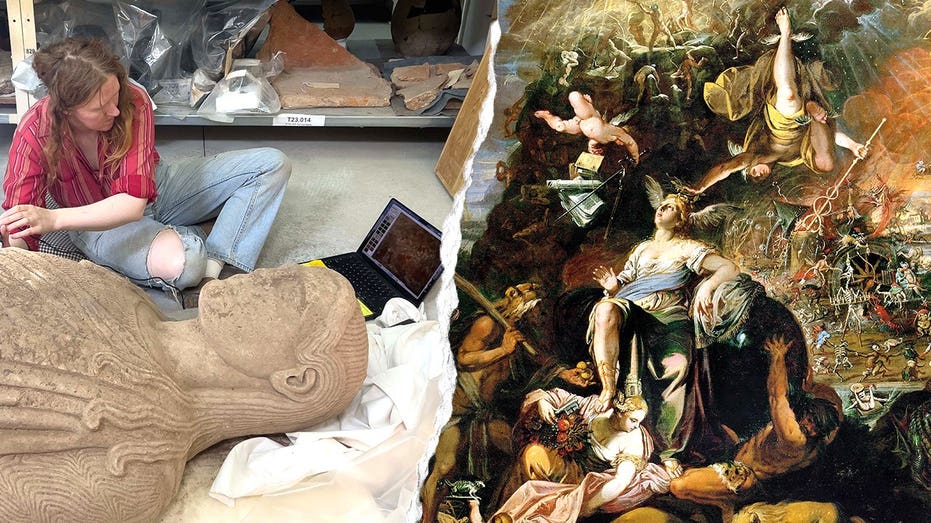
A rare, 2,500-year-old marble statue has emerged from the ruins of Sardis, an ancient city immortalized in the Book of Revelation.The discovery, which dates to the fifth century B.C., was announced by the Turkish Ministry of Culture and Tourism earlier in August. Sardis is located in the Salihli district of Manisa, about 45 miles east of the major Turkish city of İzmir.Pictures show excavators carefully uncovering the monumental statue, which still retained well-preserved facial features, at the archaeological site.ARCHAEOLOGISTS UNEARTH SECRET CHURCH TIED TO COUNCIL OF NICAEA, CHRISTIANITY'S DEFINING MOMENTThe statue depicts a young man and measures around 7.2 feet tall.In a translated social media post, Culture and Tourism Minister Mehmet Nuri Ersoy described the find as an "extraordinary discovery."He noted that the statue was repurposed as paving along a colonnaded street during the Roman period and was positioned face-down, helping protect its features for centuries."The unusual details of its clothing bear traces of Lydian culture," said Ersoy.AUTHOR DINESH D'SOUZA CHALLENGES BIBLE SKEPTICS WITH 'STARTLING' ARCHAEOLOGICAL DISCOVERIES"The statue, which appears to be holding a fruit in its hand, provides important evidence that will contribute to our understanding of life, religious beliefs and cultural interactions in Sardis during the period."In a translated statement, officials described the statue as having "larger-than-life dimensions [that] make it a rare example from the period.""The young man is depicted wearing a thick himation, a thin chiton, and beneath them a distinctive garment featuring horizontal lines," the translated statement said."This type of clothing is not seen on comparable statues from Anatolia and Greece, highlighting the work’s local characteristics and its connection to Lydian culture."ARCHAEOLOGISTS UNEARTH ANCIENT TREASURE CACHE AT BIBLICAL CITY CONNECTED TO GENESISSardis was once the capital of the ancient Lydian Kingdom before later becoming an important center of the Persian Empire, the period to which the statue dates.The city is named as one of the seven churches in Asia Minor addressed by Jesus Christ in the Book of Revelation.Revelation 3:1–6 begins, "To the angel of the church in Sardis write..."The other churches included Ephesus, Pergamum, Thyatira, Smyrna, Philadelphia and Laodicea.CLICK HERE TO SIGN UP FOR OUR LIFESTYLE NEWSLETTERAncient marble statues were often painted, and researchers plan to examine the Sardis statue for any surviving traces of pigment.The artifact is covered in a thick layer of hardened deposits, which conservators will remove with care while protecting any remaining paint.Specialists will also examine the surrounding soil for traces of color.CLICK HERE FOR MORE LIFESTYLE NEWSOnce conservation and restoration are complete, the statue will be displayed at the Manisa Museum in western Turkey.The discovery is the latest in a series of archaeological finds from ancient cities mentioned in the Book of Revelation.TEST YOURSELF WITH OUR LATEST LIFESTYLE QUIZEarlier this summer, an ancient mosaic was uncovered in Smyrna, an archaeological site in modern-day İzmir, Turkey.In Ephesus, archaeologists found a Roman-era marble bathtub and a fragment of a male statue that had been reused as a paving stone.
Reported by 1 outlet — Fox News Latest. See all sources ↓
Read the full report at Fox News Latest ↗
Why it matters
A world story we're tracking; its significance and source trust firm up as more outlets confirm it.
- What's the story?
- A rare, 2,500-year-old marble statue has emerged from the ruins of Sardis, an ancient city immortalized in the Book of Revelation.The discovery, which dates to the fifth century B.C., was announced by the Turkish Ministry of Culture and Tourism earlier in August. Sardis is located in the Salihli district of Manisa, about 45 miles east of the major Turkish city of İzmir.Pictures show excavators carefully uncovering the monumental statue, which still retained well-preserved facial features, at the archaeological site.ARCHAEOLOGISTS UNEARTH SECRET CHURCH TIED TO COUNCIL OF NICAEA, CHRISTIANITY'S DEFINING MOMENTThe statue depicts a young man and measures around 7.2 feet tall.In a translated social media post, Culture and Tourism Minister Mehmet Nuri Ersoy described the find as an "extraordinary discovery."He noted that the statue was repurposed as paving along a colonnaded street during the Roman period and was positioned face-down, helping protect its features for centuries."The unusual details of its clothing bear traces of Lydian culture," said Ersoy.AUTHOR DINESH D'SOUZA CHALLENGES BIBLE SKEPTICS WITH 'STARTLING' ARCHAEOLOGICAL DISCOVERIES"The statue, which appears to be holding a fruit in its hand, provides important evidence that will contribute to our understanding of life, religious beliefs and cultural interactions in Sardis during the period."In a translated statement, officials described the statue as having "larger-than-life dimensions [that] make it a rare example from the period.""The young man is depicted wearing a thick himation, a thin chiton, and beneath them a distinctive garment featuring horizontal lines," the translated statement said."This type of clothing is not seen on comparable statues from Anatolia and Greece, highlighting the work’s local characteristics and its connection to Lydian culture."ARCHAEOLOGISTS UNEARTH ANCIENT TREASURE CACHE AT BIBLICAL CITY CONNECTED TO GENESISSardis was once the capital of the ancient Lydian Kingdom before later becoming an important center of the Persian Empire, the period to which the statue dates.The city is named as one of the seven churches in Asia Minor addressed by Jesus Christ in the Book of Revelation.Revelation 3:1–6 begins, "To the angel of the church in Sardis write..."The other churches included Ephesus, Pergamum, Thyatira, Smyrna, Philadelphia and Laodicea.CLICK HERE TO SIGN UP FOR OUR LIFESTYLE NEWSLETTERAncient marble statues were often painted, and researchers plan to examine the Sardis statue for any surviving traces of pigment.The artifact is covered in a thick layer of hardened deposits, which conservators will remove with care while protecting any remaining paint.Specialists will also examine the surrounding soil for traces of color.CLICK HERE FOR MORE LIFESTYLE NEWSOnce conservation and restoration are complete, the statue will be displayed at the Manisa Museum in western Turkey.The discovery is the latest in a series of archaeological finds from ancient cities mentioned in the Book of Revelation.TEST YOURSELF WITH OUR LATEST LIFESTYLE QUIZEarlier this summer, an ancient mosaic was uncovered in Smyrna, an archaeological site in modern-day İzmir, Turkey.In Ephesus, archaeologists found a Roman-era marble bathtub and a fragment of a male statue that had been reused as a paving stone.
- How widely is it covered?
- 1 outlet, average source rating 6.0/10.
- When was it last updated?
- 5m ago.
How outlets are framing the same story
Here's how each outlet is covering the story — compare their headlines and timing at a glance.
- Coverage card1 outlet1CoverageScouting report
Archaeologists uncover mysterious face hidden for centuries in Book of Revelation city
Sources1TypeCoverageFox News Latest