
Chasing Fire Clouds in Utah
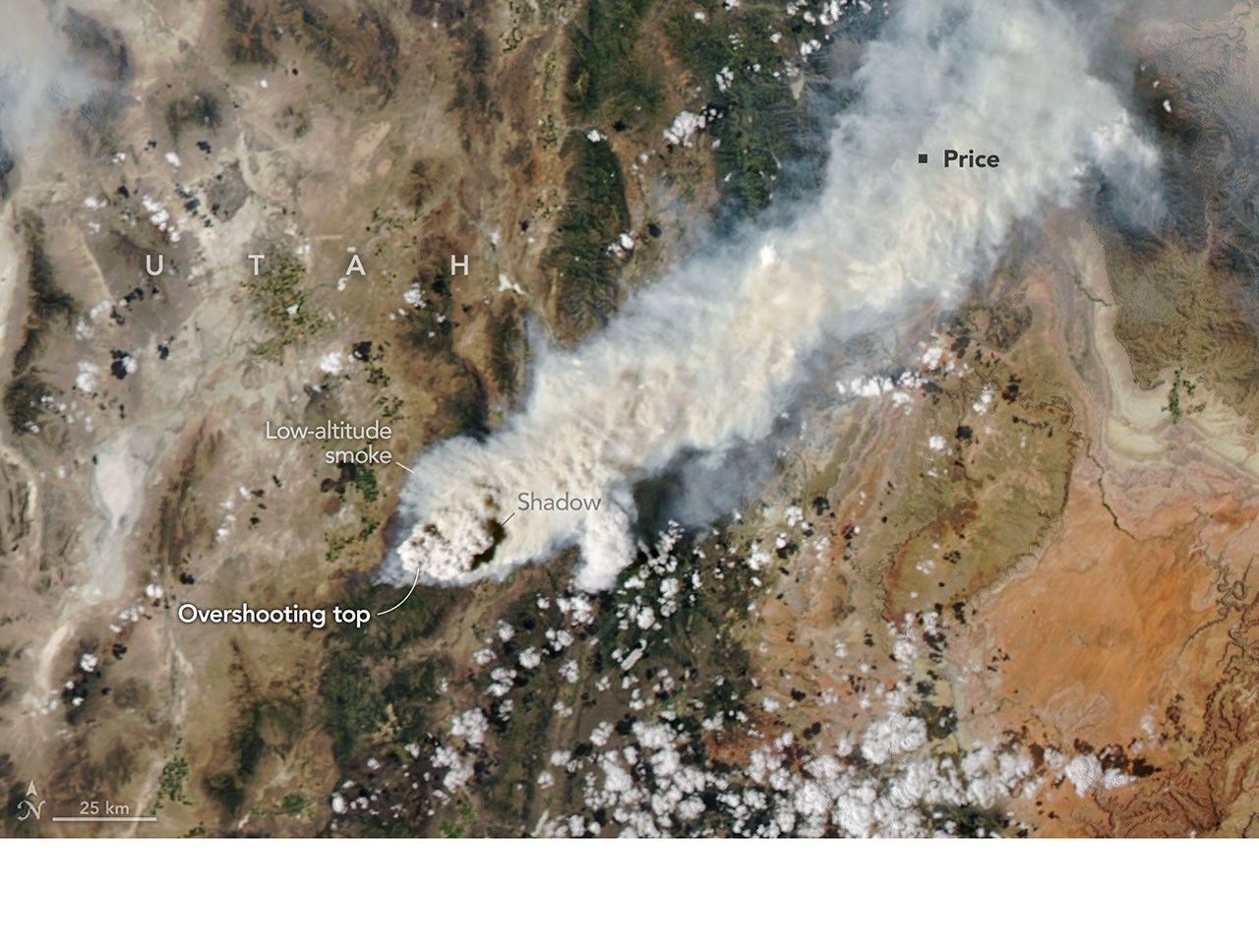
Earth Observatory Science Earth Observatory Chasing Fire Clouds in Utah Earth Earth Observatory Image of the Day EO Explorer Topics All Topics Atmosphere Land Heat & Radiation Life on Earth Human Dimensions Natural Events Oceans Remote Sensing Technology Snow & Ice Water More Content Collections Global Maps World of Change Articles Earth Matters Blog Blue Marble: Next Generation EO Kids Mission: Biomes About About Us Subscribe 🛜 RSS Contact Us Search Natural Color Brightness Temperature NASA Earth Observatory/Michala Garrison NASA Earth Observatory/Michala Garrison Natural ColorBrightness Temperature NASA Earth Observatory/Michala Garrison NASA Earth Observatory/Michala Garrison Natural Color Brightness Temperature CurtainToggle2-Up Image Details A smoke-infused pyrocumulonimbus (pyroCb) rises from the Widemouth 2 fire in Utah in these images captured by the MODIS (Moderate Resolution Imaging Spectroradiometer) on NASA’s Aqua satellite. The left image is natural color; the right image is false color, revealing cloud-top brightness temperatures below -40°C, a commonly used threshold for identifying pyroCbs.
Reported by 1 outlet — NASA. See all sources ↓
Earth Observatory Science Earth Observatory Chasing Fire Clouds in Utah Earth Earth Observatory Image of the Day EO Explorer Topics All Topics Atmosphere Land Heat & Radiation Life on Earth Human Dimensions Natural Events Oceans Remote Sensing Technology Snow & Ice Water More Content Collections Global Maps World of Change Articles Earth Matters Blog Blue Marble: Next Generation EO Kids Mission: Biomes About About Us Subscribe 🛜 RSS Contact Us Search Natural Color Brightness Temperature NASA Earth Observatory/Michala Garrison NASA Earth Observatory/Michala Garrison Natural ColorBrightness Temperature NASA Earth Observatory/Michala Garrison NASA Earth Observatory/Michala Garrison Natural Color Brightness Temperature CurtainToggle2-Up Image Details A smoke-infused pyrocumulonimbus (pyroCb) rises from the Widemouth 2 fire in Utah in these images captured by the MODIS (Moderate Resolution Imaging Spectroradiometer) on NASA’s Aqua satellite. The left image is natural color; the right image is false color, revealing cloud-top brightness temperatures below -40°C, a commonly used threshold for identifying pyroCbs. NASA Earth Observatory images by Michala Garrison. Scientists have long known that volcanoes can launch large quantities of particles into the stratosphere.
Read the full report at NASA ↗
Why it matters
A world story we're tracking; its significance and source trust firm up as more outlets confirm it.
- What's the story?
- Earth Observatory Science Earth Observatory Chasing Fire Clouds in Utah Earth Earth Observatory Image of the Day EO Explorer Topics All Topics Atmosphere Land Heat & Radiation Life on Earth Human Dimensions Natural Events Oceans Remote Sensing Technology Snow & Ice Water More Content Collections Global Maps World of Change Articles Earth Matters Blog Blue Marble: Next Generation EO Kids Mission: Biomes About About Us Subscribe 🛜 RSS Contact Us Search Natural Color Brightness Temperature NASA Earth Observatory/Michala Garrison NASA Earth Observatory/Michala Garrison Natural ColorBrightness Temperature NASA Earth Observatory/Michala Garrison NASA Earth Observatory/Michala Garrison Natural Color Brightness Temperature CurtainToggle2-Up Image Details A smoke-infused pyrocumulonimbus (pyroCb) rises from the Widemouth 2 fire in Utah in these images captured by the MODIS (Moderate Resolution Imaging Spectroradiometer) on NASA’s Aqua satellite. The left image is natural color; the right image is false color, revealing cloud-top brightness temperatures below -40°C, a commonly used threshold for identifying pyroCbs.
- How widely is it covered?
- 1 outlet, average source rating 9.0/10.
- When was it last updated?
- 16m ago.
How outlets are framing the same story
Here's how each outlet is covering the story — compare their headlines and timing at a glance.
- Coverage card1 outlet1CoverageScouting report
Chasing Fire Clouds in Utah
Sources1TypeCoverageNASA