
Google reveals Gemini Robotics 2.0, promising improved dexterity and safety
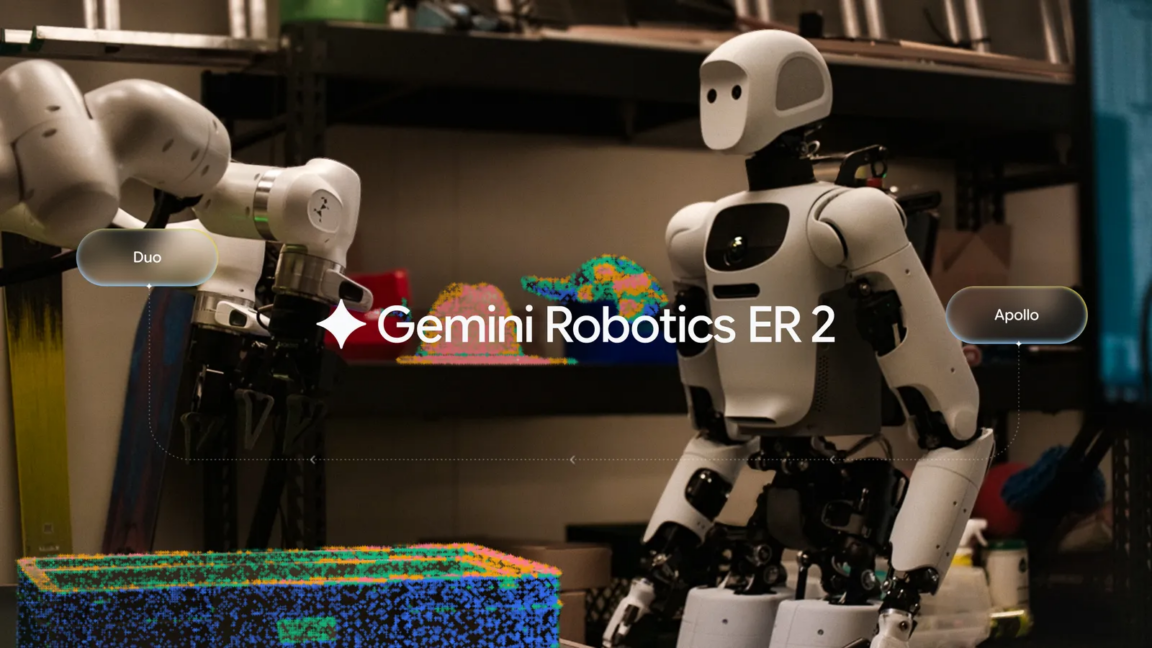


Robots powered by Google's Gemini AI models are now more capable. With the debut of Gemini Robotics 2, these physical bots can now accomplish more complex tasks, continuously analyze changing environments, and collaborate with other robots.
Reported by 3 outlets — Ars Technica, WIRED, The Verge. See all sources ↓
Google DeepMind announced Gemini Robotics 2.0, an AI system that can control humanoid robots. The new model lets robots walk, pick up objects, and work together. One part of the system is now available for developers to use.
Why it matters
This advance brings robots closer to helping in homes and factories. It shows how AI can improve everyday tasks.
- What is Gemini Robotics 2.0?
- It is Google DeepMind's AI model that can control humanoid robots to perform many physical tasks.
- Why is part of the model being shared with developers?
- Sharing one sub-model lets developers build their own robot applications.
- What new abilities do robots gain with this update?
- They can walk, crouch, stretch, and manipulate objects with their whole body.
How outlets are framing the same story
These are the main editorial angles found across reporting. Use them to quickly compare what different outlets emphasize, omit, or question.
Ars Technica stresses developer access and the goal of a generalist robot. WIRED highlights the vision‑language models that enable dexterous actions. The Verge emphasizes the shift to whole‑body control and shows a specific robot example.
- Coverage cardFraming signal1AngleScouting report
One sub‑model is released publicly for developers.
Sources1TypeAngleArs Technicamentions public availability
- Coverage cardFraming signal2AngleScouting report
The system uses a vision language model and two vision‑language‑action models to enable dexterous tasks.
Sources1TypeAngleWIREDdescribes VLM and VLA models for tasks like screwing bulbs
- Coverage cardFraming signal3AngleScouting report
The update adds whole‑body motion control, allowing walking and object manipulation.
Sources1TypeAngleThe Vergehighlights whole‑body control and Apollo 2 example