
How fruit flies chase invisible ribbons of smell to get to their source
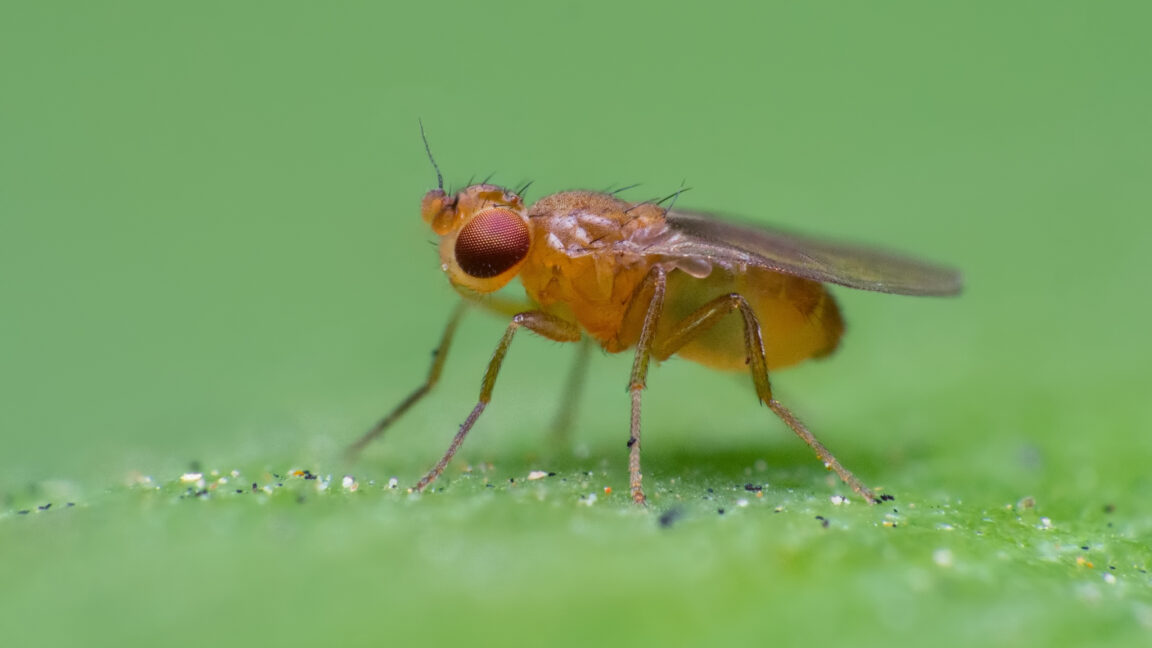
A fruit fly hunting a piece of rotting fruit or a mate navigates by smell, following plumes of odor. Out in the wild, turbulent air swirls these plumes into a chaotic, broken landscape—dense chemical filaments laced through long stretches of clean air.
Reported by 1 outlet — Ars Technica. See all sources ↓
Fruit flies find food or mates by following smells. The smell travels in invisible ribbons called odor plumes. In the wild, wind breaks these plumes into pieces, so the fly gets the smell only now and then. Scientists did not know how a fly with a tiny brain can follow such a broken signal. For a long time, they thought flies used a pattern called surge and cast.
Why it matters
Learning how flies track smells can help engineers design better robots for detecting gas leaks or diseases. It also shows how small brains can solve complex problems.
- What do fruit flies follow to find food or mates?
- They follow invisible ribbons of smell called odor plumes.
- Why is it hard for a fly to follow an odor plume in nature?
- Wind breaks the plume into pieces, so the fly gets the smell only intermittently.
How outlets are framing the same story
Here's how each outlet is covering the story — compare their headlines and timing at a glance.
Only one outlet was provided, so all outlets frame the story the same way.
- Coverage card1 outlet1CoverageScouting report
How fruit flies chase invisible ribbons of smell to get to their source
Sources1TypeCoverageArs Technica