
New power axis in the making? Three military heavyweights lock arms, complicating Abraham Accords strategy
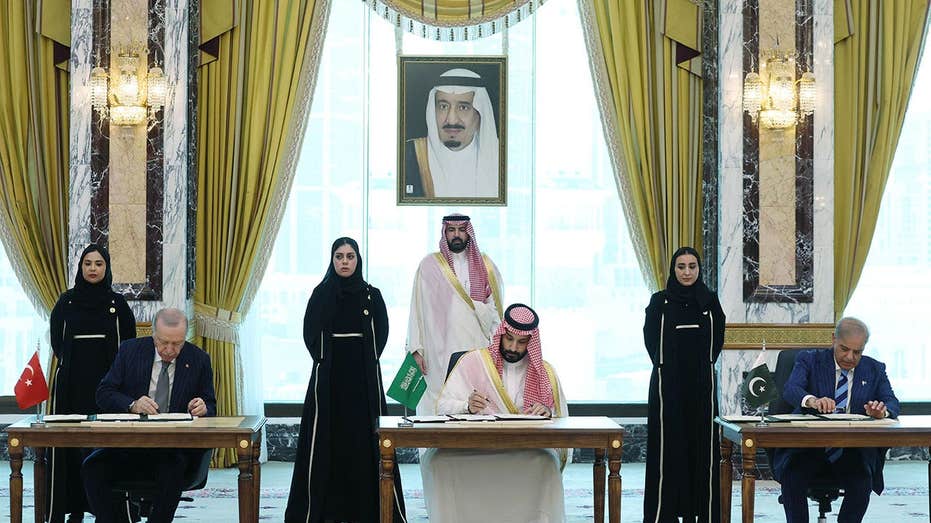
A new defense pact linking Saudi Arabia, Turkey and Pakistan is fueling debate over whether the three countries are laying the groundwork for a competing regional bloc — potentially challenging the U.S.-backed architecture built around Israel and the Abraham Accords — or simply creating a new model of burden-sharing among American partners.The three countries, all with longstanding security ties to the United States, enter the pact with different interests — but together they could begin shifting the region’s balance of power.Saudi Arabia signed a Strategic Defense Agreement with the United States in November 2025 and was designated a major non-NATO ally, but Riyadh did not secure the treaty-level, Article 5-style U.S. defense guarantee it had long sought, making the new pact a potential hedge against uncertainty over Washington’s future security commitments.
Reported by 1 outlet — Fox News Latest. See all sources ↓
A new defense pact linking Saudi Arabia, Turkey and Pakistan is fueling debate over whether the three countries are laying the groundwork for a competing regional bloc — potentially challenging the U.S.-backed architecture built around Israel and the Abraham Accords — or simply creating a new model of burden-sharing among American partners.The three countries, all with longstanding security ties to the United States, enter the pact with different interests — but together they could begin shifting the region’s balance of power.Saudi Arabia signed a Strategic Defense Agreement with the United States in November 2025 and was designated a major non-NATO ally, but Riyadh did not secure the treaty-level, Article 5-style U.S. defense guarantee it had long sought, making the new pact a potential hedge against uncertainty over Washington’s future security commitments. Pakistan, a nuclear-armed state, gains greater energy security, Saudi investment and regional influence, while offering significant military capabilities — although whether its nuclear deterrent extends to its partners remains unconfirmed. Turkey, already a NATO member, gains a larger market for its growing defense industry and additional strategic weight as tensions with Israel rise.WHO IS TURKEY'S RECEP TAYYIP ERDOĞAN?
Read the full report at Fox News Latest ↗
Why it matters
A world story we're tracking; its significance and source trust firm up as more outlets confirm it.
- What's the story?
- A new defense pact linking Saudi Arabia, Turkey and Pakistan is fueling debate over whether the three countries are laying the groundwork for a competing regional bloc — potentially challenging the U.S.-backed architecture built around Israel and the Abraham Accords — or simply creating a new model of burden-sharing among American partners.The three countries, all with longstanding security ties to the United States, enter the pact with different interests — but together they could begin shifting the region’s balance of power.Saudi Arabia signed a Strategic Defense Agreement with the United States in November 2025 and was designated a major non-NATO ally, but Riyadh did not secure the treaty-level, Article 5-style U.S. defense guarantee it had long sought, making the new pact a potential hedge against uncertainty over Washington’s future security commitments.
- How widely is it covered?
- 1 outlet, average source rating 6.0/10.
- When was it last updated?
- 8m ago.
How outlets are framing the same story
Here's how each outlet is covering the story — compare their headlines and timing at a glance.
- Coverage card1 outlet1CoverageScouting report
New power axis in the making? Three military heavyweights lock arms, complicating Abraham Accords strategy
Sources1TypeCoverageFox News Latest